Here's Why Japan's Robots Are Taking Jobs YOU Don't Want
You might think robots are coming for your job, but in Japan, they're filling critical roles no one wants. Discover how Japan's physical AI push addresses labor shortages and drives industrial survival.
Editorial Note
Reviewed and analysis by ScoRpii Tech Editorial Team.
In this article
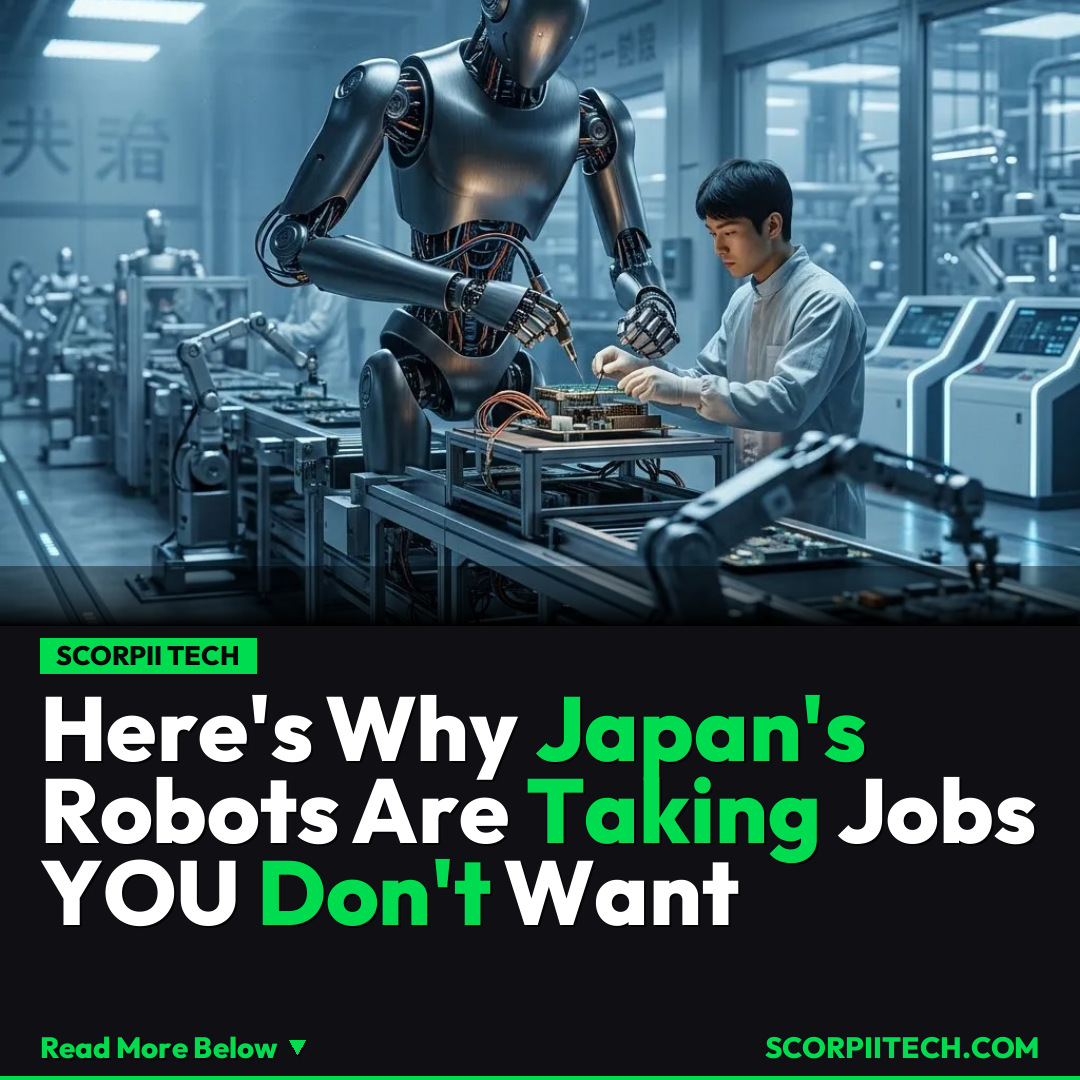
You might envision robots as the job-stealing villains of tomorrow, but prepare to shift your perspective. In Japan, physical AI is emerging not as a threat to your employment, but as a critical solution to a growing crisis. This isn't a race for simple efficiency; it's a profound push born out of industrial necessity, and it's rapidly redefining the future of work.
Key Details
Japan finds itself at the forefront of what many are calling the next major industrial battleground: physical AI. This aggressive embrace of robotics isn't driven by a desire for novelty or marginal productivity gains. Instead, it’s a direct response to severe labor shortages impacting industries across the nation. As Ro Gupta, Managing Director, wisely observed, "The driver has shifted from simple efficiency to industrial survival." This encapsulates the urgent reality facing Japanese businesses, from manufacturing powerhouses like Toyota Motor Corporation and Honda Motor to technology innovators like SoftBank.
Deploy your next full-stack application effortlessly. Get $200 in free DigitalOcean credits to host your Laravel or Python APIs.
The scale of this shift is impressive. Japan commanded a staggering 70% of the global market in industrial robotics in 2022, a testament to its long-standing expertise. To maintain this leadership and address its existential labor challenges, the nation is now pouring an estimated $6.3 billion into physical AI. This significant investment isn't just government-led; it’s a collaborative effort involving major venture capital firms. You’ll find entities like Woven Capital, Global Brain, and Salesforce Ventures actively funding cutting-edge companies.
Among the key players leading this charge are innovators like Mujin, co-founded by CEO Issei Takino, which focuses on intelligent robotics. Similarly, WHILL, under CEO Satoshi Sugie, is revolutionizing personal mobility, and Terra Drone, led by CEO Toru Tokushige, is advancing drone technology for industrial applications. Guided by figures such as Hogil Doh, General Partner, and Sho Yamanaka, Principal, these efforts, supported by Japan's Ministry of Economy, Trade and Industry, are projected to secure Japan at least 30% of the global physical AI market share by 2040, even as other nations like the U.S. and China increase their own investments.
Why This Matters
For you, this isn't just a distant tech story; it’s a potential blueprint for how economies worldwide might tackle their own demographic and labor challenges. Japan's proactive stance on physical AI highlights a fundamental shift: these robots aren't designed to replace human creativity or complex problem-solving. Instead, they’re stepping into repetitive, dangerous, or undesirable roles that struggle to find human workers. Think about the impact on your supply chains, healthcare systems, or even agricultural sectors if chronic labor gaps could be reliably filled. This strategic deployment of AI ensures vital industries continue to function, preventing economic stagnation and preserving the quality of life for an aging population.
The lessons learned in Japan, from funding mechanisms to regulatory frameworks, could inform policy and investment decisions in your own region, especially if you live in a country facing similar demographic shifts. If companies like Mitsubishi Electric can maintain production levels despite a shrinking workforce, it stabilizes global markets and ensures the availability of essential goods. It's about adapting for survival, transforming daunting challenges into opportunities for technological leadership and economic resilience.
The Bottom Line
So, what should you take away from Japan's compelling journey into physical AI? First, recognize that the narrative around robotics is evolving from job displacement to essential partnership. These intelligent machines are becoming indispensable tools for industrial survival, particularly in economies facing acute labor shortages. Second, understand that investment in physical AI is not merely about growth; it’s about strategic resilience. For you, this means recognizing how these technologies are reshaping industries, creating new job categories focused on AI management and maintenance, and ultimately ensuring the stability of our modern world. Pay attention to how these innovations could impact your own career or business, because this quiet revolution is already here.
Originally reported by
TechCrunchWhat did you think?



Stay Updated
Get the latest tech news delivered to your reader.