Your Agents, Local & Fast: Holo3.1's Quantization Impact
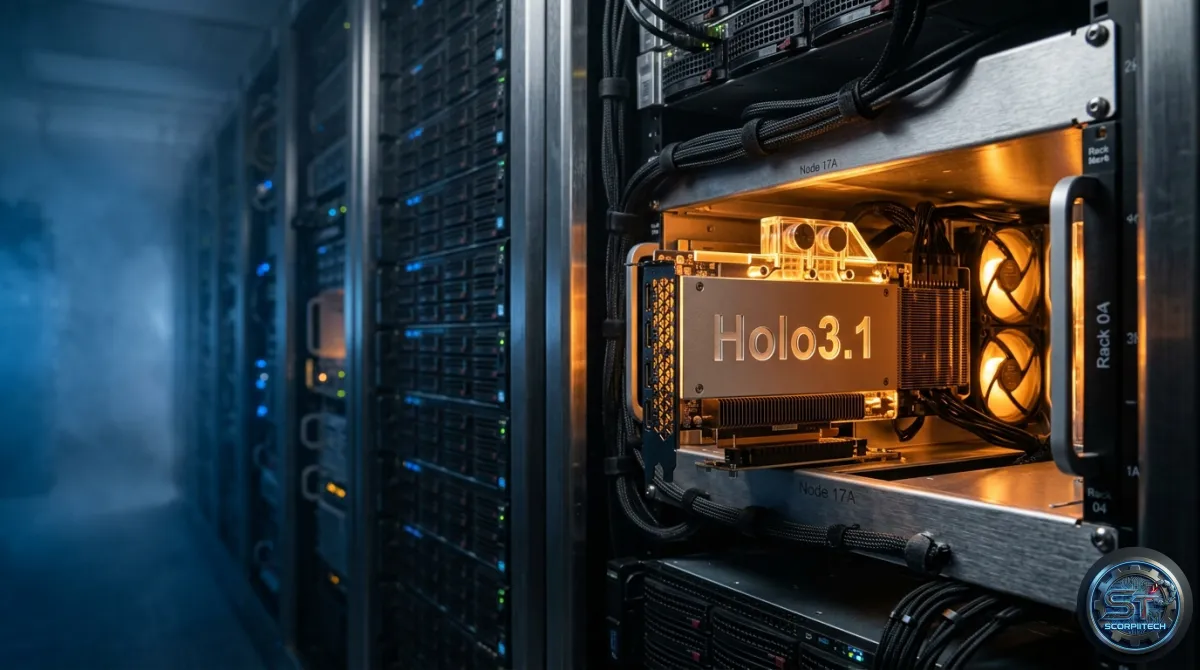
Holo3.1 enables fast, local computer-use agents on your devices using FP8, Q4 GGUF, and NVFP4 quantization. Understand the infrastructure implications for your workflows.
Editorial Note
Reviewed and analysis by ScoRpii Tech Editorial Team.
In this article
The Imperative for Local Agent Execution
You are now able to run identical computer-use capabilities across both desktop and mobile environments, coupled with seamless integration into diverse agent frameworks, thanks to Holo3.1. This shift toward local execution for these agents bypasses network latency and reduces operational costs associated with cloud-based inference, offering direct control over data privacy and processing.
Holo3.1 allows you to embed sophisticated, context-aware agents directly onto your end-user devices, including platforms like HoloTab. This architecture minimizes external dependencies, making your agent-driven workflows more resilient and responsive, especially in bandwidth-constrained scenarios or for sensitive operations.
Need fast, secure, and affordable hosting for your next website or PHP application? We recommend Hostinger Managed Hosting. Get premium speeds, a free domain, and 24/7 expert support.
Concept Refresher: Quantization
Quantization is the process of reducing the precision of model parameters in neural networks, often to lower bit-widths like FP8, Q4, or W4A16. This process drastically shrinks the model's memory footprint and accelerates inference by allowing computations on integer or lower-precision hardware, which are faster and more energy-efficient.
Some key techniques used in quantization include:
- FP8: 8-bit floating point
- Q4: 4-bit integer
- W4A16: 4-bit weights, 16-bit activations
Holo3.1's Engineering: Quantized Models and NVIDIA Partnership
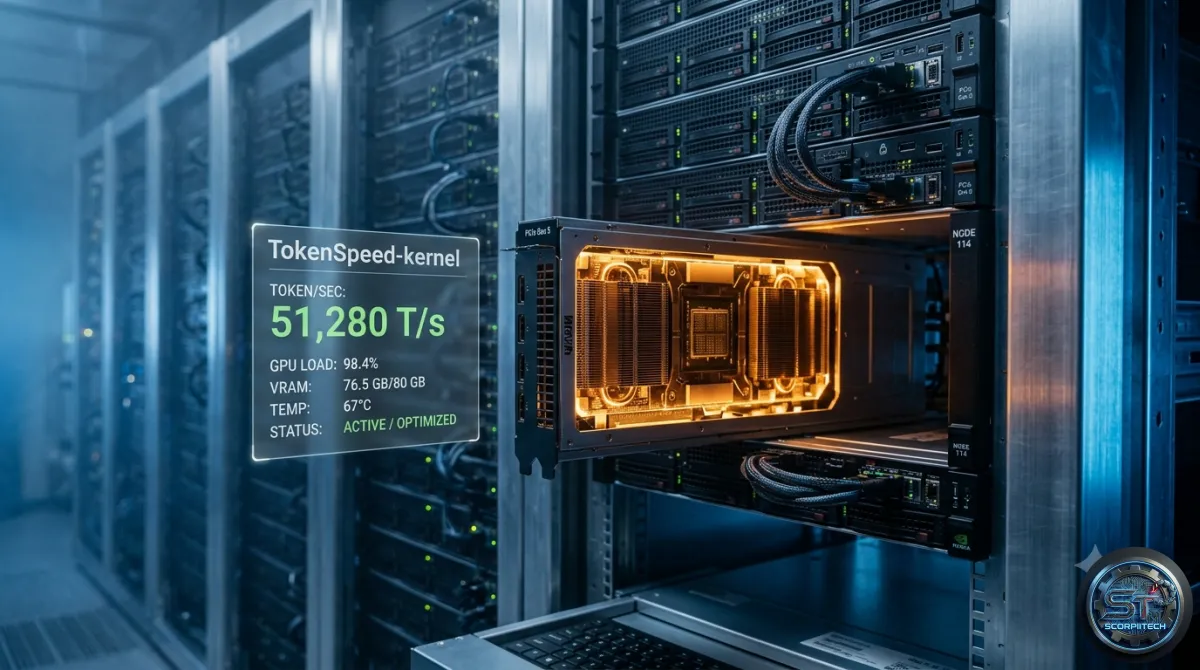
Holo3.1 utilizes several specific techniques, including FP8, Q4 GGUF, and NVFP4, to achieve its fast, local computer-use agent capabilities. The mention of NVFP4 points to a collaboration or optimization for NVIDIA hardware, suggesting that NVIDIA plays a role in enabling these high-performance, low-precision computations.
The W4A16 scheme, combining 4-bit weights with 16-bit activations, represents another approach to balance precision reduction with computational efficiency. By leveraging these techniques across its different model variants, Holo3.1 ensures that even larger models can run efficiently on your local compute resources, including those found in mobile devices like the HoloTab.
What This Means For Your Infrastructure
For your development and operational teams, Holo3.1's availability directly impacts your resource allocation and deployment strategies. You can now design agent frameworks that assume local, high-speed inference without the traditional GPU farm dependencies for every interaction.
This enables you to distribute computational load more effectively across your user base's existing devices. The emphasis on quantized models means your hardware requirements for local agent execution will be significantly lower than for full-precision models.
The Bottom Line for Developers
In conclusion, Holo3.1's local agent execution capabilities offer a significant improvement in infrastructure efficiency and responsiveness. By understanding the techniques used in quantization and the engineering behind Holo3.1, you can optimize your infrastructure to take full advantage of these capabilities.
Originally reported by
Hugging Face BlogWhat did you think?
Stay Updated
Get the latest tech news delivered to your reader.