Get Ready: Chinese Humanoid Robots Are Outpacing The West On The Factory Floor And In Your Future
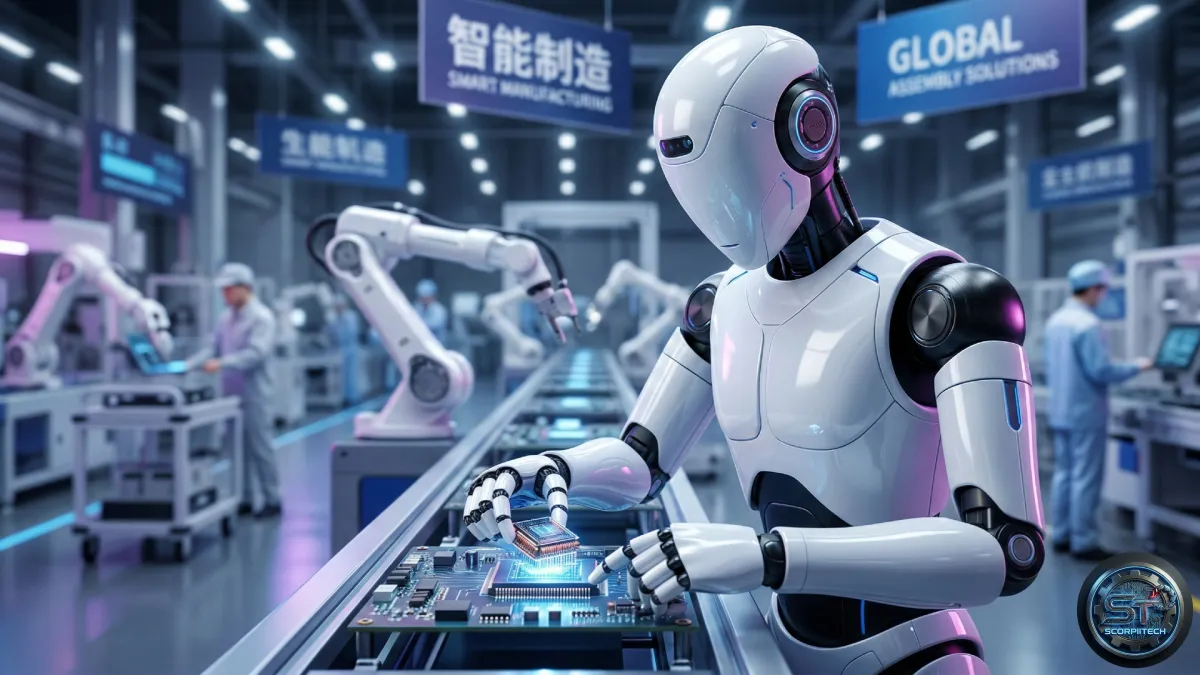
If you're watching humanoid robots, China is pulling ahead, driven by a robust supply chain and manufacturing, bringing these advanced machines to your world faster.
Editorial Note
Reviewed and analysis by ScoRpii Tech Editorial Team.
In this article
China's Rapid Ascent in Humanoid Robotics
You’re seeing a seismic shift in the robotics world: China is rapidly becoming the dominant force in humanoid robot development. From impressive public demonstrations – including robots performing Kung Fu – to planned product launches like Honor’s upcoming reveal at Mobile World Congress (MWC), the pace of innovation is breathtaking. This isn’t just about flashy demos; it’s about a fundamental advantage in hardware and manufacturing that’s allowing China to pull ahead.
A key factor driving this progress is China’s incredibly robust hardware supply chain. Built up significantly through the electric vehicle (EV) sector, it provides easy access to essential components like sensors and batteries. This allows companies to iterate designs and get products to market far faster than their Western counterparts.
Deploy your next full-stack application effortlessly. Get $200 in free DigitalOcean credits to host your Docker containers, Laravel, or Python APIs.
Outpacing the West in Production and Speed
The numbers tell a stark story. While the US has 36 humanoid robot companies, China boasts a staggering 13,317. This isn’t just a difference in quantity; it translates directly into production capacity and speed. Projections suggest that 2.6 million humanoid robots could be deployed globally by 2035, and China is poised to supply a significant portion of them.
Sizing Your Single-Box VPS Architecture?
Calculate exact vCPU cores, RAM GB, NVMe storage, and estimated monthly budget for your traffic before migrating away from high-cost cluster providers.
Selina Xu, China and AI policy lead at the office of Eric Schmidt, explains that this strong foundation impacts both cost and release cycles. According to Xu, “As a result, not only are Chinese robots cheaper but companies can also release new models more quickly.” Companies like Unitree are already challenging established Western firms like Figure, Tesla, and Nvidia.
Foundation Robot, for example, aims to produce 50,000 robots by 2027, a target that demonstrates the scale of ambition within the Chinese robotics industry. This aggressive scaling is fueled by substantial investment and government support.
From Showpiece to Practical Application
The initial excitement around humanoid robots focused on what they *could* do. Now, the demand is shifting to what they *can reliably* do. You’re seeing a move away from impressive demos and towards practical applications that solve real-world problems.
Yuli Zhao, chief strategy officer at Galbot, articulates this shift perfectly: “More customers are asking: Can the robot run stably in real environments and actually take work off people’s plates?” China is leading this transition, leveraging its manufacturing ecosystem and supportive policies. Companies like Unitree Robotics, Noetix, MagicLab, and Galbot, with its G1 robot, are all focused on delivering robots that can perform useful tasks.
Billions in Investment, Software Hurdles Remain
China’s push into humanoid robotics is backed by serious capital. Unitree, for instance, is currently valued at $3 billion, and Galbot has secured $300 million in funding. James Riney, CEO of Coral Capital, sums up the situation succinctly: “China’s leadership is best understood as a speed-to-scale advantage.”
However, challenges remain. While hardware is a strength, AI systems and software development are still hurdles. Sophisticated programming is crucial for enabling robots to navigate complex environments and perform intricate tasks. Despite this, China is making rapid progress in these areas.
It’s important to remember that other nations are also key players. Japan, for example, has a long history of robotics innovation, with companies like Hyundai Motor, Boston Dynamics (with 30,000 Atlas units produced), Honda (Asimo), Murata Manufacturing (Murata Boy), and SoftBank Robotics (Pepper) all contributing to the field.
What This Means For You
The rapid advancements in Chinese humanoid robotics will likely impact your life sooner than you think. You can expect to see increased automation in manufacturing, logistics, and service industries, potentially leading to lower costs and increased efficiency. The faster iteration cycles mean you’ll encounter new robot models and capabilities more frequently.
Initially, these robots will likely be deployed in industrial settings, but the long-term trajectory points to them becoming more integrated into your daily environment. This could create new job roles focused on robot maintenance, programming, and integration, while also redefining existing roles as robots take over physically demanding or repetitive tasks. Prepare for a future where robots are a common sight – and a valuable part of the workforce.
The Bottom Line
China isn’t just building robots; it’s building an ecosystem that’s poised to dominate the humanoid robotics market. You should expect to see continued innovation, falling prices, and wider adoption of these machines in the years to come. Staying informed about these developments will be crucial for understanding the future of work and the evolving technological landscape.
Originally reported by
Tech CrunchWhat did you think?

Stay Updated
Get the latest tech news delivered to your reader.