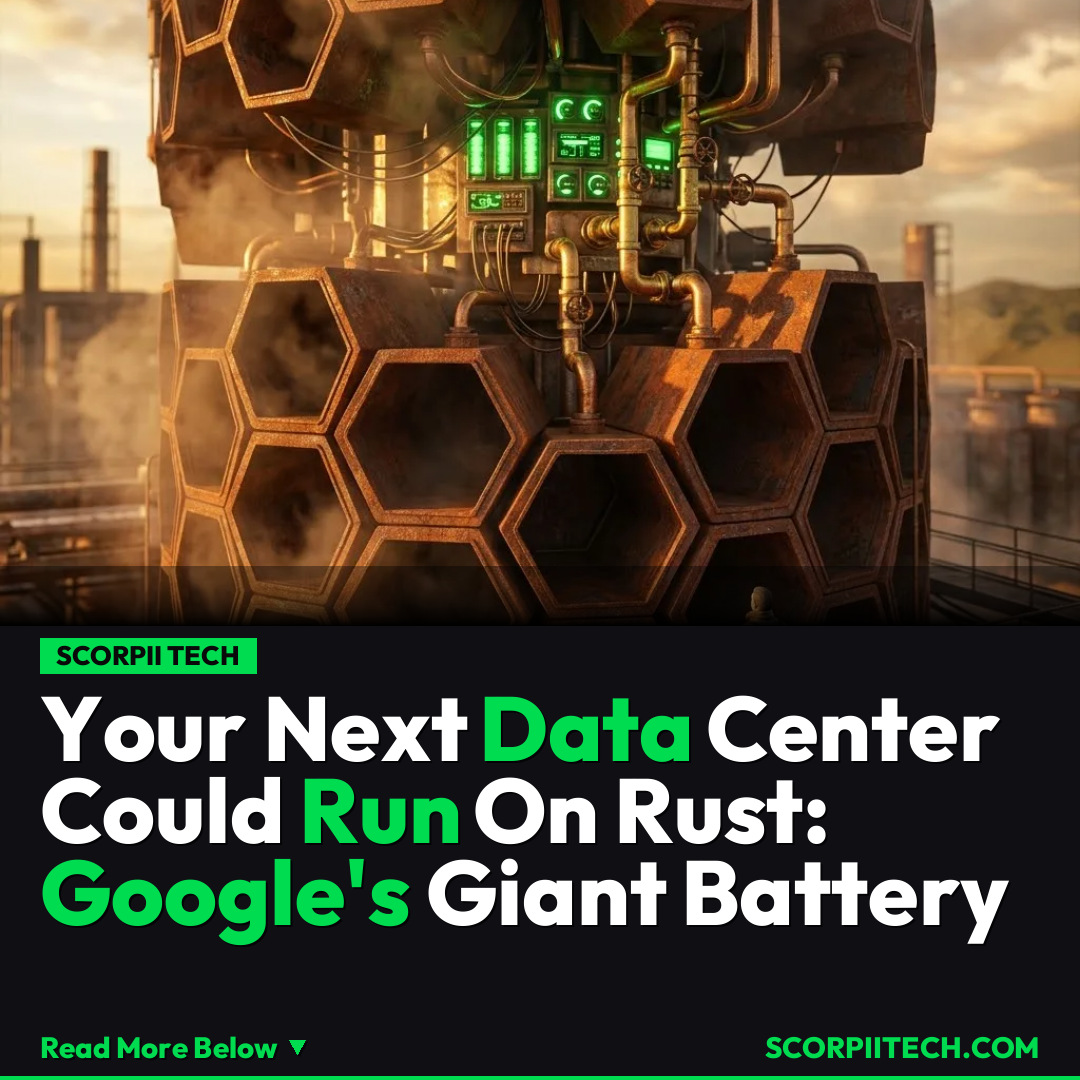
Your Next Data Center Could Run On Rust: Google's Giant Battery
Discover how Google, Form Energy, and Xcel Energy are building the world's largest iron-air battery in Minnesota to power data centers. Learn what this rust-based technology means for your future energy needs.
Editorial Note
Reviewed and analysis by ScoRpii Tech Editorial Team.
In this article
The world of power is changing quite a bit right now, with big tech companies going in hard on nuclear energy and even looking for other ways to power the data centers that they are building. You might think of massive server farms needing equally massive, traditional power sources. But what if your next data center was powered by something as simple as rust, not lithium?
Key Details
You're witnessing a game-changer unfold in Minnesota, where Google, in collaboration with Xcel Energy and Form Energy, is spearheading a monumental shift in energy storage. They're constructing what’s been dubbed "the largest battery project by gigawatt-hour energy capacity announced to date in the world." This isn't just a big battery; it's a massive leap in how we think about grid-scale power.
Deploy your next full-stack application effortlessly. Get $200 in free DigitalOcean credits to host your Laravel or Python APIs.
At the heart of this groundbreaking initiative is the Form Energy iron-air battery. Forget the lithium-ion cells you're familiar with; this technology is fundamentally different. It works by using oxygen to "breathe" as it produces electricity, literally harnessing the power of rust. Imagine a battery that can deliver 300 megawatts of electricity with an incredible operational run time of up to 100 hours. This isn't about short bursts of power; it's about sustained, long-duration energy delivery, a critical factor for reliably powering immense data centers and stabilizing renewable energy grids.
This massive installation will serve a Google data center, showcasing a practical application for an innovative solution to energy demands. The partnership between Google's voracious energy needs, Form Energy's cutting-edge battery technology, and Xcel Energy's utility expertise in Minnesota creates a powerful trifecta aimed at revolutionizing how we store and distribute electricity. You're looking at a future where energy storage isn't just about efficiency, but about fundamental material science innovation.
Why This Matters
Why should you pay attention to a rust-powered battery in Minnesota? Because this project signals a profound shift in the energy landscape that will directly impact your future. For years, the reliance on lithium for large-scale energy storage has presented challenges, from supply chain vulnerabilities to environmental concerns associated with mining. An iron-air battery, using abundant and inexpensive materials like iron (which rusts!) and oxygen, offers a compelling alternative. This means less geopolitical risk for critical energy components and a potentially greener, more sustainable path to powering our increasingly data-driven world.
Think about the implications for your own energy consumption. As more and more of your digital life moves to cloud-based services and data centers, the demand for reliable, clean power skyrockets. This Form Energy iron-air battery provides the kind of long-duration storage that perfectly complements intermittent renewable sources like solar and wind. It means cleaner energy grids that are less prone to fluctuations, potentially leading to more stable utility bills and a more resilient infrastructure for everyone. You're seeing the foundational work for a grid that can truly move beyond fossil fuels, not just in theory, but with robust, real-world solutions.
The Bottom Line
So, what does Google's rust-powered battery mean for you today, March 29, 2026? It means innovation in clean energy is accelerating, and solutions once thought futuristic are becoming tangible realities. Keep an eye on companies like Form Energy and projects like this one in Minnesota, as they're not just powering data centers; they're paving the way for a more sustainable and reliable energy future for your home, your work, and your planet. Embrace these shifts, because the energy powering your digital world is changing for the better, driven by ingenuity and a commitment to new possibilities.
Originally reported by
BGRWhat did you think?



Stay Updated
Get the latest tech news delivered to your reader.