Google Invests $1 Billion in Form Energy's 100-Hour Battery Technology
Google just invested $1 billion in Form Energy's long-duration iron-air battery, promising to power data centers with renewables for days. Discover what this means for you.
Editorial Note
Reviewed and analysis by ScoRpii Tech Editorial Team.
In this article
Iron-Air Batteries: A Game Changer for Renewable Energy
You rely on electricity for everything, and increasingly, that electricity *should* come from renewable sources. But wind and solar power aren't always available. Google is tackling this problem head-on with a massive $1 billion investment in Form Energy, a company pioneering iron-air battery technology. This isn’t just about powering Google’s data centers; it’s about building a more reliable, sustainable energy future for everyone.
Form Energy’s batteries aren’t like the lithium-ion batteries in your phone or electric car. They’re designed for *long-duration* storage – discharging 300 megawatts of electricity for an incredible 100 hours. That’s a huge leap beyond current battery capabilities, and it’s key to unlocking the full potential of renewable energy.
Deploy your next full-stack application effortlessly. Get $200 in free DigitalOcean credits to host your Docker containers, Laravel, or Python APIs.
According to Mateo Jaramillo, CEO of Form Energy, the technology works on a surprisingly simple principle: “It works by breathing, in a sense — oxygen pumped into the cells rusts iron, which releases electrons.” This “rusting” process is reversible, allowing the battery to store and release energy efficiently over days, not just hours.
Sizing Your Single-Box VPS Architecture?
Calculate exact vCPU cores, RAM GB, NVMe storage, and estimated monthly budget for your traffic before migrating away from high-cost cluster providers.
Form Energy is currently developing its technology in West Virginia, aiming to revitalize the region while building the foundation for a nationwide grid-scale energy storage solution. The company has secured commitments for multiple projects, including one with Minnesota-based utility, Great River Energy.
Powering Google's Data Centers and Beyond
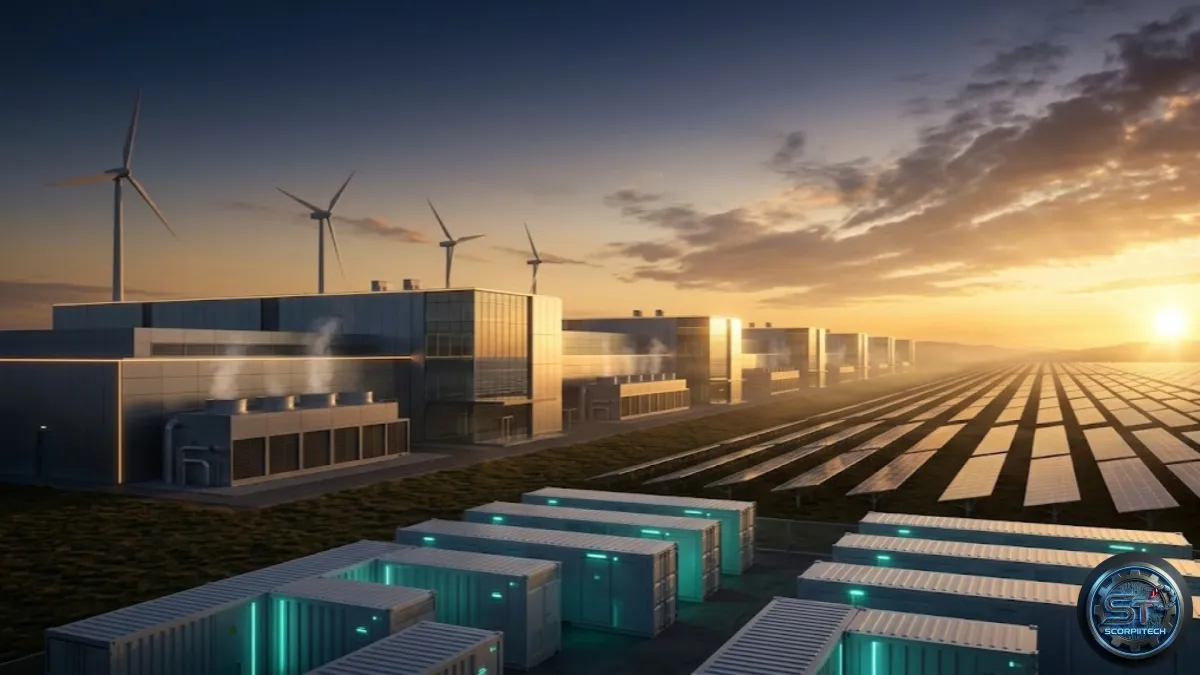
Your Google experience – from searches to streaming to cloud services – demands a constant and enormous power supply. Google’s new data center in Minnesota will draw on 1.4 gigawatts of wind power and 200 megawatts of solar power. But relying solely on these sources isn’t enough.
That’s where Form Energy comes in. Integrating a 100-hour iron-air battery system ensures a continuous power supply, even when the wind isn’t blowing and the sun isn’t shining. This is a critical step towards Google’s commitment to operating on 24/7 carbon-free energy by 2030.
PitchBook data confirms the scale of Google’s investment, highlighting the company’s confidence in Form Energy’s potential. This isn’t just a philanthropic endeavor; it’s a strategic move to secure a reliable, sustainable energy source for its growing global infrastructure.
What This Means For You: A More Reliable, Greener Grid
So, how does this impact your daily life? The widespread adoption of long-duration energy storage like iron-air batteries means a more stable and resilient power grid. You’ll experience fewer outages and a more consistent energy supply, even as we transition to a greater reliance on renewable sources.
More renewables on the grid translate to lower carbon emissions, contributing to a healthier planet. While you might not directly see the batteries themselves, you’ll benefit from the cleaner energy powering your devices and communities. This technology also has the potential to lower energy costs in the long run, as renewable energy sources become more competitive.
The success of Form Energy could spur further innovation in long-duration storage, leading to even more efficient and affordable solutions. Keep an eye on developments in flow batteries, compressed air energy storage, and other emerging technologies.
The Bottom Line
Google’s investment in Form Energy is a bold move that signals a turning point in the energy storage landscape. Iron-air batteries offer a promising solution to the intermittency challenge of renewable energy, paving the way for a cleaner, more reliable, and sustainable future. You can expect to see more companies and governments investing in similar technologies as we strive to build a truly always-on renewable energy grid.
Originally reported by
Tech CrunchWhat did you think?
Stay Updated
Get the latest tech news delivered to your reader.