Your New Mac: Six Keys to Switching from Windows
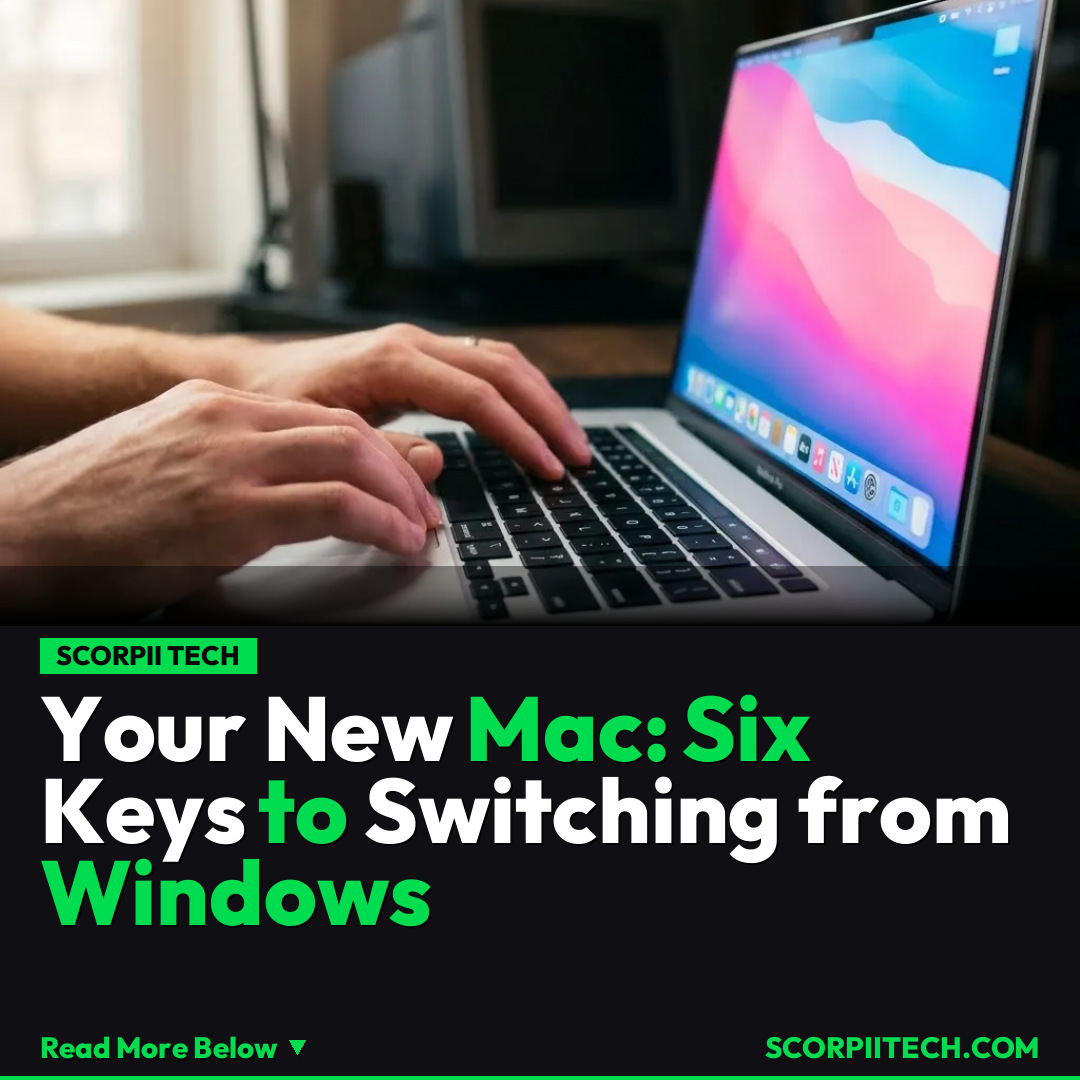
Just switched to a Mac? You're not alone! Discover the key differences between macOS and Windows, from keyboard shortcuts to file management, and make your transition seamless.
Editorial Note
Reviewed and analysis by ScoRpii Tech Editorial Team.
In this article
Apple CEO Tim Cook just dropped a bombshell: the company saw its "best launch week ever" for first-time Mac buyers. If you're among those responsible for this record, congratulations! You've stepped into a vibrant new ecosystem. Naturally, you might be wondering about the journey ahead from your familiar Windows environment to macOS.
Key Details
Apple CEO Tim Cook recently celebrated a remarkable achievement: 'its best launch week ever' for customers picking up a Mac for the very first time. This surge highlights a growing interest in the Apple ecosystem, with many of you making the jump from a Windows PC. While core computing principles remain, macOS offers a distinct experience. You might be curious how it diverges from the Windows OS you're accustomed to.
Deploy your next full-stack application effortlessly. Get $200 in free DigitalOcean credits to host your Laravel or Python APIs.
One of the first things you'll notice are keyboard shortcuts. Your muscle memory for Ctrl+C (copy) and Ctrl+V (paste) needs adjustment. On a Mac, the 'Control' key is largely replaced by 'Command' (Cmd). You'll use Cmd+C to copy and Cmd+V to paste. Closing windows, typically Alt+F4 on Windows, becomes Cmd+W. These changes are foundational.
Other frequent shortcuts also shift. Switching between open applications (Alt+Tab on Windows) is Cmd+Tab on macOS. To launch apps or search instantly, you'll use Cmd+Space for Spotlight Search. Your Mac's equivalent to 'This PC' is the 'Finder.' It's your hub for navigating documents, applications, and files, offering a visually distinct but functionally similar way to organize your digital life.
Why This Matters
This record-breaking influx of first-time Mac users signals a noteworthy shift in personal computing. For years, Windows, driven by Microsoft, dominated the desktop. As Apple integrates its hardware and software ecosystems, more people find the allure of a unified experience compelling. If you already own an iPhone or iPad, your new Mac will feel incredibly synergistic, making tasks like sharing files and messages between devices remarkably seamless. This integrated approach is a key differentiator.
Concerns about software compatibility are often a major hurdle. Rest assured, many applications you rely on daily—from creative suites like Adobe products to productivity tools and entertainment platforms like Spotify—are readily available on macOS. Even cloud services from Google integrate smoothly. While you might encounter subtle interface differences compared to Windows, the core experience remains intact. This broad software support ensures your transition adapts you to a new environment without sacrificing essential digital tools.
The Bottom Line
If you're among the many celebrating your 'best launch week ever' with a new Mac, your journey from Windows to macOS is less about relearning everything and more about embracing new habits. Give yourself time to adjust to Cmd keys, explore the Finder, and discover the unique charms of macOS. You’ll find that while there are differences, the core functionalities are intuitive. Embrace the change, and your new Mac will soon feel as natural and powerful as your old Windows machine.
Originally reported by
LifehackerWhat did you think?



Stay Updated
Get the latest tech news delivered to your reader.