Here's What 'Autonomous' Really Means for Your Next Robotaxi Ride
Discover the surprising truth behind autonomous vehicles: your next robotaxi might be remotely driven by a human. Learn what this means for your trust in AVs.
Editorial Note
Reviewed and analysis by ScoRpii Tech Editorial Team.
In this article
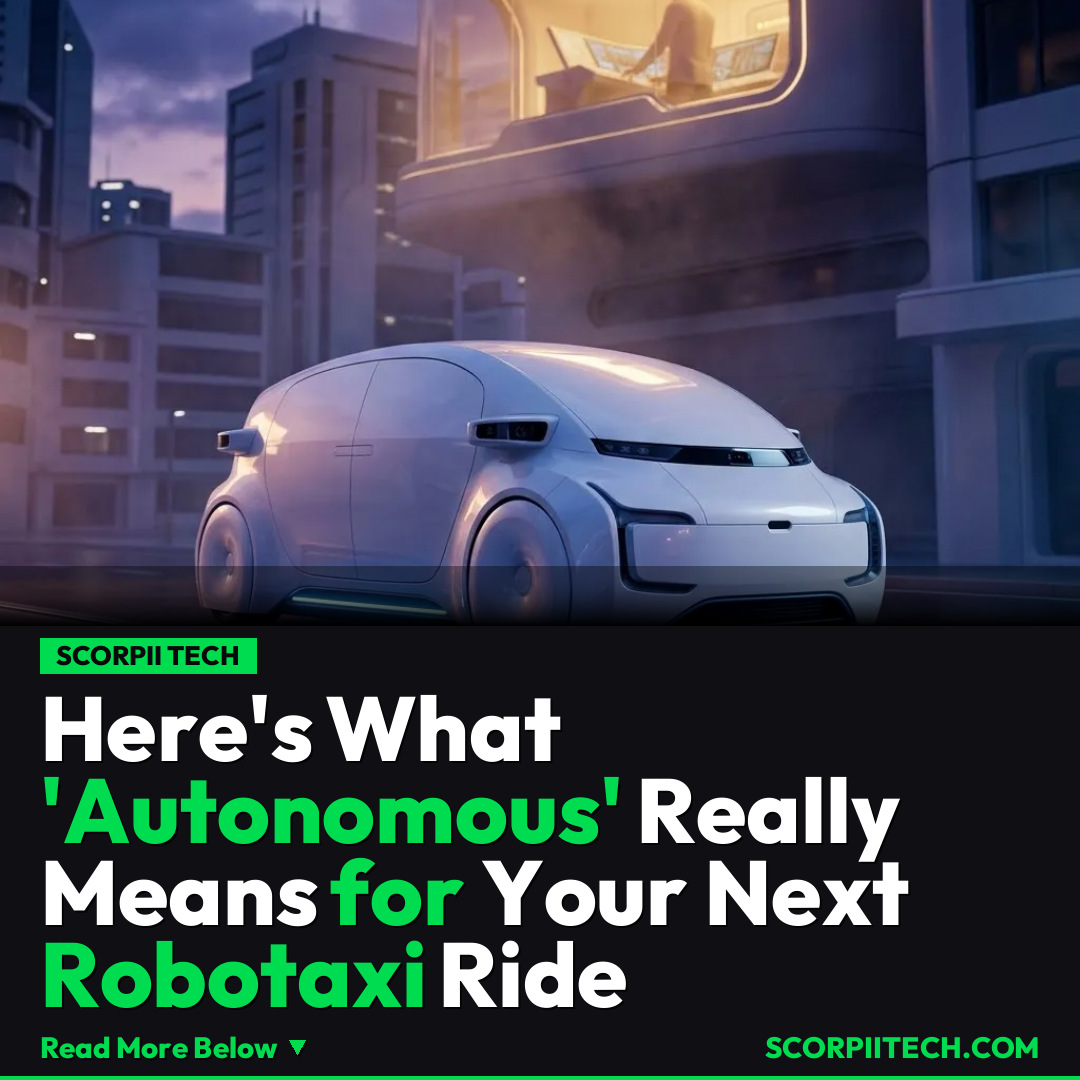
You might picture the future of autonomous vehicles as entirely driverless, a sleek machine navigating the roads without any human touch. But what if we told you that your next robotaxi ride might have a human discreetly guiding it from miles away? A series of letters sent by autonomous-vehicle (AV) developers to Democratic US senator Ed Markey of Massachusetts sheds the most light yet on the human side of robot vehicle operations, revealing a crucial detail about how 'self-driving' cars truly operate.
Key Details
The biggest revelation comes from Tesla itself. In correspondence with Senator Markey, Karen Steakley, Tesla's director of public policy and business development, admitted that remote assistants can temporarily take control of a Tesla Robotaxi. This intervention can happen at speeds up to or less than 2 mph for temporary control, and surprisingly, these remote operators can remotely drive the vehicle at speeds up to 10 mph. So, while you're envisioning pure AI, a human could be subtly steering your ride through a complex intersection or tight parking spot from an operations center, potentially in locations like Austin, Texas, Palo Alto, California, or even the Philippines.
Deploy your next full-stack application effortlessly. Get $200 in free DigitalOcean credits to host your Laravel or Python APIs.
This isn't just a Tesla phenomenon. The letters uncovered that other prominent AV developers, including Amazon (through Zoox), Uber, Nuro, Waymo (owned by Google), and Aurora, also employ various forms of remote human assistance in their operations. For instance, Ryan McNamara, Waymo's vice president and global head of operations, acknowledged the necessity of such interventions, though the precise frequency remains largely undisclosed across the industry. This lack of transparency around how often humans intervene is precisely where the controversy lies, leaving you to wonder about the true 'autonomy' of these vehicles.
Chris Urmson, CEO of Aurora, eloquently summarized a core challenge in the letters, stating, "Your ability to drive a car without being in the car is only as stable as the internet connection that connects you to it." This quote, highlighted by WIRED, underscores a critical technical detail: the reliability of remote assistance is directly tied to robust connectivity. Furthermore, Missy Cummings, a professor of engineering at George Mason University, has been a vocal critic, often questioning the industry's reluctance to provide granular data on these human interventions.
Why This Matters
For you, the potential passenger or a concerned citizen, this information is vital. It fundamentally reshapes your understanding of what 'autonomous' truly means today. Instead of a fully independent robot, you're looking at a system that often relies on a delicate dance between advanced AI and human oversight. This hybrid approach impacts everything from safety perceptions to regulatory frameworks. If you're trusting an autonomous vehicle with your life, you deserve to know the extent to which a human operator is involved, especially when critical decisions are made at low speeds or in complex environments.
The controversy around the refusal to disclose the frequency of these interventions raises significant questions about accountability and trust. Without this data, it's hard for you to objectively assess the safety and maturity of these systems. This isn't just about a company secret; it’s about establishing public confidence in a technology poised to revolutionize transportation. As these vehicles become more common, your comfort level, and ultimately, adoption, will hinge on transparent operations, not just promises of future autonomy.
The Bottom Line
So, what should you take away from this? When you consider riding in a Tesla Robotaxi or any other autonomous vehicle, understand that 'self-driving' often includes a critical human element operating remotely. This doesn't necessarily mean AVs are unsafe, but it does mean you should approach their capabilities with a more informed perspective. Moving forward, demand greater transparency from AV developers about the frequency and nature of remote assistance. Your trust is paramount, and true autonomy, it turns out, is a more collaborative effort than you might have imagined.
Originally reported by
WiredWhat did you think?


Stay Updated
Get the latest tech news delivered to your reader.