Here's What Smartwatch GPS Really Means For Your Data
Uncover the real truth behind your smartwatch's GPS. Learn how Apple, Google, and Fitbit use your location data and if you truly need it.
Editorial Note
Reviewed and analysis by ScoRpii Tech Editorial Team.
In this article
You strap on your smartwatch every day, expecting convenience. It’s a marvel of miniaturization, packing built-in GPS for location tracking and map-style apps. But pause: have you ever wondered if all that advanced tracking is truly essential, or if there's more to your smartwatch's always-on location awareness than meets the eye?
Key Details
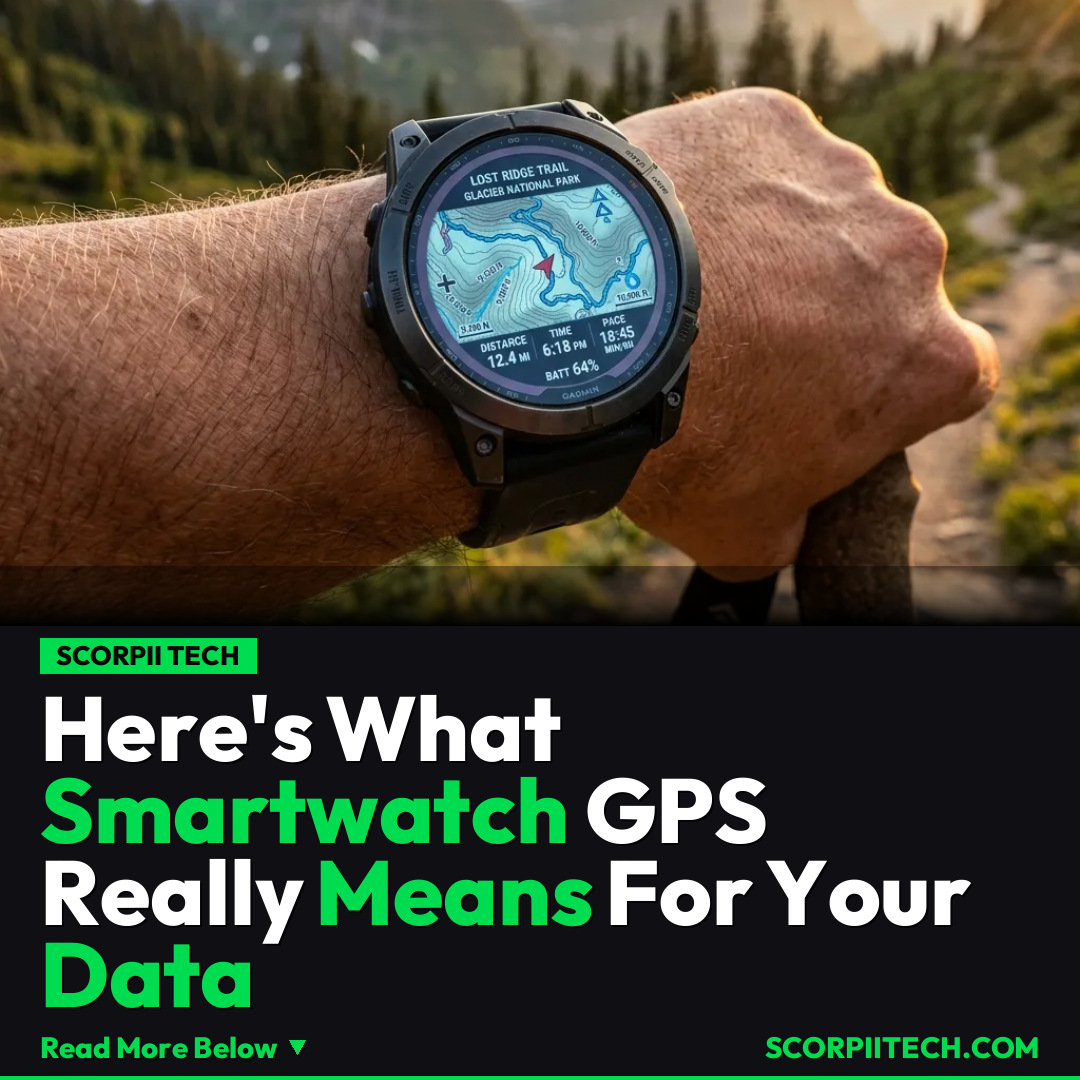
Your smartwatch acts like a simplified smartphone. Devices from Apple (like the Series 11), Google, and Fitbit all come with built-in GPS. This feature is invaluable when you’re navigating the remote wilderness, far from any cellular signal. Its ability to provide accurate location tracking and map-style apps shines, offering peace of mind and direction.
Deploy your next full-stack application effortlessly. Get $200 in free DigitalOcean credits to host your Laravel or Python APIs.
However, for most day-to-day activities, you might not utilize this advanced tracking. Many smartwatch functions, including basic fitness tracking, often rely more on Bluetooth connectivity to your smartphone. Consistently using GPS significantly drains your device's battery life faster than Bluetooth. For urban or suburban settings, GPS might be an energy-hungry feature you rarely fully utilize.
Beyond battery, a significant concern revolves around data privacy. Smartwatch providers, including Google and Fitbit, collect extensive personal health data, often including precise location details from GPS. A growing controversy suggests these providers may be selling this highly personal information. This raises critical questions about who truly owns your movement patterns and health metrics.
Why This Matters
This isn't merely a technical detail; it impacts your digital autonomy. Your smartwatch, designed for convenience, also creates a granular digital footprint of your life – every run, commute, and visit. If companies are selling personal health data, including location details, intimate insights into your daily routine could be monetized without your full awareness. This extends beyond targeted ads; it’s a deep, often unseen, intrusion into your personal life.
Understanding the distinction between GPS and Bluetooth connectivity empowers you to make informed choices. You have the power to decide when GPS tracking truly outweighs the cost in battery drain and potential privacy exposure. Reviewing your device's settings and selectively enabling GPS for truly necessary activities, like an off-grid hike, rather than constantly, can significantly safeguard your personal data and extend your device's charge. It’s about actively managing your digital life.
The Bottom Line
Ultimately, whether your smartwatch truly needs GPS comes down to your lifestyle and priorities. While it's invaluable for adventurers in the remote wilderness, for many daily users, convenience might not outweigh privacy implications or the hit to your battery life. Take control: review your smartwatch's settings, understand when GPS is active versus Bluetooth, and make an informed choice about the data you share. Your digital footprint is yours to manage.
Originally reported by
BGRWhat did you think?


Stay Updated
Get the latest tech news delivered to your reader.