France Just Ditched Windows: Here's What It Means For Your Digital Future
France is making a monumental shift from Windows to Linux for digital sovereignty. Discover why this move matters for global tech and your own reliance on U.S. software.
Editorial Note
Reviewed and analysis by ScoRpii Tech Editorial Team.
In this article
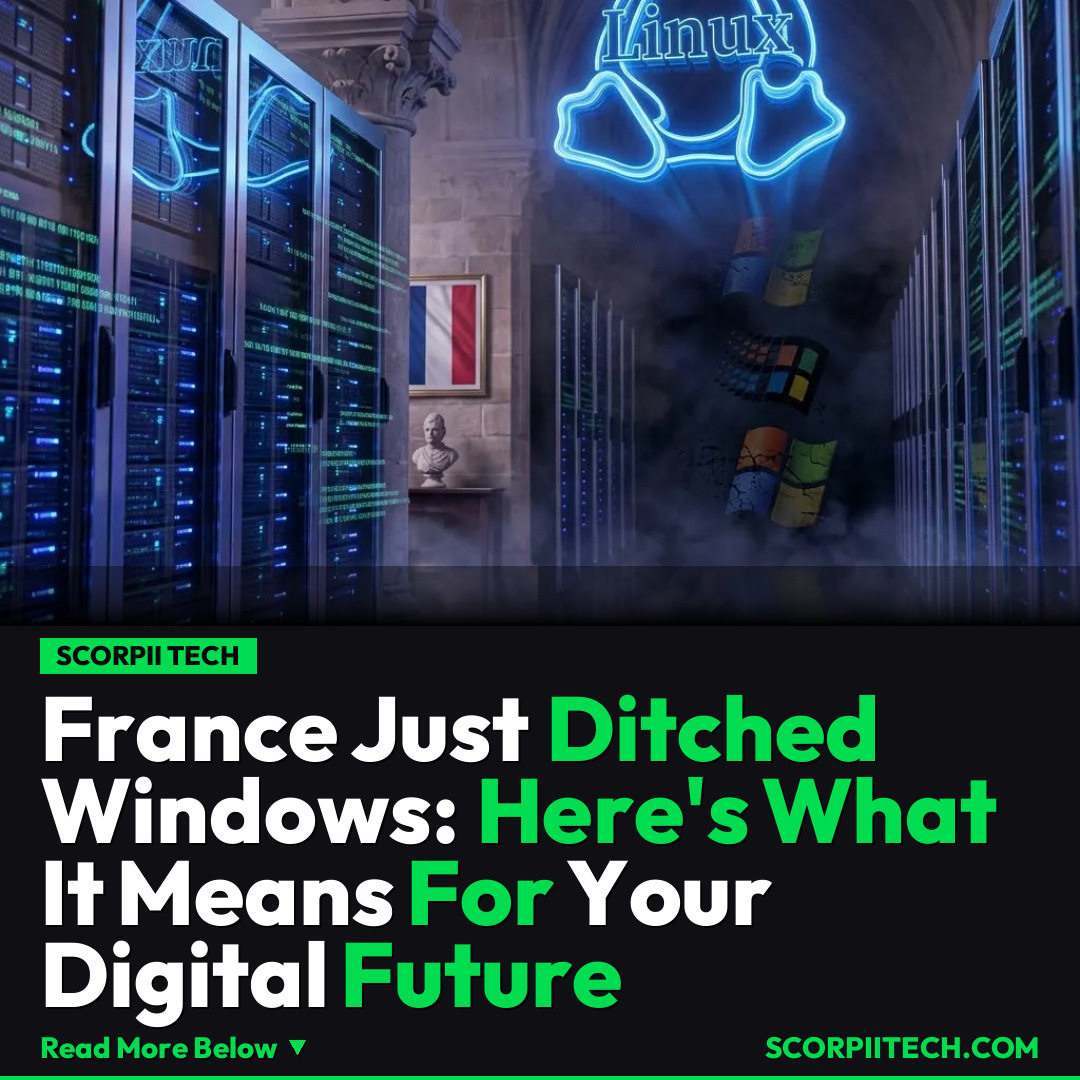
Imagine your entire country deciding to ditch the software giant you've probably used your entire professional life. That's precisely what the French government is doing, embarking on a monumental shift away from Microsoft Windows to Linux. This isn't merely a technical upgrade; it's a profound declaration of digital independence, aiming to "regain control of our digital destiny" and reshape its technological future.
Key Details
You might be wondering what's behind such a dramatic move. At its core, the French government, through the voice of French minister David Amiel, has made it clear: the objective is to significantly reduce its reliance on U.S. technology and, in his words, to "regain control of our digital destiny." This isn't just about a preference for open-source; it's a strategic national decision with deep geopolitical roots. Starting in January 2025, you'll see a systematic transition across French government systems, bidding farewell to Microsoft Windows in favor of the Linux operating system.
Deploy your next full-stack application effortlessly. Get $200 in free DigitalOcean credits to host your Laravel or Python APIs.
This isn't an isolated incident but a significant part of a larger narrative of global tech tensions and robust European digital sovereignty efforts. For years, European nations have been increasingly wary of the sway U.S. technology holds, especially given past geopolitical uncertainties. The move by France is a direct response to a perceived need for greater autonomy.
Specifically, the facts indicate that growing instability and unpredictability on the part of the Trump administration played a critical role in catalyzing these European initiatives. Concerns over potential "weaponized sanctions against his critics" and the broader implications for entities like the European Parliament, European Commission, and even the International Criminal Court, underscored the vulnerabilities of relying heavily on U.S. companies and their technological infrastructure. For the French government, this shift to Linux represents a proactive step to insulate itself from such external pressures and safeguard its national interests.
Why This Matters
So, why should you care about France's operating system choices? This decision by the French government sends a powerful signal far beyond its borders. It underlines a growing global trend where nations are actively seeking to reduce their dependence on single, dominant technology providers, especially those with strong ties to specific geopolitical powers. For you, this pursuit of digital sovereignty by a major European player could mean a ripple effect across the tech industry. It validates the strategic importance of open-source alternatives like Linux, potentially driving further innovation and adoption in areas that directly impact your digital tools and services.
Think about the implications for data security and national resilience. If a government feels its digital infrastructure is vulnerable to external political pressures or weaponized sanctions, it prompts a re-evaluation of fundamental dependencies. This shift could push more countries, and even large organizations, to scrutinize their own tech stacks and consider diversified, more independent solutions. Ultimately, it highlights that the software you use isn't just about functionality; it's deeply intertwined with geopolitical strategy, national security, and the control over critical information infrastructure.
The Bottom Line
What does this mean for your daily digital life? While you might not be swapping your operating system tomorrow, France's bold move underscores the ever-increasing importance of understanding where your technology comes from and who controls it. Stay informed about these shifts in the global tech landscape, as they often foreshadow broader changes in data privacy, security standards, and the types of services available to you. This is a clear reminder that in our interconnected world, digital choices made by governments can, and often do, echo through your own personal and professional digital destiny.
Originally reported by
TechCrunchWhat did you think?



Stay Updated
Get the latest tech news delivered to your reader.