Why Your EV Fire Might Need a Swimming Pool's Worth of Water
Electric car fires are different. Learn why putting out an EV battery fire requires an astonishing amount of water and what that means for your safety and emergency services.
Editorial Note
Reviewed and analysis by ScoRpii Tech Editorial Team.
In this article
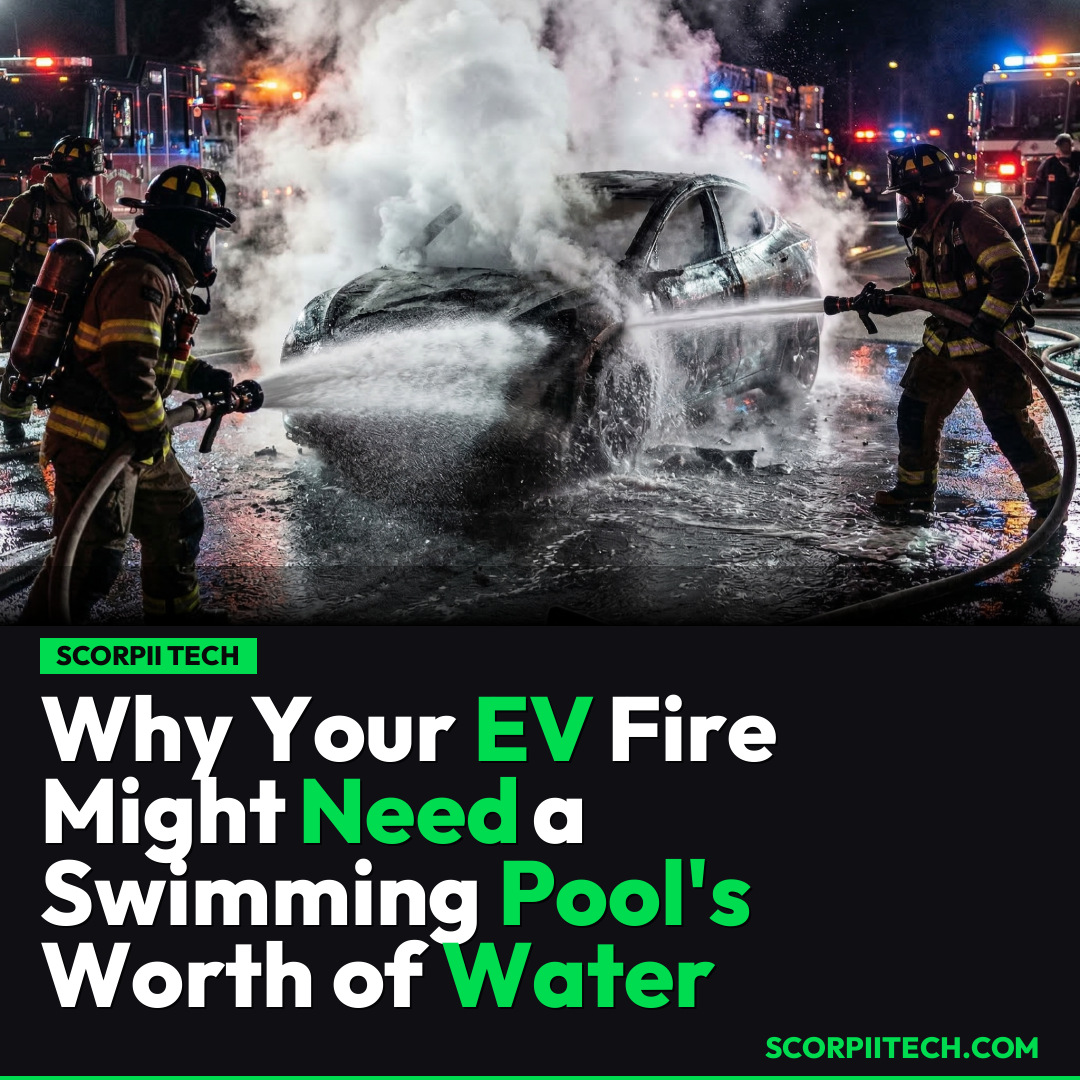
You might love your electric vehicle for its quiet ride and zero emissions, but have you ever considered what happens if its battery overheats? The reality is, even the best EV battery can malfunction and experience a thermal runaway, kicking off a fire scenario that’s vastly different from your traditional gas-powered car. When an EV catches fire, you’re looking at a whole new level of firefighting challenge.
Key Details
When an electric car like a Tesla catches fire, you're not dealing with just a small blaze. You’re facing an inferno where lithium batteries can reach temperatures up to 1,200 degrees Celsius (2,192 degrees Fahrenheit). This extreme heat is a primary reason why these fires demand an astonishing amount of water to extinguish. Think about it: a standard car fire might be doused relatively quickly, but an EV fire often requires significant amounts of water and a much longer time for containment. This isn't just a U.S. phenomenon; authorities in Australia and Sweden, among others, are grappling with these unique challenges.
Need fast, secure, and affordable hosting for your next website or PHP application? We recommend Hostinger Managed Hosting. Get premium speeds, a free domain, and 24/7 expert support.
Adding to the complexity, many electric car battery packs are designed to be water-resistant. While great for driving in the rain, this feature can complicate firefighting efforts, making it harder for water to penetrate and cool the burning cells effectively. Despite this, experts like those from the International Association of Fire & Rescue Services (CTIF) and EV FireSafe emphasize that "Exposing an electric component like the electric car battery to water during a fire isn't a risk." In fact, using copious amounts of water is often the most effective way to cool the battery and prevent re-ignition. However, this high water demand and the danger associated with fire blankets for EV fires present a significant challenge for emergency services, as highlighted by organizations like the National Fire Protection Association (NFPA) and reports from Edmunds.
Why This Matters
So, why should this matter to you? As more electric vehicles hit the roads, understanding these nuances becomes crucial for your safety and for the readiness of your local emergency responders. You might assume firefighters have all the tools for any car fire, but the unique nature of EV battery fires — from the extreme temperatures to the water resistance of battery packs and the sheer volume of water needed — means they require specialized training and equipment. Organizations like Sweden's Authority for Social Protection and Preparedness are actively working on protocols, but the widespread implications for infrastructure and emergency planning are immense. You're not just buying a car; you're investing in a new era of transportation with distinct safety considerations that impact everyone.
The Bottom Line
What’s your takeaway here? While electric vehicles offer many benefits, it’s vital to recognize the unique challenges their battery fires pose. If you own an EV or are considering purchasing one, be aware that emergency services in your area are adapting to these new realities, potentially facing longer containment times and vastly increased water usage. For you, this underscores the importance of not just knowing how to safely operate your EV, but also appreciating the evolving demands on our emergency personnel. Always prioritize safety, and understand that while EV fires are rare, when they occur, they are a significant undertaking for those who protect us.
Originally reported by
BGRWhat did you think?



Stay Updated
Get the latest tech news delivered to your reader.