Your EV Battery Just Died: Here's What Really Happens
Worried about your electric car running out of charge? Find out exactly what happens when your EV battery depletes and how to handle being stranded on the side of the road.
Editorial Note
Reviewed and analysis by ScoRpii Tech Editorial Team.
In this article
If you've ever had the misfortune of being in a car that runs out of gas, you know it's a fairly distinctive experience, especially dealing with the lack of power steering after the engine has sputtered out. But what if we told you running an Electric Vehicle (EV) battery completely dry is a different, and perhaps even more challenging, experience? You might think it's an instant halt, but your EV has a few tricks up its sleeve before it truly gives up the ghost.
Key Details
You see, modern Electric Vehicles are engineered with sophisticated systems designed to prevent you from being suddenly marooned. Your EV battery doesn't just cut out without warning. Instead, as your EV battery approaches critical levels – typically when you have around 15-20% remaining capacity – your vehicle initiates a series of power-saving modes. You might hear this referred to as 'turtle mode' or a similar manufacturer-specific designation. This isn't a bug; it's a feature, designed to give you a fighting chance.
Need fast, secure, and affordable hosting for your next website or PHP application? We recommend Hostinger Managed Hosting. Get premium speeds, a free domain, and 24/7 expert support.
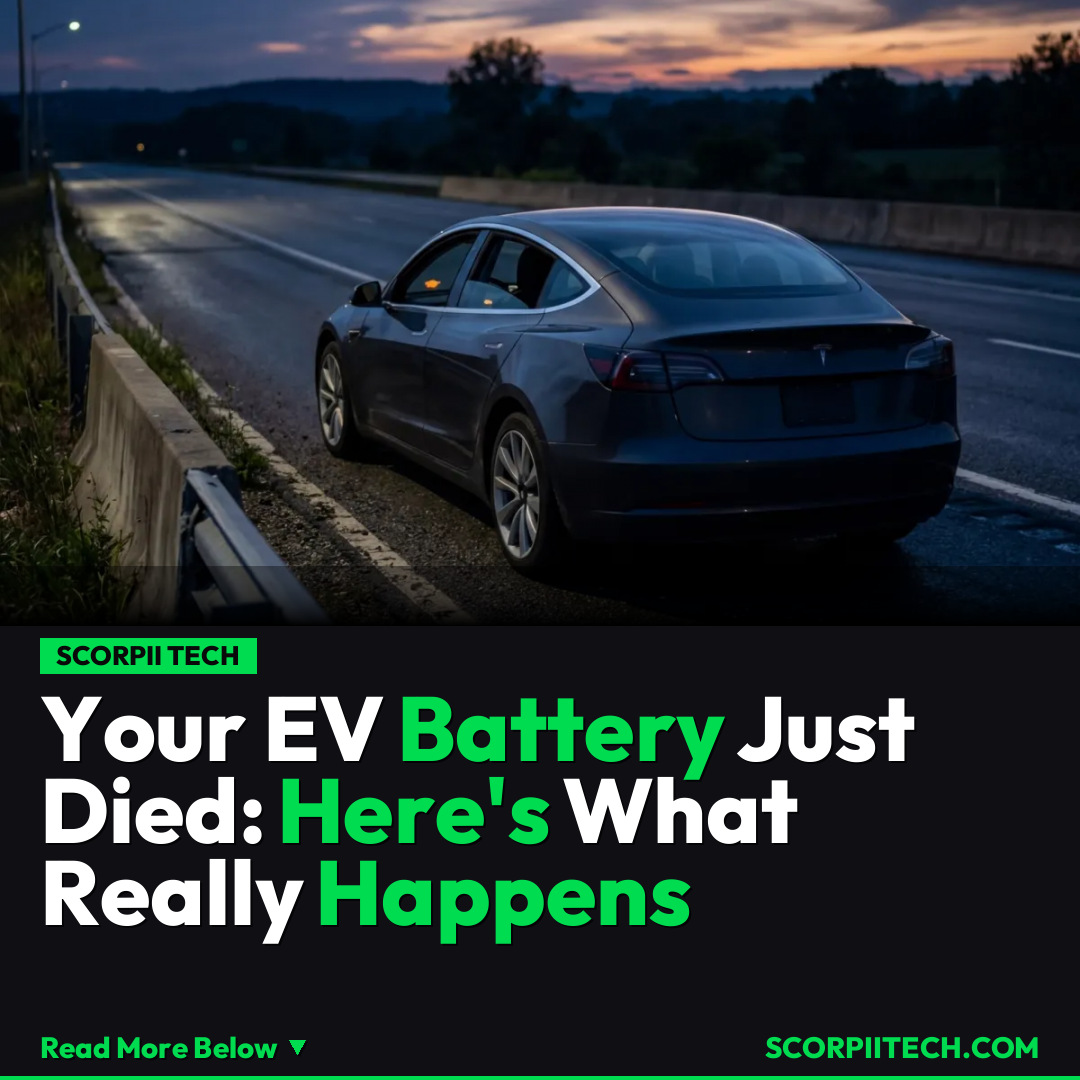
During these power-saving modes, your EV will drastically reduce its power output, limit your top speed, and restrict non-essential functions to conserve every last electron. This is your vehicle's emphatic, blinking-light warning: find a charging station, and find one fast. It's a grace period, offering reduced performance but still enough juice to (hopefully) limp you to safety. However, if you push past these warnings, the inevitable will occur: your EV battery will deplete fully, and you will eventually find yourself stranded on the side of the road.
This is where the true challenge emerges. Unlike a gasoline car where a kind stranger or a quick walk to a gas station with a jerry can can solve your problem, being stranded on the side of the road in an EV is generally more challenging. You can't simply pour electricity into it from a portable container, and the options for on-the-spot charging are still quite limited. This situation requires a different kind of preparedness.
Why This Matters
For you, the EV owner, understanding this process isn't just about technical trivia; it's about peace of mind and practical readiness. The concept of 'range anxiety' is a very real concern for many, and knowing how your vehicle behaves as its battery depletes can significantly reduce stress. It emphasizes the importance of diligent charging habits and route planning, especially on longer journeys where charging infrastructure might be sparse.
Furthermore, the 'more challenging' aspect of being stranded highlights crucial differences in roadside assistance. While many services are adapting, towing an EV often requires a flatbed truck to prevent damage to the drivetrain, unlike a simple tow bar for a conventional car. This means longer wait times or specialized services might be necessary. Being aware of these nuances allows you to choose appropriate roadside assistance plans and understand the support available to you on March 31, 2026, as EV adoption continues to grow rapidly.
The Bottom Line
The good news is that your Electric Vehicle won't just suddenly die in the middle of traffic. It's designed to give you plenty of warning and even a 'limp home' mode to try and get you to a charger. However, you must respect those warnings. Proactive monitoring of your battery level, strategic planning of your routes with charging stations in mind, and familiarizing yourself with EV-specific roadside assistance options are your best defenses against the unique challenge of electric car battery depletion. Don't push your luck; keep an eye on that charge!
Originally reported by
BGRWhat did you think?


Stay Updated
Get the latest tech news delivered to your reader.