Here's Why Your Digital History Is Now At Risk
Discover how major news outlets are blocking the Internet Archive's Wayback Machine, threatening your access to critical digital history and transparency.
Editorial Note
Reviewed and analysis by ScoRpii Tech Editorial Team.
In this article
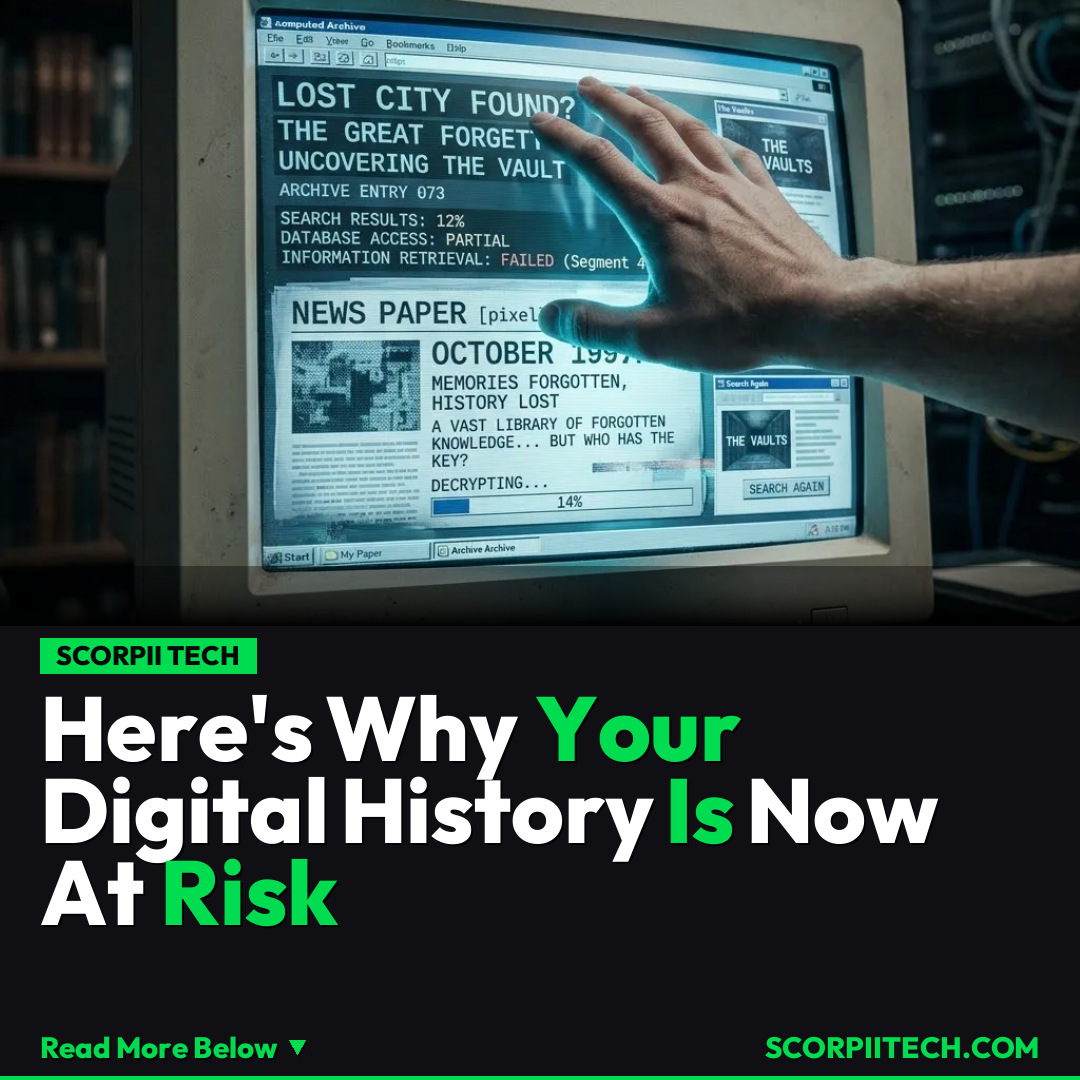
Imagine trying to verify a crucial piece of information, only to find the historical record has vanished. This isn't a dystopian fantasy; it's a growing reality. Major news outlets are actively blocking the Internet Archive's essential Wayback Machine from preserving their stories, jeopardizing our shared digital history and your ability to access crucial information. This month, USA Today published an excellent report, proving the vital role of these archives.
Key Details
You might think of the Internet Archive's Wayback Machine as a digital librarian, diligently filing away copies of websites for future reference. It's an indispensable resource, empowering everyone from independent reporters like Kat Tenbarge and Taylor Lorenz to major institutions to conduct thorough research. For instance, USA Today recently utilized the Wayback Machine to uncover how US Immigrations and Customs Enforcement delayed disclosing key information about the impacts of its detainment policies. This kind of investigative journalism, which benefits you directly by holding power accountable, often relies heavily on the preserved snapshots provided by the Archive.
Need fast, secure, and affordable hosting for your next website or PHP application? We recommend Hostinger Managed Hosting. Get premium speeds, a free domain, and 24/7 expert support.
However, many of the very organizations that benefit from this tool are now actively blocking it. Giants like USA Today Co. (parent company of USA Today), The New York Times, and The Guardian, along with platforms like Reddit, are preventing the Wayback Machine from archiving their online content. Mark Graham, the Wayback Machine director, highlighted the irony, stating, "They're able to pull together their story research because the Wayback Machine exists. At the same time, they're blocking access." This creates a concerning paradox: you might read an article that used the Wayback Machine for its research, but then be unable to archive or verify that very article yourself in the future.
The implications are far-reaching. While some argue about copyright or commercial concerns, the core mission of the Internet Archive, supported by organizations like the Electronic Frontier Foundation and Fight for the Future, is to provide enduring access to knowledge. When news outlets, which are primary sources of public information, restrict this access, they risk creating information black holes. This impacts not only future historians but also your ability, right now, to trace evolving narratives, challenge misinformation, and understand the full context of events as they unfold.
Why This Matters
Why should you care if a digital archive can't save every article? Because in an era saturated with information, discerning truth from misinformation is more critical than ever. The Wayback Machine provides an invaluable timestamp and snapshot, allowing you to see exactly what was published, when, and how it might have changed. Without this open access, you lose a vital tool for fact-checking and understanding the historical context of events. Imagine a world where official statements, news reports, or even public figures' past remarks could simply disappear from the internet without a trace – this obstruction accelerates that possibility.
Furthermore, this isn't just about individual articles. It's about the integrity of our collective digital memory. Journalists, researchers, and ordinary citizens like yourself rely on these archives to understand complex issues, track policy changes, and hold institutions accountable. Without the Wayback Machine's comprehensive reach, important records, like those critical to understanding the US Immigrations and Customs Enforcement's policies, could become much harder to access and scrutinize. Your ability to engage in informed civic discourse and participate effectively in a democracy hinges on having access to a reliable, unvarnished historical record.
The Bottom Line
Ultimately, the blocking of the Internet Archive's Wayback Machine by major news outlets is a significant threat to digital preservation and transparent information. While the reasons behind these blocks are complex, the impact on you is clear: a less complete, less verifiable digital history. You should be aware of this trend and understand that not everything published online today will necessarily be accessible tomorrow. Support organizations advocating for open access and digital preservation, and remember the importance of independent archives in safeguarding our collective knowledge. Your future understanding of the world might just depend on it.
Originally reported by
WiredWhat did you think?



Stay Updated
Get the latest tech news delivered to your reader.