Here's What Biometric Surveillance Means For Your Privacy
Your most personal data is being collected like never before. Learn how biometric surveillance, from FBI databases to smart apps, challenges your privacy and autonomy. Stay informed.
Editorial Note
Reviewed and analysis by ScoRpii Tech Editorial Team.
In this article
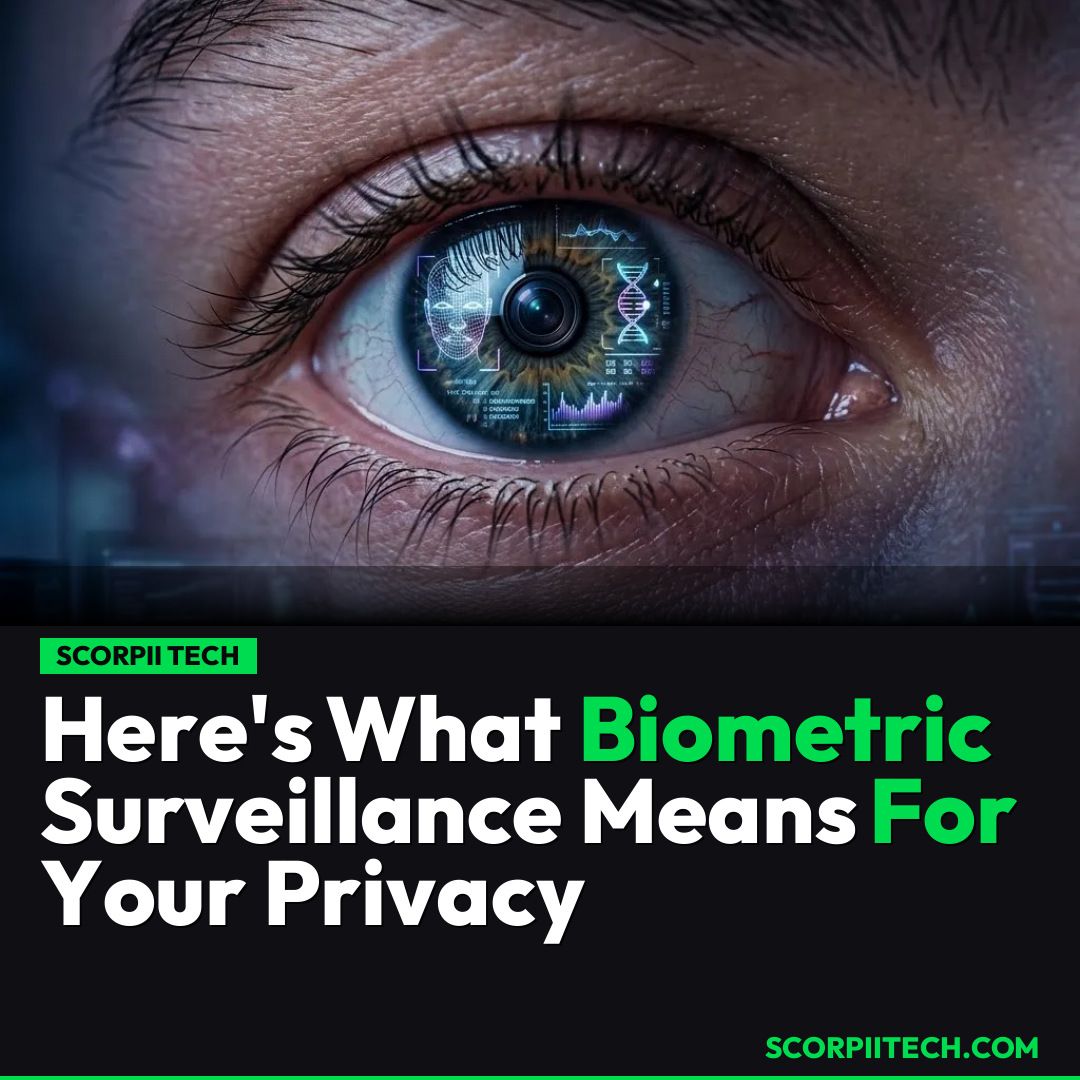
You probably think of your body as your own, a sanctuary of personal autonomy and identity. But what if that deeply held belief is being systematically eroded? From the moment you step outside to the data you voluntarily share with smart devices, your unique biological information is increasingly becoming a public commodity, silently challenging your fundamental right to privacy. The age of biometric surveillance is here, and it's already far more pervasive than you might imagine.
Key Details
The scope of biometric data collection in the United States is vast and growing. You're not just encountering face-recognition systems in public spaces; your biological information is central to massive government databases. For instance, the FBI maintains the Next Generation Information (NGI) biometrics database, a comprehensive system that relies heavily on face-recognition and DNA matching. This NGI database is interconnected with the Combined DNA Index System (CODIS), allowing for extensive cross-referencing of your genetic blueprint, even if you’ve never committed a crime. This pervasive collection isn't limited to law enforcement; the New Jersey Department of Health's Newborn Screening Laboratory, for example, collects DNA from every baby born in the state, holding onto it for years.
Need fast, secure, and affordable hosting for your next website or PHP application? We recommend Hostinger Managed Hosting. Get premium speeds, a free domain, and 24/7 expert support.
Beyond government agencies like the FBI and NYPD – which has utilized surveillance in areas like Manhattan and Orange County, California – your personal information is also being harvested by an array of smart devices and digital health records. Think about the apps on your phone: companies like BetterHelp, Premom, and Flo, as well as tech giants such as Google, collect incredibly intimate data about your health, location, and daily habits. These digital health records, combined with smart device usage, create an incredibly detailed profile of your life, often without your explicit understanding of how it will be used or shared.
Academic and author Andrea Matwyshyn emphasizes that our ability to control our own bodies is core to human autonomy and identity, a principle echoed by actor Woody Harrelson’s profound quote, "Know thyself." The increasing use of biometric surveillance and data collection from smart devices raises significant privacy concerns that reach from individual citizens all the way to the Federal Trade Commission (FTC), which actively investigates data privacy practices. Even iconic locations like the US Capitol have become sites of debate over surveillance technologies, mirroring similar, more advanced systems seen in countries like China, highlighting a global trend that directly impacts your personal freedoms.
Why This Matters
You might think, "I have nothing to hide," but the implications of widespread biometric surveillance extend far beyond criminal justice. When your unique facial features, DNA, and health patterns are meticulously cataloged and cross-referenced, your fundamental control over your own identity diminishes. This data can be used for profiling, targeted advertising, or even denying you services, all without your knowledge or consent. It shifts the power dynamic, making you transparent to institutions while they remain opaque about their data practices. Organizations like the Mozilla Foundation and the Georgetown Law Center for Privacy and Technology are actively researching and advocating against these intrusive systems precisely because they threaten the very fabric of individual liberty and privacy in a democratic society.
Imagine your digital health records from BetterHelp or Flo being combined with your location data from Google and facial scans from a public database. This creates an incredibly detailed and permanent dossier on your life, accessible to various entities. The concern isn't just about what's happening now, but how this data can be used in the future, as technology advances and societal norms evolve. Protecting your biometric data isn't just a technical challenge; it's a social and ethical imperative for preserving your individual autonomy and ensuring that you, not a database, remain the ultimate authority on "thyself."
The Bottom Line
The time to take your digital privacy seriously is now. You must be vigilant about the data you share, from app permissions on your smart devices to understanding how government agencies collect and store your biometric information. Advocate for stronger privacy laws and support organizations working to protect digital rights. Your body is not just a biological entity; it's a source of incredibly valuable and sensitive data. Reclaiming control over that data is crucial for maintaining your autonomy and identity in an increasingly surveilled world. Don't let your own body betray your right to privacy – empower yourself with knowledge and action.
Originally reported by
WiredWhat did you think?


Stay Updated
Get the latest tech news delivered to your reader.