Why Your Phone's GPS Might Not Be Enough
Think your phone is the ultimate navigation tool? You might be surprised. Discover why dedicated handheld GPS devices still outshine your smartphone for critical outdoor adventures and reliable navigation.
Editorial Note
Reviewed and analysis by ScoRpii Tech Editorial Team.
In this article
You likely use your smartphone for almost everything these days, especially navigation. Google Maps on your iPhone or Android certainly gets you from point A to B in the city, managing calls, texts, and a thousand other tasks all in one convenient device. But while they certainly do a lot of those things in one, convenient device, sometimes it's still better to have a standalone option, especially when reliable navigation is absolutely critical for your safety and success.
Key Details
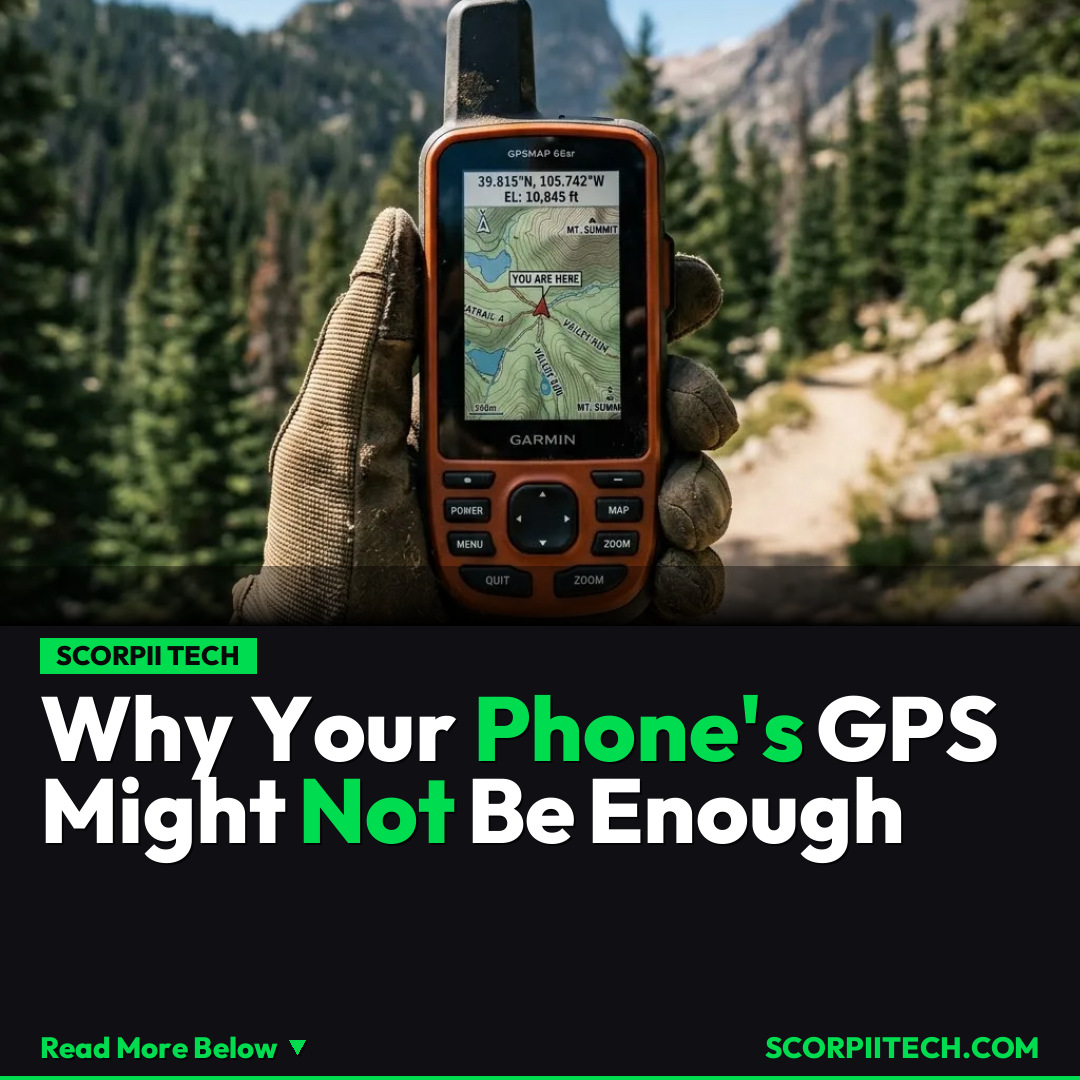
When you're far from civilization, depending on your phone for navigation can quickly become a gamble you don't want to take. The biggest differentiator for dedicated handheld GPS devices, like those from Garmin, is their incredible power efficiency. You can expect 35 hours or more of battery life from a purpose-built unit, allowing you to venture deep into the backcountry without constant worry. Compare that to the typical 8-12 hours of battery life you'll get from your power-hungry phone, and the choice for extended trips becomes clear.
Need fast, secure, and affordable hosting for your next website or PHP application? We recommend Hostinger Managed Hosting. Get premium speeds, a free domain, and 24/7 expert support.
It's not just about battery life, though. Handheld GPS devices offer superior accuracy and reliability thanks to their ability to utilize advanced GNSS frequency bands. While your phone primarily relies on the Global Positioning System (GPS) provided by the United States Department of Defense, a high-quality handheld unit can simultaneously tap into a multitude of global navigation satellite systems. This includes Russia's GLONASS, Europe's Galileo, Japan's QZSS, and China's BeiDou, creating a more robust and precise positioning lock, even in challenging environments like deep canyons or dense forests where a single signal might struggle.
These dedicated devices are designed specifically for the rigors of outdoor use. They’re often ruggedized, waterproof, and built to withstand drops and extreme temperatures, unlike the delicate smartphones you carry. This durability, combined with their specialized antenna designs and processing capabilities for location data, means you’re getting a tool optimized purely for finding your way, not for checking social media or streaming video.
Why This Matters
You might be thinking, 'My phone has GPS, that's good enough!' But for serious hikers, backcountry adventurers, search and rescue personnel, or anyone who relies on precise positioning in remote areas, 'good enough' isn't actually good enough. The difference between 8 hours and 35+ hours of battery life can literally be the difference between making it back to camp safely or spending an unplanned, potentially dangerous night lost. When your phone dies, you lose your navigation, your communication, and potentially your safety net.
Furthermore, the enhanced accuracy from tapping into multiple global satellite systems means you're less likely to be led astray by an inaccurate reading, which can be crucial when navigating treacherous terrain or trying to locate a specific point. For you, this translates to greater confidence and security when exploring off-grid, knowing you have a reliable, purpose-built instrument guiding your path, regardless of cellular reception or smartphone limitations.
The Bottom Line
So, should you ditch your phone's GPS entirely? Not necessarily. For everyday driving or urban navigation, your iPhone or Android is perfectly fine. But when your adventure takes you beyond cell towers and into environments where reliability and extended battery life are paramount, you owe it to yourself to consider a dedicated handheld GPS device. You'll gain peace of mind knowing you have a robust, long-lasting, and highly accurate tool built specifically to ensure you always know where you are and where you're going, no matter how far off the beaten path you venture.
Originally reported by
BGRWhat did you think?



Stay Updated
Get the latest tech news delivered to your reader.