Why Your Next Solar Panels Should Probably Be Black
Deciding between blue and black solar panels? You'll find out why the black monocrystalline option often comes out on top for efficiency and long-term value.
Editorial Note
Reviewed and analysis by ScoRpii Tech Editorial Team.
In this article
You're standing at a crossroads, pondering the big solar question: blue or black? While your eyes might be drawn to both, the answer today, for most homeowners and businesses, is almost always black solar panels. It’s a decision that impacts not just your wallet upfront, but your energy production for decades to come, and understanding why is key.
Key Details
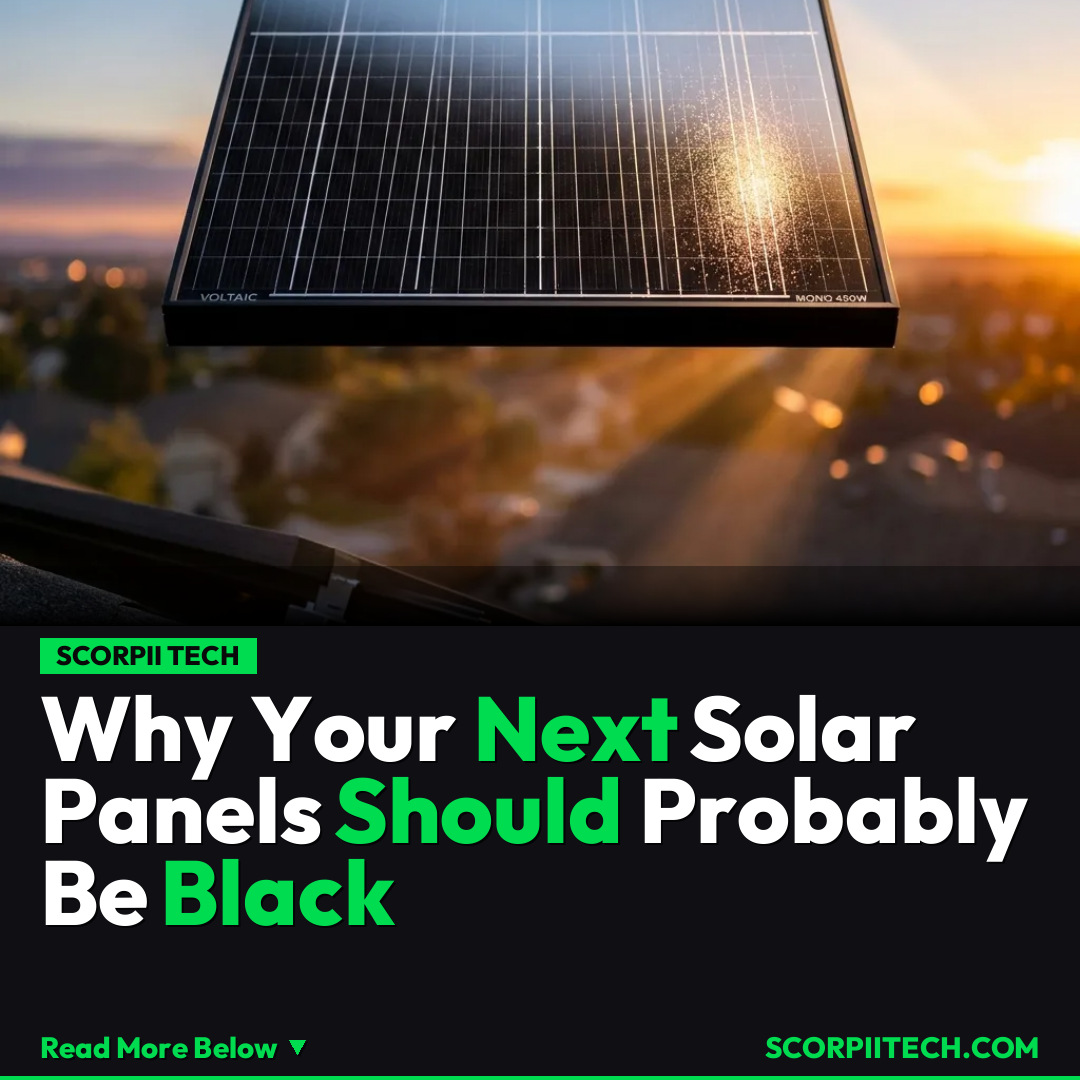
When you're diving into the world of solar, you'll primarily encounter two types: monocrystalline and polycrystalline. The sleek, often darker monocrystalline panels, known for their uniform black appearance, are crafted from a single crystal of silicon. This is achieved through the meticulous Czochralski process, which grows a single, pure silicon ingot before it's sliced into wafers. This single-crystal structure allows electrons to move more freely, leading to higher solar panel efficiency. You can expect to pay around $0.90 to $1.20 per watt for these premium panels, but they deliver an impressive efficiency of up to 24%.
Need fast, secure, and affordable hosting for your next website or PHP application? We recommend Hostinger Managed Hosting. Get premium speeds, a free domain, and 24/7 expert support.
On the other side of the spectrum are polycrystalline panels, distinguished by their characteristic blue, speckled appearance. Unlike their monocrystalline counterparts, these panels are made by melting multiple silicon fragments together to form a block, which is then cut into wafers. This multi-crystal structure results in slightly less freedom for electrons, which translates to lower efficiency. While you might find them more budget-friendly at $0.70 to $0.95 per watt, their efficiency typically ranges between 15% to 17%. So, if upfront cost is your primary driver, blue might seem appealing.
Why This Matters
You might be thinking, 'a few percentage points in efficiency, does it really matter?' Absolutely. For you, higher solar panel efficiency means more power generated from the same amount of rooftop space. If your roof has limited area, a more efficient black panel can produce significantly more electricity, reducing your reliance on the grid and lowering your energy bills more effectively. This long-term energy output often outweighs the initial higher investment, especially when you consider the lifespan of a solar installation.
Organizations like Consumer Reports frequently highlight that while the upfront cost of solar panels is a key factor, the long-term return on investment, driven by efficiency, is paramount. You're not just buying a panel; you're investing in decades of clean energy. A more efficient panel means you might need fewer panels overall to meet your energy demands, potentially saving you on installation costs, racking, and wiring, and giving your home a cleaner aesthetic. It’s about getting the most bang for your buck over the entire life of your system.
The Bottom Line
So, what's your next move? If maximizing your energy output and getting the most from your available space is your priority, then lean towards the higher efficiency and proven performance of black monocrystalline solar panels. While they come with a slightly higher per-watt cost, the long-term savings and increased energy production often make them the smarter choice for your home’s sustainable future. Weigh your budget against your energy goals, but know that today, black usually wins the race for solar panel efficiency.
Originally reported by
BGRWhat did you think?



Stay Updated
Get the latest tech news delivered to your reader.