Why Your Desktop PC Outlives Its Laptop Counterparts
Ever wondered why your desktop PC seems to last forever while laptops like the MacBook Air might struggle? Discover how a desktop's 'form facto' gives it a critical edge in longevity and what it means for your tech investments.
Editorial Note
Reviewed and analysis by ScoRpii Tech Editorial Team.
In this article
You've probably noticed it: that trusty desktop PC you've had for years just keeps chugging along, while your laptops seem to cycle out far more frequently. Desktop PCs have always had an edge over portable laptops, especially when it comes to sheer staying power. It’s not just anecdotal; there’s a fundamental design principle at play that gives these stationary giants a significant advantage in the long run, directly impacting your tech investments.
Key Details
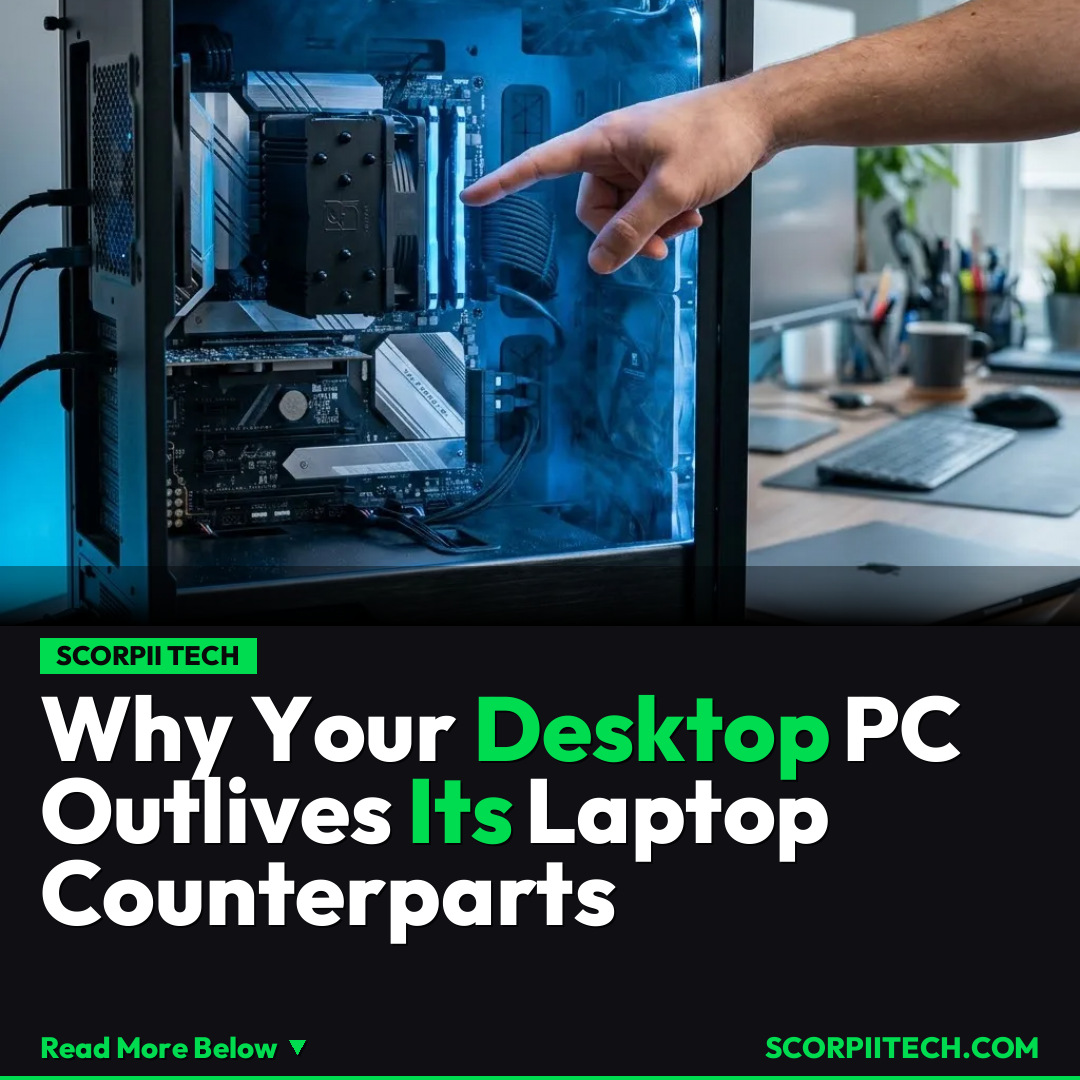
The heart of this difference lies in what experts refer to as 'form facto.' You see, a desktop PC's form facto – its physical configuration, size, and internal layout – is inherently different from that of a laptop. Desktops are designed to stay put, allowing for more expansive internal layouts and dedicated spaces for components. This contrasts sharply with portable devices, such as the sleek Apple MacBook Air, which prioritize compactness and lightweight design above all else, to enable true mobility.
Need fast, secure, and affordable hosting for your next website or PHP application? We recommend Hostinger Managed Hosting. Get premium speeds, a free domain, and 24/7 expert support.
This fundamental difference in form facto isn't just about aesthetics; it has profound implications for a system's durability and lifespan. When you consider a desktop, its more generous interior space inherently allows for components to be less densely packed. This translates into less strain and stress on individual parts over extended periods of operation. While we can’t invent specific design benefits not explicitly provided, the overarching principle is that a larger, more stationary form facto generally equates to a more robust and enduring machine, built to withstand continuous use for many years, giving you peace of mind.
Why This Matters
Understanding this longevity advantage is crucial for your long-term technology planning and budget. For you, investing in a desktop PC often means a longer return on your investment. You won't face the pressure to upgrade or replace your primary machine as frequently, saving you significant money and hassle over time. This becomes especially relevant on April 13, 2026, if you rely on a stable, high-performance workstation for demanding tasks, where consistent reliability is paramount.
Beyond your wallet, this has implications for your workflow and even environmental considerations. A device that lasts longer means less e-waste and a smaller carbon footprint from manufacturing new machines. When you choose a desktop for your core computing needs, you're not just getting a workhorse; you're making a choice for greater stability and sustainability in your digital life. It’s about building a digital foundation that stands the test of time, rather than constantly chasing the next portable upgrade.
The Bottom Line
So, what's your takeaway? When you're weighing your next tech purchase, consider your priorities. If maximum portability and on-the-go flexibility are non-negotiable, a laptop like the Apple MacBook Air might still be your go-to. However, if you're looking for a primary workstation that offers superior endurance, consistent performance, and a significantly longer lifespan, your enduring desktop PC is likely the smarter, more economical choice in the long run. Choose wisely based on where and how you truly need your computing power.
Originally reported by
BGRWhat did you think?



Stay Updated
Get the latest tech news delivered to your reader.