Why Your Computer Doesn't Need Screensavers Anymore
You might miss the mesmerizing visuals, but your modern computer doesn't need screensavers anymore. Discover the tech evolution that retired these digital art forms.
Editorial Note
Reviewed and analysis by ScoRpii Tech Editorial Team.
In this article
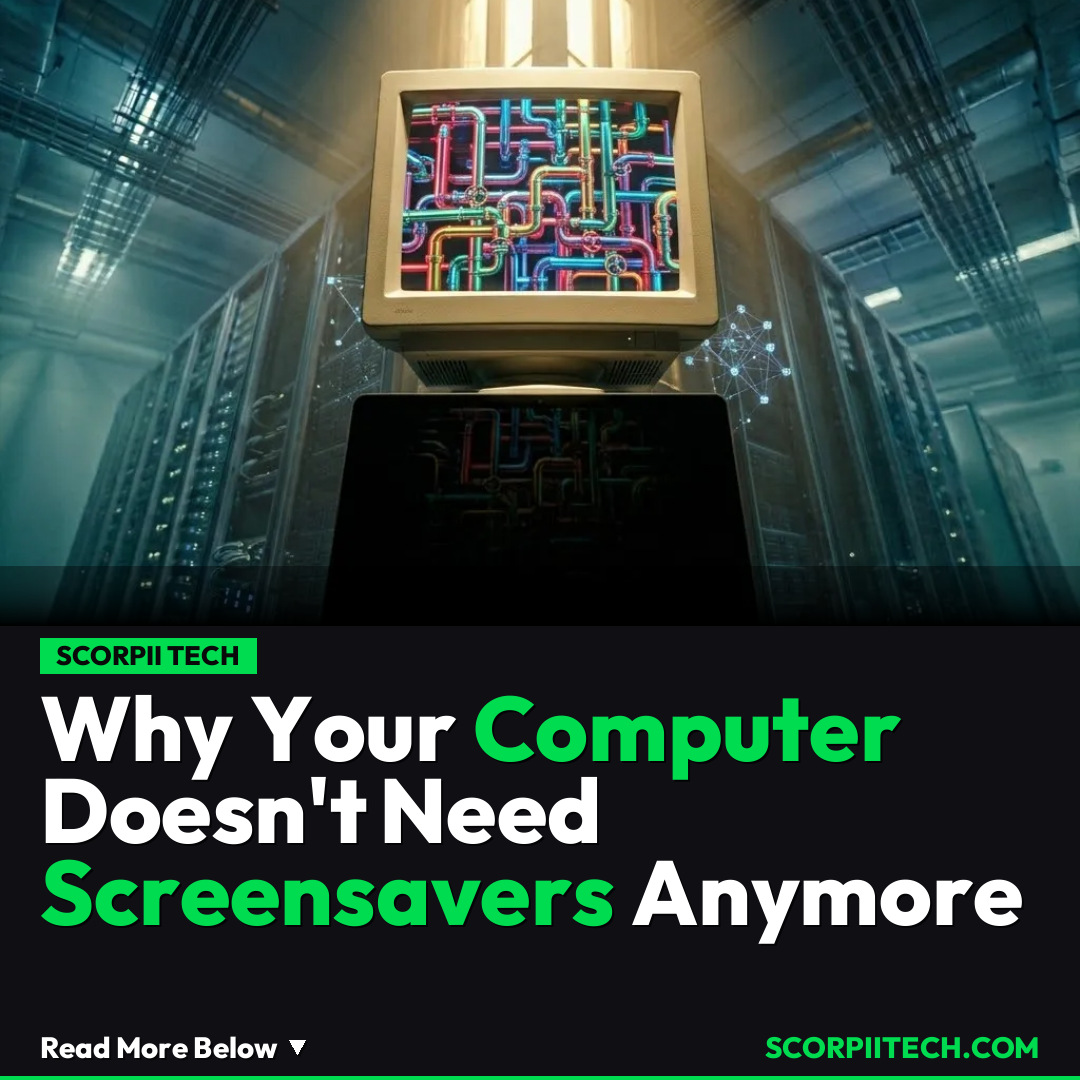
While computers are packed with fun and essential apps and programs, depending on when you bought your first PC, you might have fond memories of doing nothing but watching screensavers play on the screen. You'd marvel at the flying toasters or the hypnotic 3D pipes, wondering where they went. Well, buckle up, because we're diving into the curious case of the disappearing screensaver.
Key Details
You remember the days. Leaving your computer idle wasn't just about saving power; it was about protecting your monitor. The 'rise and fall' of screensavers, as some call it, is a story deeply intertwined with display technology. Back in the era of CRT monitors, those bulky screens you probably grew up with, there was a real risk of 'burn-in.' If a static image remained on your screen for too long, it could literally burn its ghost image permanently into the display's phosphor layer. Screensavers were your digital knights, constantly moving pixels around to prevent this unsightly fate. It was a clever workaround for a hardware limitation.
Need fast, secure, and affordable hosting for your next website or PHP application? We recommend Hostinger Managed Hosting. Get premium speeds, a free domain, and 24/7 expert support.
Then came the revolution: LCD (Liquid Crystal Display) technology. Suddenly, burn-in became far less of a concern for the average user. LCDs don't rely on phosphors in the same way CRTs do, drastically reducing the risk. With more advanced screens like OLED (Organic Light-Emitting Diode), while burn-in can occur under specific, extreme conditions (primarily with static UI elements), it's still nowhere near the CRT era problem. For most casual use, the need for a dynamic screen protector evaporated. You could say that for screensavers, their technological evolution was 'one step forward, two steps back' – a leap in display tech made them largely redundant.
Today, your computer handles power management and display sleep modes far more efficiently. Instead of a mesmerizing kaleidoscope, your screen simply turns off, saving energy and preserving its lifespan more effectively than any screensaver ever could. Even modern devices with always-on displays or smart features, like an Amazon Fire tablet or TV stick, prioritize low-power modes or static ambient photos rather than animated pixel-movers for 'protection.' The functionality screensavers once offered has been integrated directly into the operating system and hardware, making their distinct application largely unnecessary for display health.
Why This Matters
So why does this matter to you? The disappearance of screensavers isn't just quirky tech trivia; it’s a powerful illustration of how technology evolves to solve its own problems, often leading to the quiet obsolescence of once-essential features. Your modern devices are smarter, more energy-efficient, and inherently more resilient against display damage, thanks to advancements in LCD and OLED. This shift frees up system resources. While you might miss the purely aesthetic joy, your computer is now optimized for performance and longevity in ways screensavers could only dream of supporting.
The Bottom Line
Ultimately, the story of screensavers is a testament to progress. While you might feel a pang of nostalgia for those digital art pieces, your current computer setup is objectively better without them. It's more efficient, durable, and less reliant on workarounds for fundamental display limitations. So, the next time your screen goes black from inactivity, appreciate that silent, power-saving moment. It’s not just a blank slate; it’s a quiet declaration of how far display technology has come, allowing you to focus on your actual work or entertainment without needing a pixelated guardian.
Originally reported by
BGRWhat did you think?


Stay Updated
Get the latest tech news delivered to your reader.