Why You Can't Just Buy A Petabyte Hard Drive
Ever wondered why you can't just pick up a 1PB hard drive? You're not alone. Discover the technical hurdles like form facto and cost facto preventing your dream storage, despite innovations from Western Digital and Seagate.
Editorial Note
Reviewed and analysis by ScoRpii Tech Editorial Team.
In this article
You’ve probably seen the dizzying numbers on storage devices and thought, “When can I get a 1,000 terabyte hard drive?” It's a natural dream for anyone drowning in digital files. But here's the reality check: while a single petabyte (1PB) hard drive is theoretically possible, you're nowhere close to finding one for sale. Your quest for ultimate local storage faces some surprisingly complex barriers.
Key Details
At its core, 1PB equals a massive 1000TB, a number that sounds like science fiction even today, April 21, 2026. The limitations of current hard drive technology are the main culprits preventing these colossal drives from reaching your PC. We're talking about fundamental challenges related to both form facto and cost facto – essentially, how big a drive needs to be to hold that much data, and how expensive it would be to make it viable for the average consumer.
Need fast, secure, and affordable hosting for your next website or PHP application? We recommend Hostinger Managed Hosting. Get premium speeds, a free domain, and 24/7 expert support.
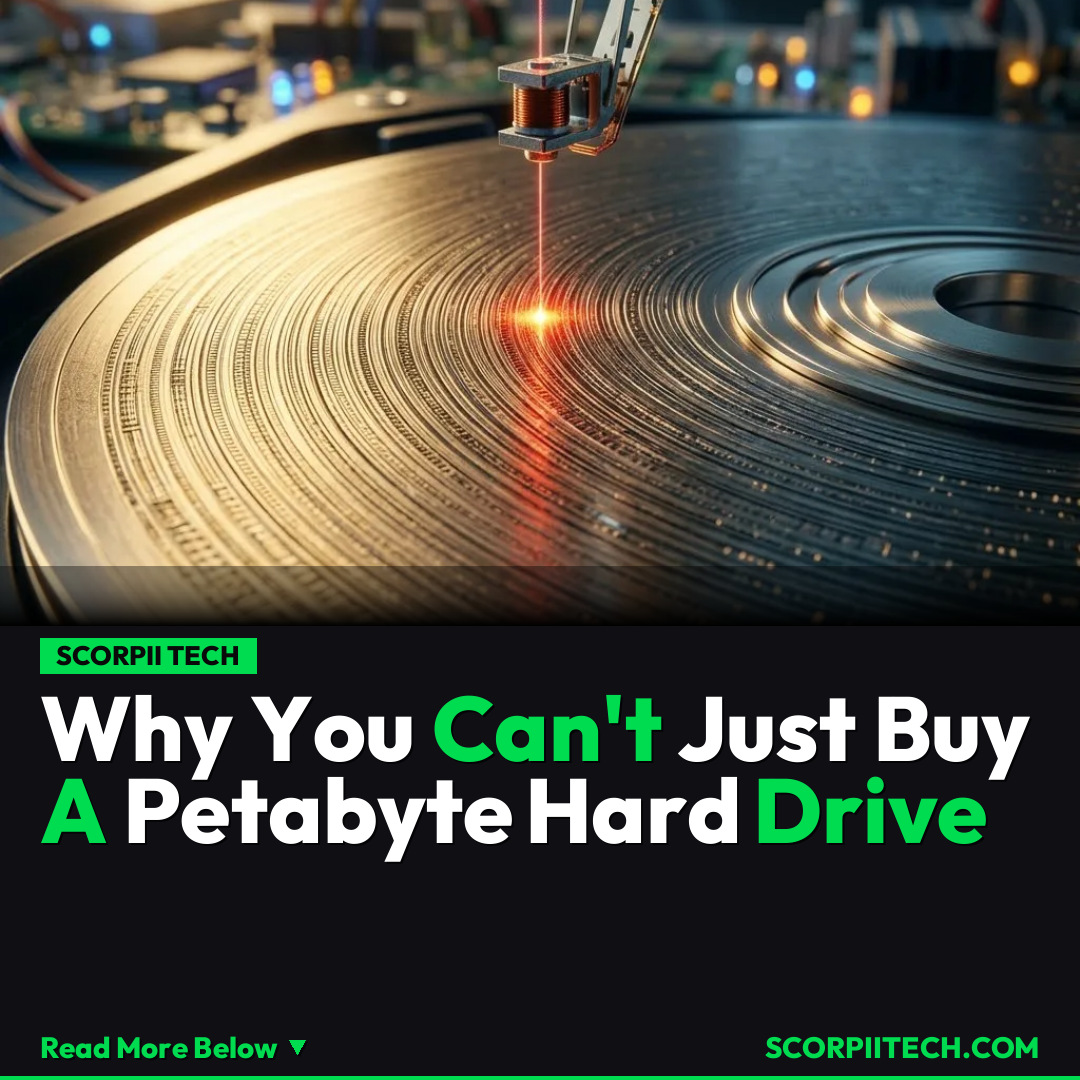
Manufacturers are innovating, of course. Companies like Western Digital are pushing boundaries with technologies such as their UltraSMR ePMR HDDs. Not to be outdone, Seagate is also making strides with advancements like Mozaic 4+. These innovations often rely on sophisticated techniques such as Heat-Assisted Magnetic Recording (HAMR), which uses a laser to briefly heat the platter during writing to allow for much denser data storage. Additionally, concepts like High Bandwidth Drive Technology aim to improve the speed at which this dense data can be accessed and written, tackling another critical performance bottleneck.
Despite these impressive technical leaps, the path to a single, affordable, and consumer-friendly 1PB hard drive remains long. The engineering hurdles for packing such immense capacity into a standard form facto without making it prohibitively expensive (the cost facto) are considerable. It’s not just about fitting more bits onto a platter; it's about doing so reliably, efficiently, and at a price point that makes sense outside of enterprise data centers.
Why This Matters
Why should you care about the absence of a petabyte hard drive? Because this limitation impacts more than just your personal hoarding habits. For businesses, researchers, and content creators, the demand for massive, efficient storage is constant. The current need means relying on complex, multi-drive RAID arrays or cloud solutions, which introduce their own costs, complexities, and potential latency issues. If a single 1PB drive were readily available, it would revolutionize local data management, simplify backups, and potentially lower infrastructure costs for many.
Understanding these technical limitations also gives you insight into the cutting edge of data storage. You learn that the “problem” isn't a lack of trying, but fundamental physics and engineering challenges. It highlights why companies like Western Digital and Seagate are investing heavily in technologies like HAMR and High Bandwidth Drive Technology – they're not just trying to make bigger drives, but smarter, more efficient ones, pushing against the very boundaries of what's possible with magnetic storage.
The Bottom Line
So, what's your takeaway? While you can't buy a single 1PB hard drive today, don't despair over your data dilemma. You should continue to plan your storage strategy around multi-drive solutions, network-attached storage (NAS), or cloud services. Keep an eye on the innovations from leaders like Western Digital and Seagate; their ongoing research into technologies such as UltraSMR ePMR HDD and Mozaic 4+ will eventually bring us closer to that petabyte dream. For now, understand that the technology is progressing, just not at the breakneck pace you might wish for when managing your ever-growing digital footprint.
Originally reported by
BGRWhat did you think?



Stay Updated
Get the latest tech news delivered to your reader.