Why For All Mankind's Shuttles Defy Your Physics (On Purpose)
You love *For All Mankind*, but did you spot its big space shuttle inaccuracy? Discover why Ronald D. Moore's show takes creative liberties with lunar travel.
Editorial Note
Reviewed and analysis by ScoRpii Tech Editorial Team.
In this article
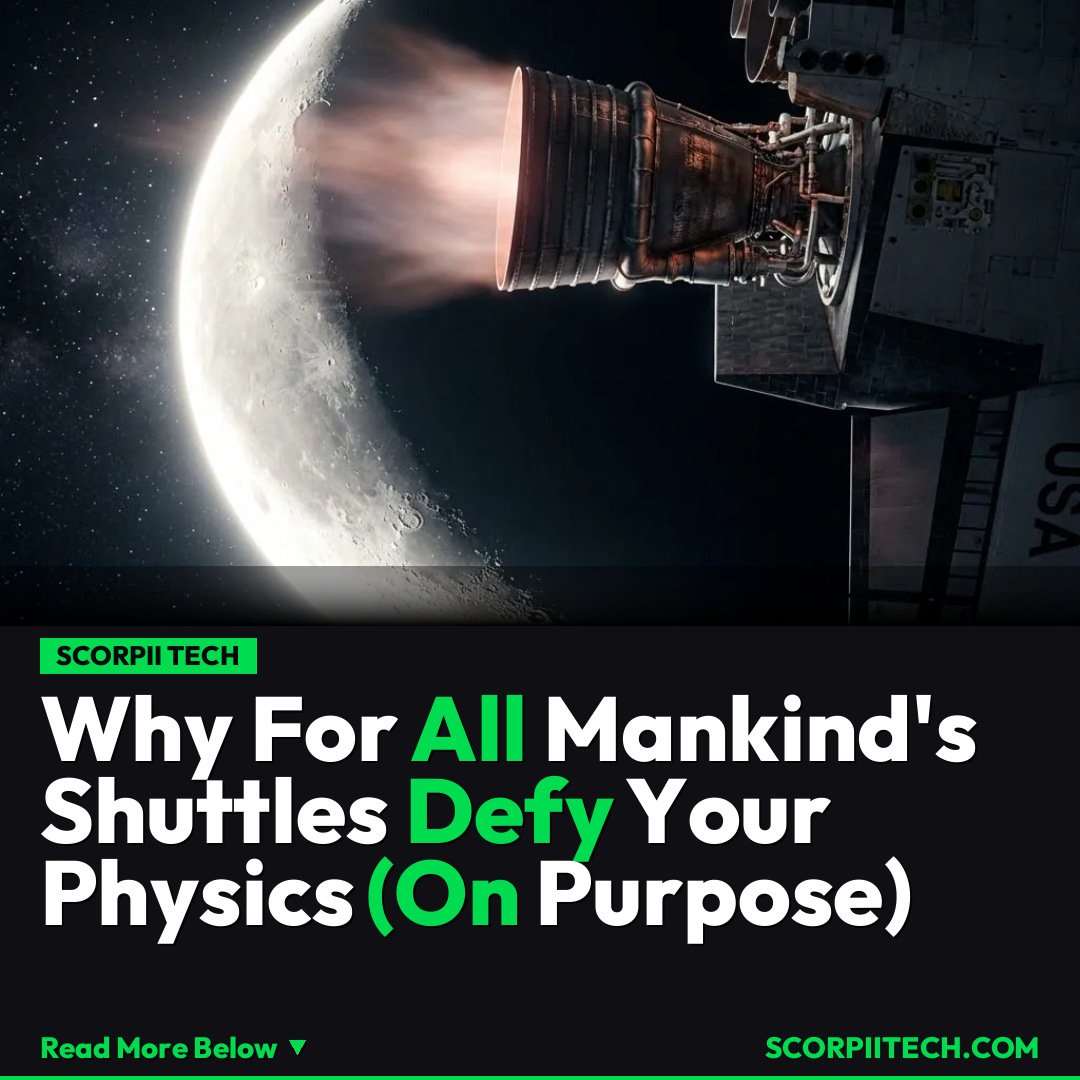
You adore the alternate history of Apple TV's For All Mankind, where the space race never ended and NASA's Space Shuttles boldly go beyond Earth orbit. It's a gripping narrative that keeps you hooked, envisioning a future where humanity pushed further, faster. But if you know your astrodynamics, you've probably spotted a glaring detail that makes you scratch your head: the show's moon-bound shuttles. Turns out, there's a wild, yet very deliberate, reason for this deviation from reality.
Key Details
You’re not alone if you’ve cringed a little watching a Space Shuttle gracefully depart for the Moon in For All Mankind. As a fan of space exploration, you instinctively know something feels off. This isn't just a minor oversight; it's a fundamental break from real-world physics. According to collectSPACE, a key quote highlights this impossibility: "We even did calculations that showed if you filled up the payload bay with hydrazine and fed it to the [orbital maneuvering system] OMS engines, you still couldn't get to the moon and back without exceeding the payload mass of the orbiter." That's a direct statement from the show’s technical advisor, former astronaut Garrett Reisman.
Deploy your next full-stack application effortlessly. Get $200 in free DigitalOcean credits to host your Laravel or Python APIs.
Think about what this means for your understanding of space travel. The Space Shuttle's Orbital Maneuvering System (OMS) engines, which use highly volatile hydrazine fuel, were designed for relatively small orbital adjustments around Earth, not for the immense change in velocity—or `delta-v`—required to travel to the Moon and return. The sheer amount of fuel needed would far exceed the Shuttle’s capacity, making any lunar mission completely impractical, if not outright impossible, with the existing orbiter design. This isn't just a technicality; it's a physical constraint that anchors real-world spaceflight.
Yet, Ronald D. Moore, the creator of For All Mankind, fully understands these limitations. The inclusion of lunar-capable Space Shuttles is a conscious creative choice. It allows the Apple TV series to explore a more advanced and integrated alternate space program where NASA utilized its existing, iconic hardware for grander missions, even if it meant taking some liberties with the laws of physics. They are crafting a compelling narrative where the International Space Station and Apollo program legacy intertwine in unexpected ways, pushing beyond the historical rivalry with the Soviet Union.
Why This Matters
You might wonder why such a significant technical inaccuracy is permissible in a show otherwise celebrated for its detailed realism and historical nuance. The answer lies in the art of storytelling. For For All Mankind, the Space Shuttle isn't just a vehicle; it’s a symbol. It represents the pinnacle of American space technology from a certain era, an aspirational machine that, in our reality, never made it beyond Earth orbit. By enabling it to reach the Moon, the show taps into a collective "what if" that resonates deeply with audiences, allowing you to envision a bolder, more ambitious space future.
This deliberate deviation demonstrates a crucial balance between scientific accuracy and narrative drive. While absolute realism is paramount in documentaries or engineering projects, a fictional work like For All Mankind prioritizes emotional impact and imaginative exploration. The show uses your familiarity with the Space Shuttle's design to ground its alternate history, then gracefully bends the rules to allow for a more dramatic and expansive universe. It’s a testament to the creators' understanding of both the science and the art of science fiction.
The Bottom Line
So, what should you take away from this fascinating revelation? You can continue to immerse yourself in the thrilling saga of For All Mankind without guilt. The creators are fully aware of the space shuttle’s real-world limitations and have made an informed decision to prioritize narrative over strict astrodynamic accuracy. Next time you see a shuttle heading for the Moon on Apple TV, remember that you’re witnessing a clever storytelling device, not a scientific blunder. It’s a bold artistic choice that enriches your viewing experience, encouraging you to embrace the "what if" and enjoy the ride.
Originally reported by
BGRWhat did you think?



Stay Updated
Get the latest tech news delivered to your reader.