The USPS Website Scam That Could Cost You More Than Moving
Discover how the USPS Mover's Guide website, run by MyMove, uses deceptive practices for change-of-address and voter registration. Learn why experts say your simple civic duty is being monetized.
Editorial Note
Reviewed and analysis by ScoRpii Tech Editorial Team.
In this article
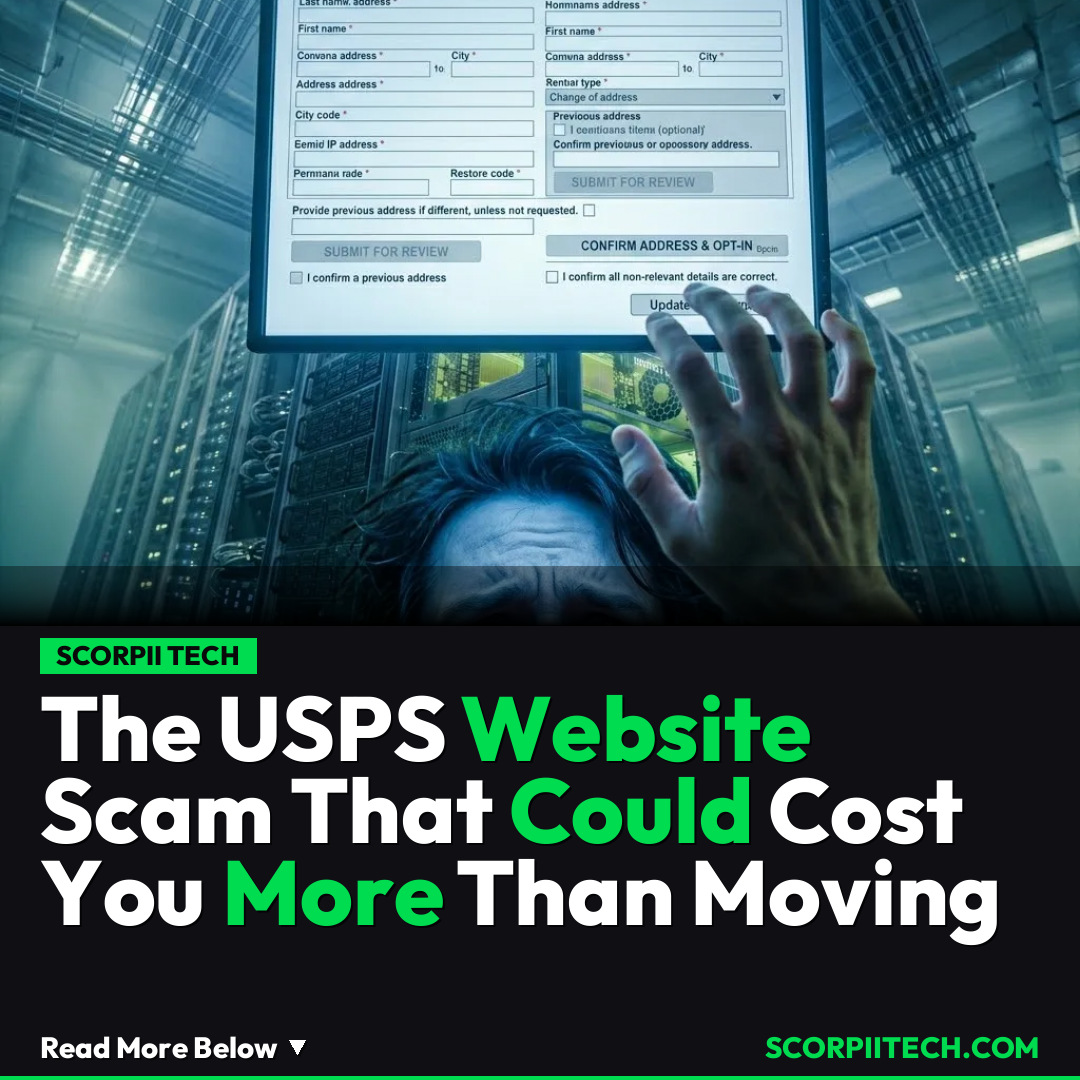
You probably think changing your address or registering to vote is a simple, free public service. For Emilia Rybak, who just wanted to register to vote, it became a jarring encounter with what’s been dubbed "the Government’s Shittiest Website." The USPS Mover’s Guide website, run by MyMove, has become a digital minefield, employing deceptive and potentially illegal design practices that complicate essential civic duties.
Key Details
When you navigate to the official-looking Mover’s Guide website to update your address or register to vote, you're stepping into a complex web orchestrated by a private company called MyMove. This isn't just a simple online form; it's a partnership between the USPS and MyMove (owned by Red Ventures), which then involves other entities like Targeted Marketing Solutions, Imagitas, and Pitney Bowes. The controversy stems from how these services are presented to you.
Deploy your next full-stack application effortlessly. Get $200 in free DigitalOcean credits to host your Laravel or Python APIs.
Instead of a clear, straightforward path, you're often nudged towards an optional $1.25 identity verification fee, even for basic, free services like voter registration. Lior Strahilevitz, a University of Chicago Law School professor, minces no words, stating, "It’s inherently confusing the way they’re presenting the choices—and it’s easily fixable, but there’s a lot of money at stake here." This "money at stake" extends to partnerships with major service providers like Xfinity, Spectrum, and Verizon, who also benefit from the data and traffic generated.
Experts like user experience research consultancy owner Emilia Rybak and Maastricht University professor Johanna Gunawan have highlighted how these design practices are not merely accidental. They are indicative of a deliberate strategy, one that Marcos Arellano, former director of operations at MyMove, would have overseen. The issue impacts people in locations from New York to Florida, turning a crucial public service into a potentially monetized, frustrating experience for you.
Why This Matters
You might think $1.25 is a small fee, but this issue is about far more than pocket change. When government-linked services employ deceptive design, it erodes public trust and creates unnecessary barriers to essential civic engagement. Imagine your grandmother trying to navigate this maze just to ensure her voter registration is current or her mail gets forwarded correctly. The confusion is not just an annoyance; it can lead to people giving up on important tasks like voter registration, disenfranchising them in the process.
This controversy, highlighted by WIRED, underscores a broader problem of 'dark patterns' online, where interfaces are designed to trick you into making choices you wouldn't otherwise. It's particularly concerning when these practices are intertwined with a quasi-governmental service like the USPS. Your expectation of transparency and simplicity is undermined by a system designed to extract data or minor fees, impacting millions of movers across the nation. It sets a dangerous precedent for how public services might be monetized and manipulated.
The Bottom Line
So, what should you do? When you're using any online service, especially one linked to a government function like the Mover’s Guide website, stay vigilant. Carefully scrutinize every step, look for small print, and be wary of any unexpected fees. Remember, basic services like voter registration and change-of-address should be free and straightforward. It’s up to you to be an informed user and demand transparency and ethical design from the platforms you interact with, especially those that claim to serve the public good.
Originally reported by
WiredWhat did you think?



Stay Updated
Get the latest tech news delivered to your reader.