The 'Future-Proof' PC Myth: What You Should Do Instead
You think buying top-tier RTX GPUs or Intel processors will 'future-proof' your PC? Think again. Discover why this common strategy is a myth and what you should do instead to save money.
Editorial Note
Reviewed and analysis by ScoRpii Tech Editorial Team.
In this article
You know that feeling. The allure of a brand-new component – maybe the latest Nvidia RTX GPU, or whatever 'Lake' your newest Intel processor is named after – is intoxicating. Reviewers are raving, the benchmarks are sky-high, and suddenly, you're convinced you need it to 'future-proof' your rig.
Key Details
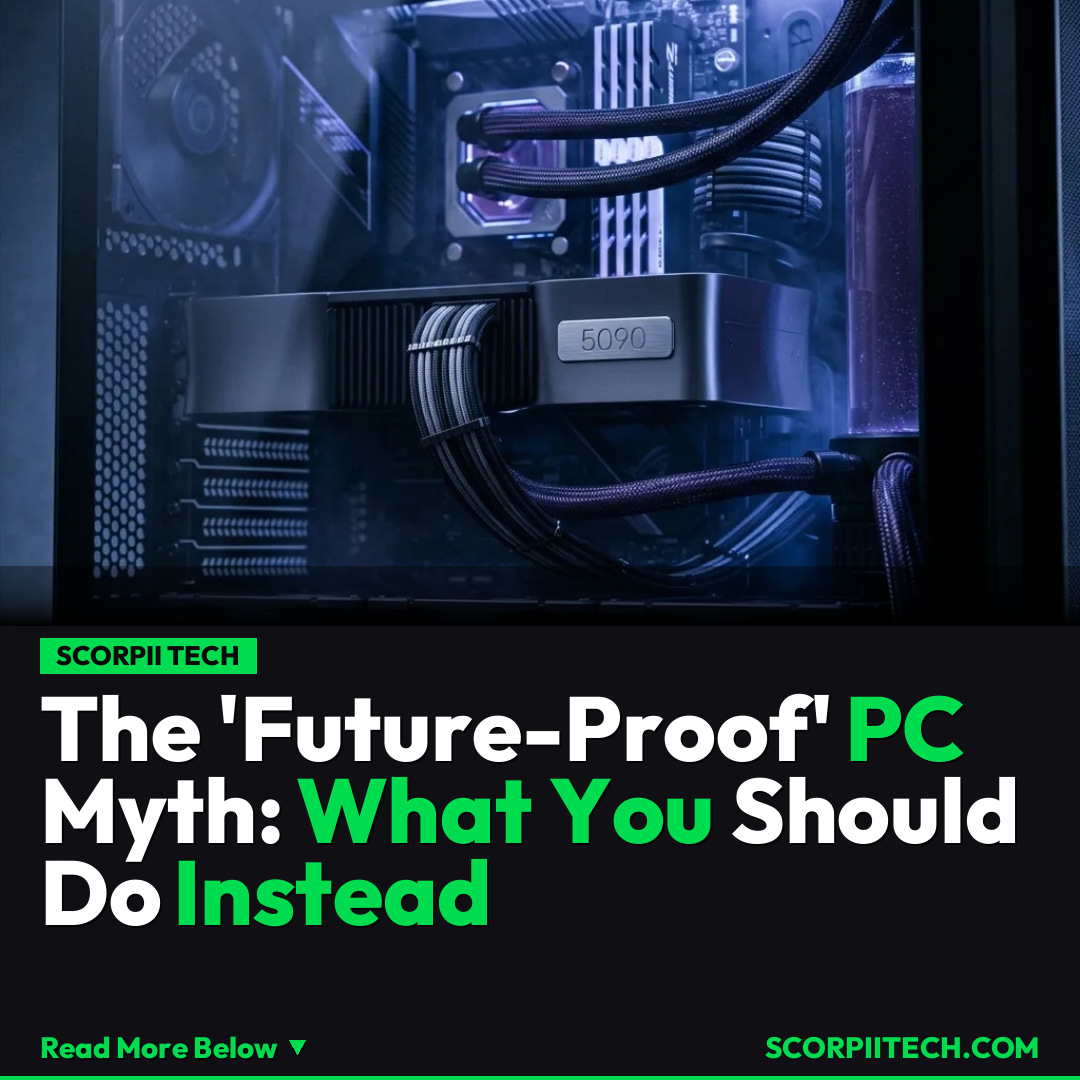
Let's be honest, you've probably felt the immense pull of a shiny new piece of tech. The desire to equip your PC with the absolute best, convinced that a powerful RTX 5090 or the latest Intel processor will somehow make it immune to obsolescence for years to come. This sentiment is precisely what fuels the multi-billion dollar PC hardware market, driven by the belief that investing heavily now will save you from constant upgrades later. You see the incredible performance figures for the newest Nvidia GeForce cards, maybe even a rumored RTX 5070, and you think, "This is it! This will last me!"
Need fast, secure, and affordable hosting for your next website or PHP application? We recommend Hostinger Managed Hosting. Get premium speeds, a free domain, and 24/7 expert support.
However, the idea of "future-proofing" your PC by simply buying the most expensive, bleeding-edge components available right now is largely a well-marketed myth. Technology, especially in the realms of GPUs from Nvidia and processors from Intel, evolves at an astonishing pace. What seems like an unbeatable RTX 5090 today might be comfortably surpassed by a mid-range card just a couple of generations down the line. Even upgrading your RAM to an excessive degree often yields diminishing returns, as bottlenecks usually lie elsewhere long before memory becomes the primary limitation.
The "FOMO" – fear of missing out – is a powerful motivator, especially when tech reviewers gush over raw performance numbers. But this constant chase for the ultimate 'future-proof' PC part means you're often paying a significant premium for marginal gains that will quickly depreciate. You're effectively buying into a promise that hardware manufacturers themselves can't truly keep due to the relentless pace of innovation.
Why This Matters
Why should you care about this distinction between aspiration and reality? Because it directly impacts your wallet and your long-term satisfaction with your PC. You might spend thousands on an RTX 5090 or the latest generation Intel processor, believing it's a sound investment for years, only to find that within 18-24 months, a newer, more efficient, and often more affordable component offers similar or even superior performance. This rapid depreciation means your initial 'future-proof' investment loses significant value quickly.
Instead of genuinely securing your system for the future, you often end up overspending on parts that will inevitably become less cutting-edge faster than you anticipate. This cyclical pattern of chasing the latest and greatest, fueled by excitement for new Nvidia and Intel releases, can trap you in an expensive upgrade treadmill. Understanding this myth allows you to make more informed decisions, freeing you from the pressure of always buying the top-tier components and helping you build a PC that truly meets your needs without unnecessary financial strain.
The Bottom Line
So, what's the actionable takeaway for you? Stop thinking in terms of buying 'future-proof' PC parts and start focusing on smart, incremental upgrades based on your actual performance needs and current market value. Instead of immediately jumping on the RTX 5090 bandwagon, evaluate if an RTX 5070 (or even a previous generation card) offers the performance you truly need for your games and applications at a much better price-to-performance ratio. Prioritize components that offer the best value for your specific use case, rather than simply chasing the highest number. You'll save money, reduce buyer's remorse, and still enjoy a powerful, responsive PC without falling victim to the costly 'future-proof' fallacy. This strategic shift will empower you to build a system that works for you, not just for the next product launch cycle.
Originally reported by
BGRWhat did you think?



Stay Updated
Get the latest tech news delivered to your reader.