The Deepfake Nudes Crisis in Schools Is Much Worse Than You Thought
Discover the unsettling truth about deepfake sexual abuse in schools, how generative AI is fueling it, and what it means for your community. Get the facts on this growing crisis.
Editorial Note
Reviewed and analysis by ScoRpii Tech Editorial Team.
In this article
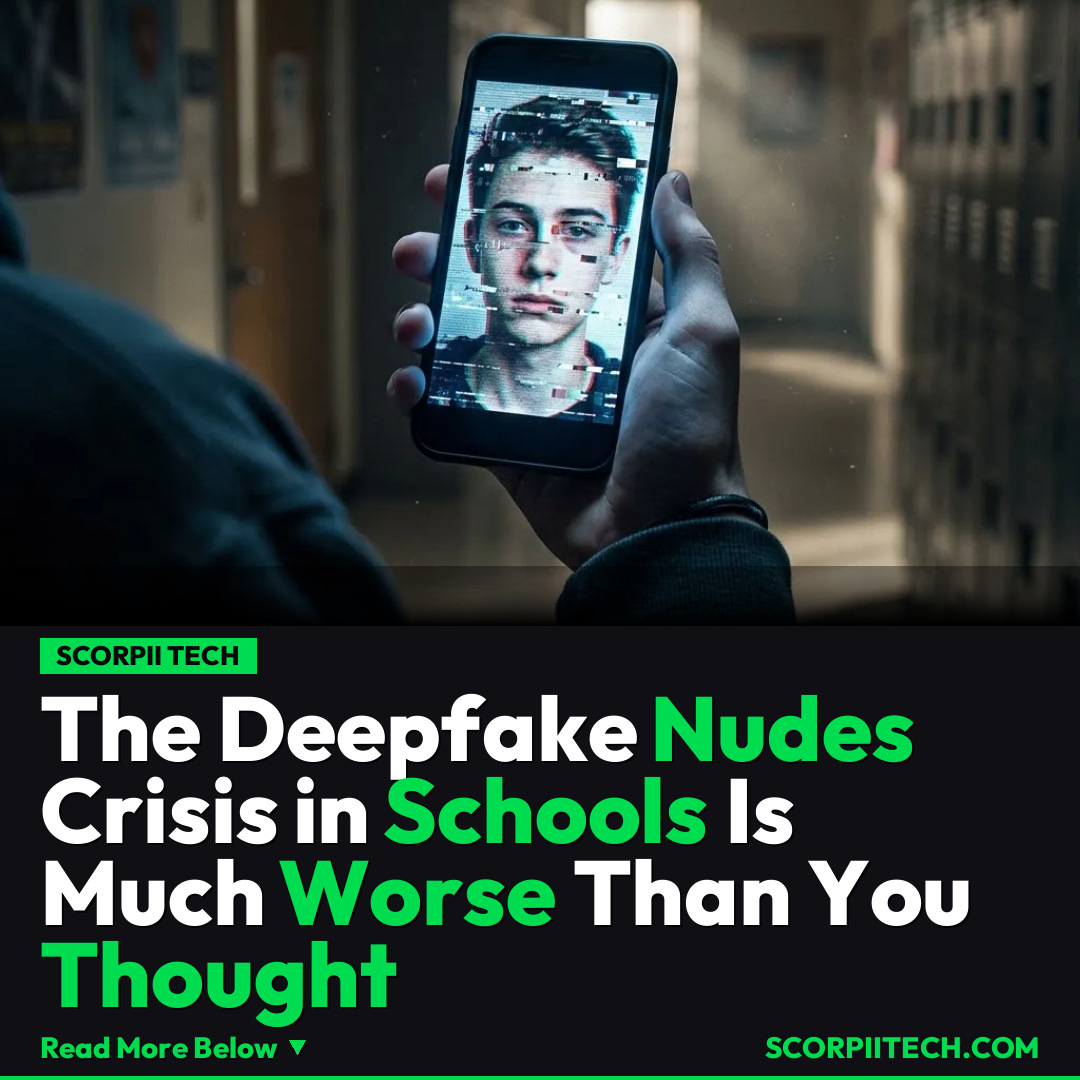
You might think the surge of deepfake technology is just about celebrity hoaxes or political misinformation. But a far more insidious and personal crisis is quietly unfolding in schools around the globe: the widespread creation and sharing of deepfake nude images of schoolchildren. The true scale of this deepfake sexual abuse is likely much higher than you've ever imagined, impacting communities you wouldn't expect.
Key Details
WIRED has shed light on this disturbing trend, revealing that the creation and sharing of deepfake nude photos and videos of schoolchildren, primarily by teenage boys, is not just a localized problem but a growing international crisis. These aren't just doctored images; they are often sophisticated fabrications created using readily available generative AI systems, 'nudification' technologies, and deepfake creation apps that can strip clothing from an image with chilling ease. Think about that for a moment: technology that allows for the digital sexual abuse of minors, available to anyone with a smartphone.
Need fast, secure, and affordable hosting for your next website or PHP application? We recommend Hostinger Managed Hosting. Get premium speeds, a free domain, and 24/7 expert support.
The reach of this crisis is staggering. According to Lloyd Richardson, Director of Technology at the Canadian Centre for Child Protection, "I think you'd be hard-pressed to find a school that has not been affected by this." This isn't an exaggeration; incidents have been documented across North America, South America, Europe, Australia, and East Asia, specifically in places like Iowa, New Jersey, Pennsylvania, Oregon, South Korea, Spain, and the UK. Organizations like Unicef and Save the Children are observing its spread, while groups such as Thorn, the Canadian Centre for Child Protection, and the RATI Foundation are actively working on solutions and prevention.
Experts like Amanda Goharian, Director of Research and Insights at Thorn, and Siddharth Pillai, Cofounder and Director of the RATI Foundation, are at the forefront of understanding this evolving threat. Educational institutions, including McDonogh School, are grappling with the reality of these incidents. Tanya Horeck, a Feminist Media Studies Professor and Researcher at Anglia Ruskin University, highlights the complex social dynamics at play, while Child Protection Specialist Afrooz Kaviani Johnson from Unicef emphasizes the global impact. The legal and ethical implications are being explored by individuals like Shane Vogt, a lawyer, and Yale Law School students Catharine Strong, Tony Sjodin, and Suzanne Castillo, alongside consultants like Evan Harris of Pathos Consulting Group. Discussions around legal frameworks such as the proposed 'Take It Down Act' underscore the urgency of the situation.
Why This Matters
This crisis matters deeply to you, whether you're a parent, an educator, a student, or simply a concerned citizen. The proliferation of these deepfakes creates an incredibly hostile and unsafe environment for young people, eroding trust within school communities and inflicting severe psychological harm on victims. Imagine the devastating impact on a child's mental health, reputation, and sense of safety when their fabricated nudes are circulating among their peers on platforms like Instagram and Snapchat. It’s not just a privacy violation; it’s a profound form of digital sexual assault that has lifelong consequences.
The ease with which these images can be generated and disseminated—sometimes with just a few clicks—means that protective measures need to evolve rapidly. The sheer volume and speed of sharing make traditional methods of content removal difficult, though organizations like the Center for Democracy and Technology are pushing for more robust solutions. The issue forces us to confront uncomfortable truths about digital literacy, consent, and the responsibility of social media platforms and AI developers in safeguarding minors from their technologies, which are clearly failing in their current state.
The Bottom Line
The takeaway is clear: you can no longer afford to be passively aware of deepfakes. This is an urgent, pervasive threat to children in educational settings. If you’re a parent, talk to your children about online safety and deepfakes, stressing the importance of reporting such incidents. If you’re an educator or school administrator, advocate for stronger digital literacy programs and robust school policies that address AI-generated abuse. Support organizations like Thorn and the Canadian Centre for Child Protection who are fighting this on the front lines. Understanding this crisis is the first step; taking proactive measures in your community is the essential next one to protect the next generation from this insidious form of digital harm.
Originally reported by
WiredWhat did you think?



Stay Updated
Get the latest tech news delivered to your reader.