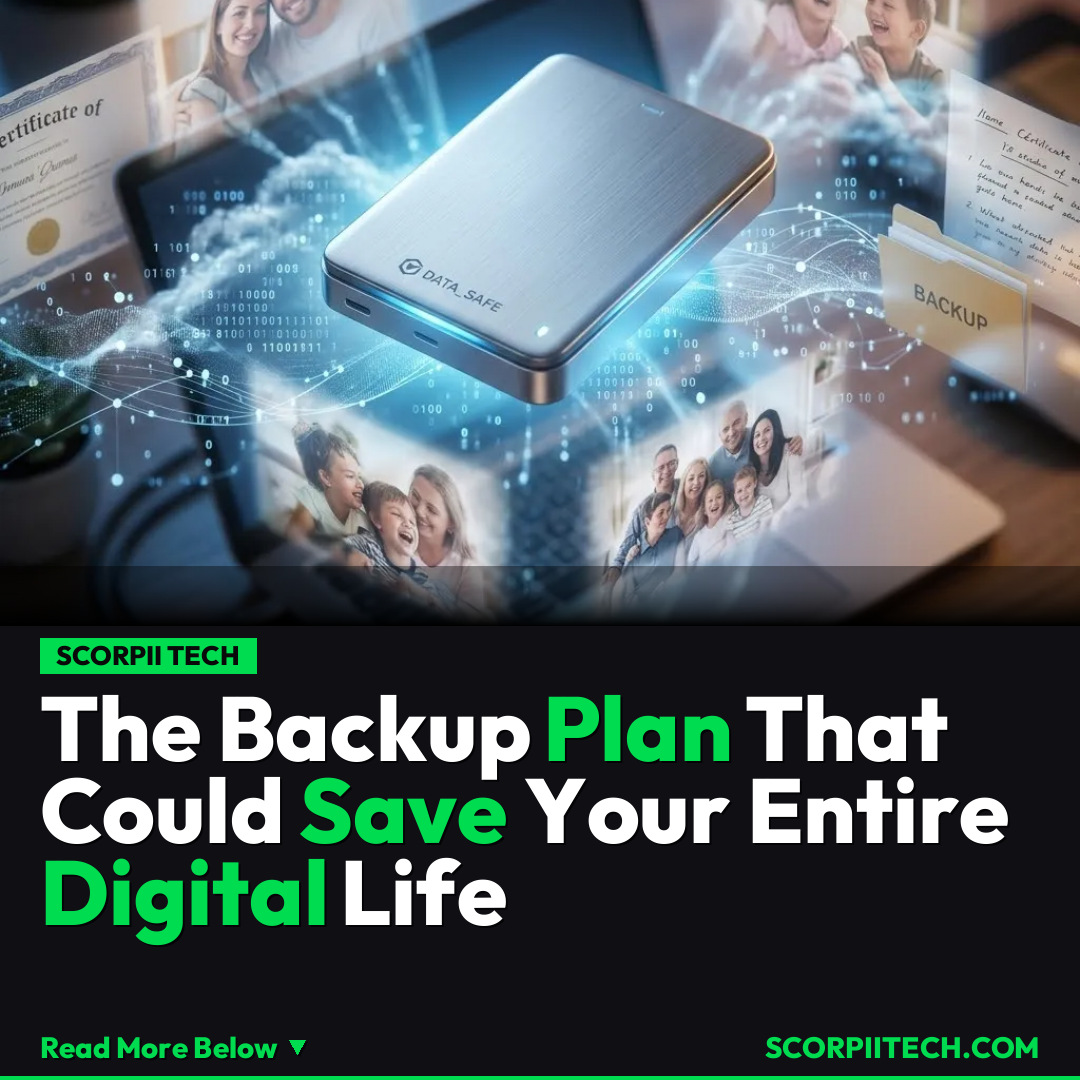
The Backup Plan That Could Save Your Entire Digital Life
Protect your precious digital files! Learn how to safeguard your data with hard drives, cloud services like Backblaze and IDrive, and essential health checks for your storage. You'll never worry about data loss again.
Editorial Note
Reviewed and analysis by ScoRpii Tech Editorial Team.
In this article
You probably agree: making backup files is boring. It’s a chore we all dread, a digital equivalent of flossing. But consider the alternative: losing your irreplaceable photos, crucial documents, and cherished memories. That’s the kind of heart-stopping excitement no one wants. In a world where your entire life often lives digitally, having a robust data backup strategy isn't just a suggestion—it's absolutely essential to avoid digital disaster.
Key Details
When it comes to safeguarding your digital life, you have powerful options. For local, physical backups, you might consider something robust like an 8 TB Western Digital Elements Desktop Hard Drive, offering ample space for a significant portion of your data. These physical drives, when stored securely (perhaps even off-site, like a relative’s house in Maine!), provide a tangible layer of protection against digital threats or cloud service outages.
Deploy your next full-stack application effortlessly. Get $200 in free DigitalOcean credits to host your Laravel or Python APIs.
Cloud-based solutions, on the other hand, offer unparalleled convenience and accessibility. Services like Backblaze are a popular choice, providing unlimited storage for around $9 a month, or a cost-effective $100 a year. If you prefer a tiered approach, IDrive offers 5 TB of storage for an introductory $69 for the first year, settling at $99 annually thereafter. For those needing a more specialized backup suite, Acronis True Image provides 256 GB of backup space for about $73 a year, bundling features beyond simple file storage.
Beyond choosing a backup method, monitoring the health of your storage devices is critical. Many modern hard drives utilize Self-Monitoring, Analysis, and Reporting Technology (SMART) to predict potential failures. You can check your drive’s SMART status using tools like CrystalDiskInfo for Windows, Disk Utility for Mac, or GSmartControl for Linux. Proactive checks can give you a heads-up before your drive fails, saving you from the agony of data loss.
Why This Matters
You might think data loss only happens to others, but it's a silent threat that can strike anyone, anytime—from hardware failure and ransomware to accidental deletion or even a house fire. The impact isn't just financial; losing years of family photos, important work projects, or meticulously collected personal data can be devastating. Companies like Western Digital and Seagate aren't just selling storage; they're selling peace of mind, knowing your digital memories and crucial work are safe.
In 2026, your digital footprint is likely larger and more integrated into your daily life than ever. Relying solely on your primary device, whether it's your laptop with Windows Backup and File History, or your Mac with Time Machine, is playing a dangerous game. Leveraging comprehensive tools like Macrium Reflect, or services such as Dropbox, Google Drive, and Sync.com alongside dedicated backup solutions, ensures redundancy and dramatically reduces your risk. This isn't just tech advice; it’s essential digital hygiene for your well-being.
The Bottom Line
Ultimately, neglecting your data backup is a gamble you simply can't afford. You’ve seen the options, from robust local drives to flexible cloud services and essential diagnostic tools. The goal isn't just to store files; it's to protect your entire digital legacy and ensure continuity in your personal and professional life. Take five minutes right now to assess your current backup strategy, or better yet, implement one. Your future self, relieved and unburdened by the stress of data loss, will thank you for it. Don't wait until the 'excitement' of data loss hits; start backing up today.
Originally reported by
WiredWhat did you think?



Stay Updated
Get the latest tech news delivered to your reader.