Here's What Tesla's Model S & X Exit Means for You
Tesla's Model S and X production is ending, making way for Optimus robots and the Cybercab. Discover what this shift means for you and the future of autonomous vehicles in California.
Editorial Note
Reviewed and analysis by ScoRpii Tech Editorial Team.
In this article
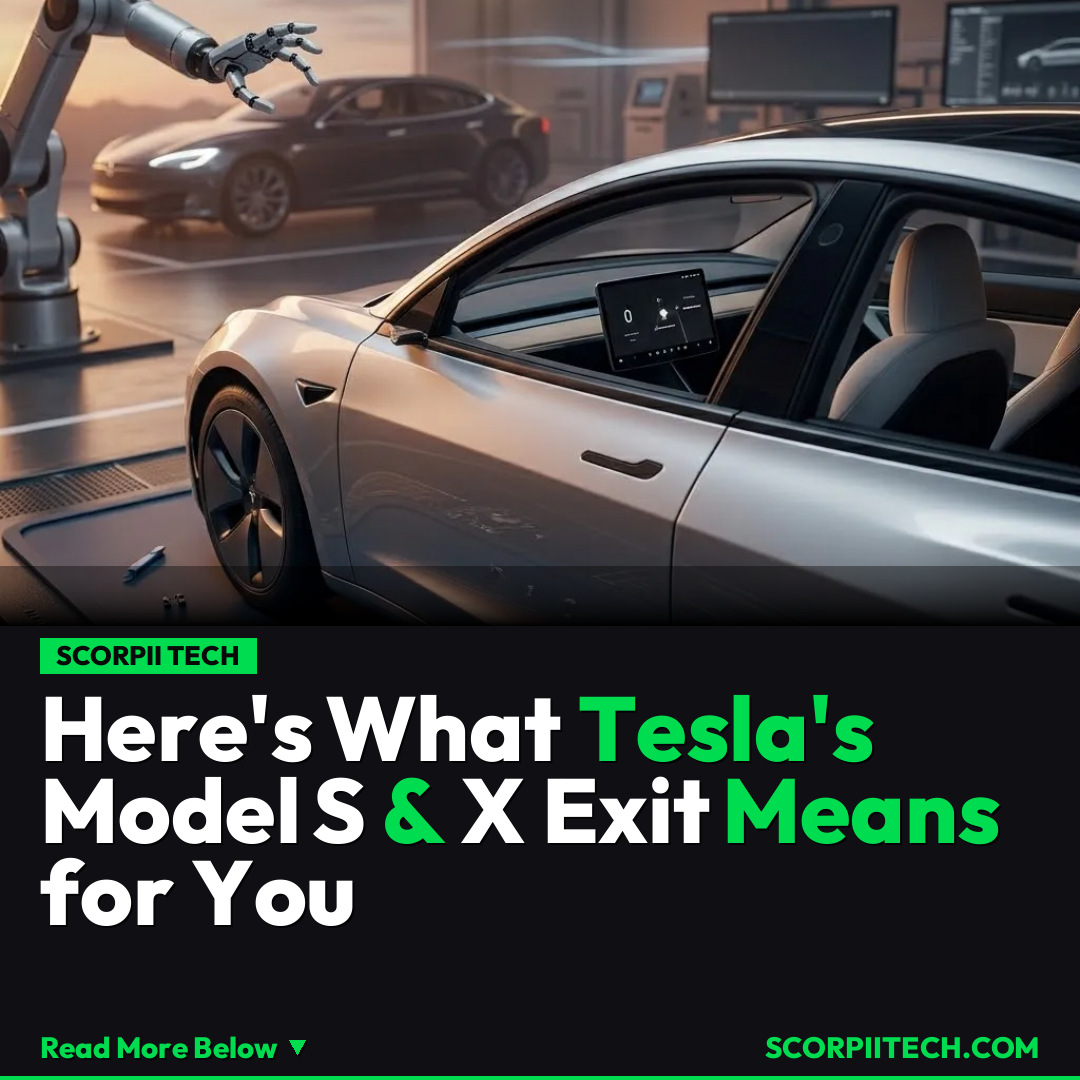
Get ready to wave goodbye to an era of luxury electric vehicles. Your Tesla Model S and Model X are officially winding down production, with just a few hundred units left to snag. But this isn't just an end; it's a dramatic pivot, signaling Tesla’s all-in bet on a future driven by AI, robots, and truly autonomous vehicles like the controversial Cybercab.
Key Details
If you've been eyeing a new Model S or X, your time is running out. The countdown has begun, with only a handful of these iconic Tesla vehicles remaining unsold as production nears its complete halt. Even CEO Elon Musk acknowledged the strategic shift, reportedly stating, "I think we got more carried away with the X." This candid admission underscores a calculated move, as Tesla prepares to transform its Fremont, California, factory from a luxury EV production hub into a state-of-the-art facility for manufacturing Optimus robots.
Need fast, secure, and affordable hosting for your next website or PHP application? We recommend Hostinger Managed Hosting. Get premium speeds, a free domain, and 24/7 expert support.
This isn't merely a shift in production lines; it's a full-throttle leap into Tesla's ambitious AI-first campaign. The upcoming star of this new era is the Cybercab, a radical concept designed from the ground up to be an entirely autonomous vehicle. Imagine a car where you won't find traditional controls like a steering wheel or pedals – that's the Cybercab. While Model 3 and Y continue to be volume drivers, this move cements Tesla’s focus on dominating the autonomous vehicle space, pushing boundaries that competitors like Amazon's Zoox are also exploring across California.
Why This Matters
Why should this matter to you? Tesla's aggressive pivot to an AI-first strategy, particularly with the Cybercab, introduces significant implications and potential challenges. The very idea of a vehicle without traditional controls immediately raises questions about reliability and safety. As autonomous vehicles become more prevalent, regulatory bodies like the National Highway Traffic Safety Administration (NHTSA) and the Federal Register will play a crucial role in shaping their acceptance and deployment. This transition highlights a global debate: are we ready to trust AI completely with our safety on the roads, especially given the risks associated with such advanced technology? Your future commute could depend on these critical questions.
The Bottom Line
So, what's your takeaway? The retirement of the Model S and Model X is far more than just a model refresh; it's a clear signal that Tesla is doubling down on its long-term vision for AI and full autonomy. You're witnessing a dramatic reshaping of what a car can be and how it's manufactured. Keep a close eye on developments surrounding the Cybercab and Optimus robots from Tesla’s Austin, Texas headquarters, and Fremont, California factory. This shift is not just for tech enthusiasts; it's set to impact regulations, infrastructure, and ultimately, how you move around in the world. Prepare for a future where your car might literally be a robot.
Originally reported by
TechCrunchWhat did you think?

Stay Updated
Get the latest tech news delivered to your reader.