Kelowna Wildfire: What it Means for Your Ops Resilience
A rapidly spreading wildfire near Kelowna, B.C., forced thousands to evacuate. Understand the critical infrastructure and operational resilience challenges this presents for your systems.
Editorial Note
Reviewed and analysis by ScoRpii Tech Editorial Team.
In this article
Immediate Operational Strain and Evacuation Logistics
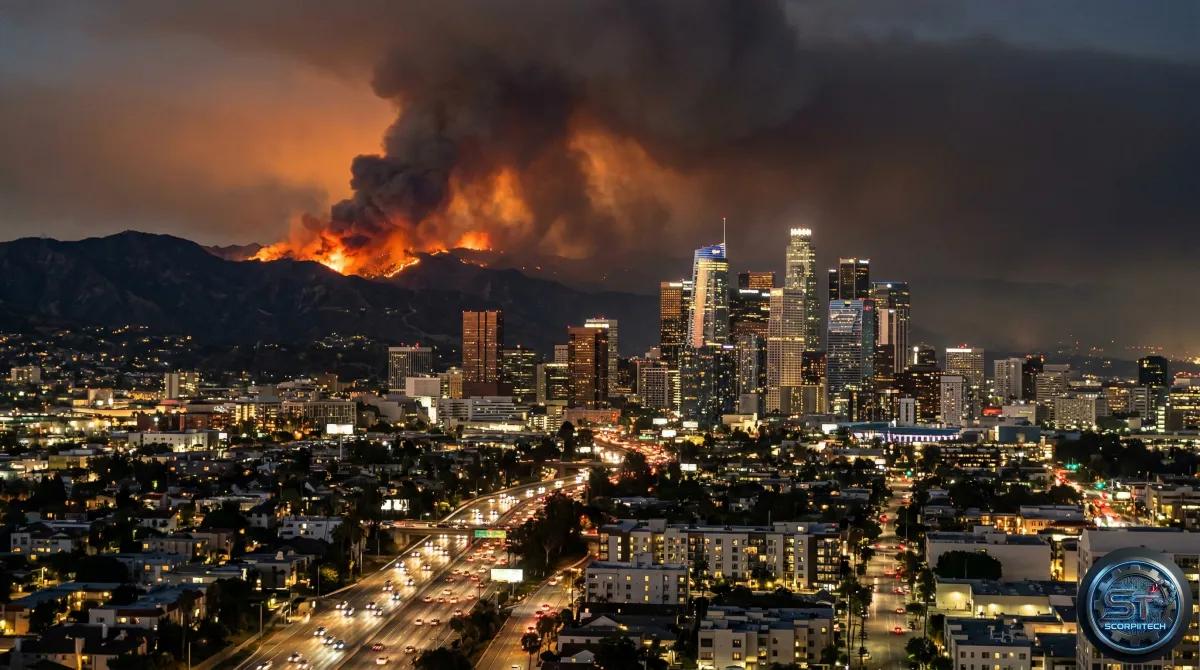
The Kelowna wildfire has forced thousands to evacuate, directly threatening critical transport routes like Highway 97 and impacting communities in Kelowna, B.C., West Kelowna, and the Westbank First Nation. You must consider the immense pressure this puts on public-facing communication channels, particularly when maintaining reliable real-time updates for residents. The Clifton Road area has experienced a direct threat, alongside critical infrastructure. You need to assess your operational preparedness for such disasters.
When physical access is compromised, the sheer volume of outbound communication regarding evacuation orders, safety zones, and resource availability becomes a complex task. You must ensure your systems can handle the increased load and provide accurate information to those affected, such as residents in the impacted zones. Travis Whiting, Kelowna Fire Chief, has been involved in coordinating the response efforts, highlighting the importance of precise resource deployment.
Deploy your next full-stack application effortlessly. Get $200 in free DigitalOcean credits to host your Docker containers, Laravel, or Python APIs.
Infrastructure Vulnerability in a Dynamic Environment
The wildfire’s rapid spread exposes critical infrastructure vulnerabilities, including power grids, telecommunication lines, and potentially data centers. You should review your geographical redundancy and failover mechanisms for mission-critical services, considering the integrity of communication links vital for emergency response and civilian contact. The incident serves as a reminder that even well-architected systems can encounter unexpected stress vectors when regional stability is threatened.
Sizing Your Single-Box VPS Architecture?
Calculate exact vCPU cores, RAM GB, NVMe storage, and estimated monthly budget for your traffic before migrating away from high-cost cluster providers.
Operational continuity under these circumstances is a pressing requirement. You must consider how your service delivery pipelines respond when primary access points or local network nodes are compromised. The following are key considerations for your infrastructure:
- Evaluating disaster recovery plans for widespread service disruption caused by physical infrastructure damage or mass population displacement
- Assessing the geographic distribution of your infrastructure and the efficacy of your failover strategies
- Proactive planning for scenarios like the Kelowna incident to ensure system resilience
What This Means For Your Operations
If your operational footprint includes regions prone to natural disasters, the Kelowna wildfire offers actionable insights. You should evaluate your emergency communication protocols, including how rapidly you can disseminate critical information to impacted users or internal teams. Consider the following:
- Reduced connectivity or reliance on mobile networks during a crisis
- Systems that account for sudden changes in user behavior and location
- Proactive planning for infrastructure redundancy and failover mechanisms
The Bottom Line for Developers
The Kelowna wildfire serves as a stark reminder of the importance of infrastructure resilience and proactive planning. You must consider the potential impact of natural disasters on your operations and take steps to ensure your systems can respond to unexpected stress vectors. By evaluating your disaster recovery plans, assessing your infrastructure, and planning for scenarios like the Kelowna incident, you can ensure your systems retain resilience in the face of unpredictable forces.
Originally reported by
Weights & Biases BlogWhat did you think?



Stay Updated
Get the latest tech news delivered to your reader.