Here's How AI Threatens Your Access To The Internet's Past
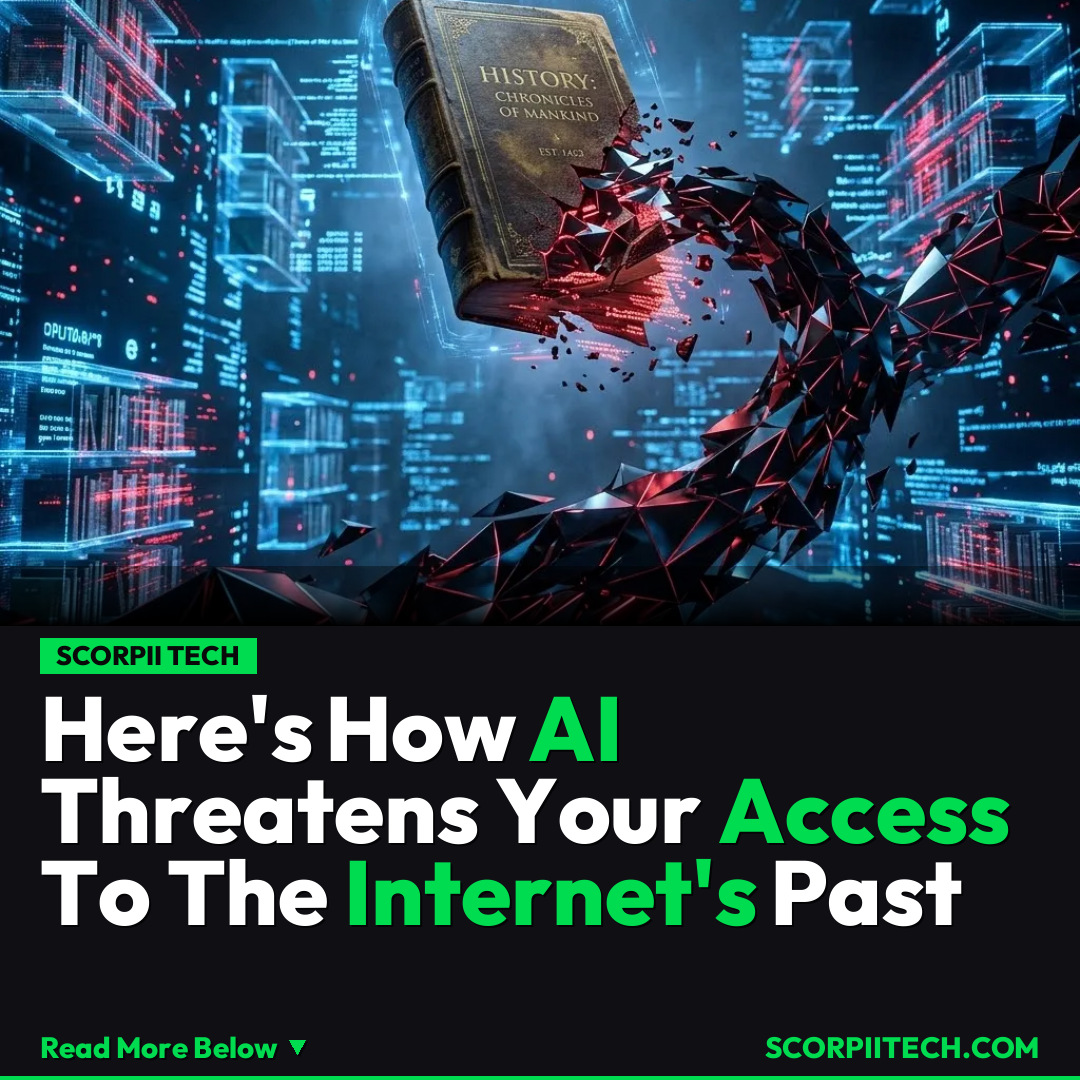
Discover how AI's rise is causing websites to block crawlers, putting the Internet Archive and your access to digital history at risk. Understand the implications for your future online.
Editorial Note
Reviewed and analysis by ScoRpii Tech Editorial Team.
In this article
The arrival of Artificial Intelligence (AI) chatbots has undeniably reshaped our digital landscape, but not always in ways you might expect. What if we told you that AI's rapid expansion is now directly jeopardizing the very fabric of the internet's memory? Your ability to peek into the past, to access critical historical records, is now under threat, and the culprit is a surprising twist in the AI narrative.
Key Details
You might already be familiar with the invaluable work of the Internet Archive, especially its iconic Wayback Machine. It’s the digital equivalent of a universal library, painstakingly archiving billions of web pages over decades, ensuring that the ephemeral nature of the internet doesn't erase our collective history. But a silent war is brewing, instigated by the rise of AI.
Need fast, secure, and affordable hosting for your next website or PHP application? We recommend Hostinger Managed Hosting. Get premium speeds, a free domain, and 24/7 expert support.
Here’s the breakdown: As AI models become increasingly sophisticated and data-hungry, websites are taking defensive measures. Publishers, concerned about their content being scraped and repurposed by AI bots without compensation or attribution, are updating their robots.txt files. This seemingly innocuous text file acts as a gatekeeper, telling automated crawlers and bots which parts of a website they are disallowed from accessing. The problem? These disallow lists, primarily aimed at AI content scrapers, are also inadvertently blocking the benevolent crawlers of the Internet Archive.
This escalating trend has placed the Internet Archive in serious jeopardy. Its founder, Brewster Kahle, recently issued a stark warning that cuts right to the heart of the issue. He stated unequivocally, "If publishers limit libraries, like the Internet Archive, then the public will have less access to the historical record." This isn't just about obscure pages; it's about the everyday digital legacy, from news articles by organizations like The New York Times and The Guardian, to community discussions on platforms like Reddit, and even specialized content from sources such as Nieman Lab and The Athletic, all potentially becoming inaccessible to future historians and researchers.
Why This Matters
Why should this matter to you? Imagine trying to research a past event, verify a news story, or simply revisit a website that has long since changed or disappeared. The Wayback Machine has traditionally been your go-to resource for exactly these scenarios. When major publishers, out of a legitimate concern for AI data mining, choose to block all automated access, they're not just stopping hostile bots; they're also inadvertently preventing the preservation of crucial historical data. This creates a gaping hole in the digital record, threatening the very concept of an accessible, verifiable internet.
Your access to information, particularly the historical context of current events, could be severely curtailed. This shift in U.S. online practices means that future generations, and even you right now, might find a censored or incomplete version of history. It impedes scholarly research, undermines journalistic integrity by making past references harder to confirm, and ultimately leaves you with a less robust and trustworthy internet. The integrity of our digital historical archives hangs in the balance.
The Bottom Line
So, what's the takeaway? You are witnessing a critical juncture where the advancements in AI are clashing with the foundational principles of digital preservation. It's a complex issue without easy answers. While publishers are right to protect their content, the collateral damage to institutions like the Internet Archive is immense. As a user of the internet, understanding this dynamic is crucial. Your future access to the complete tapestry of online history depends on how these digital gatekeeping battles play out.
Originally reported by
BGRWhat did you think?



Stay Updated
Get the latest tech news delivered to your reader.