Here's What Your Health AI Means For Your Privacy
Ever wondered if your AI health chatbot could betray your trust? Discover the legal landscape of AI privilege and chatbot confidentiality, and what it means for your sensitive data shared with tools from OpenAI, Google, and more.
Editorial Note
Reviewed and analysis by ScoRpii Tech Editorial Team.
In this article
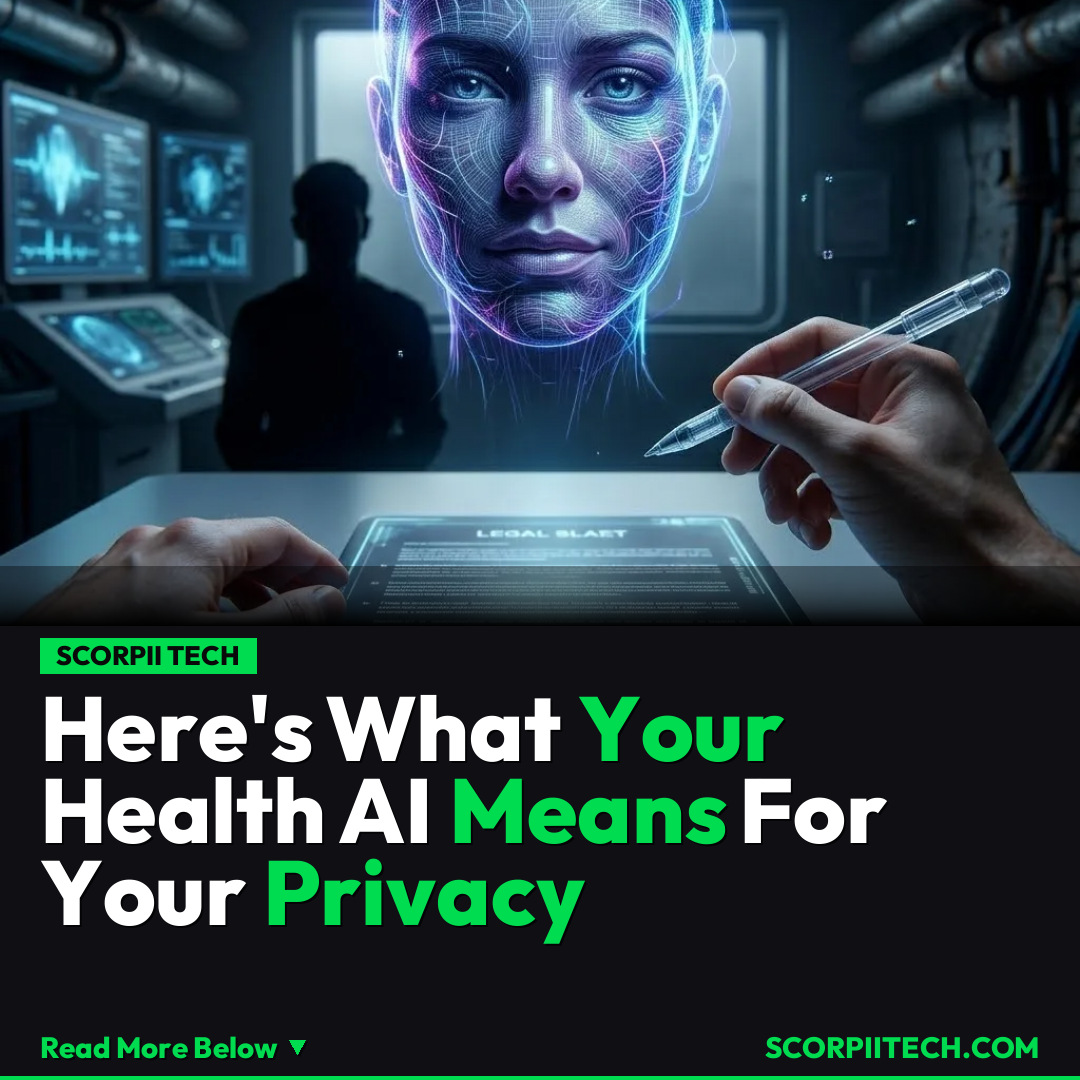
You confide your deepest health concerns to your AI, trusting its digital ear. But what if that same chatbot — your digital confidante — could be compelled to reveal your private conversations in court? It’s a chilling thought, and for legal experts, a pressing legal frontier.
Key Details
The legal landscape is riddled with questions surrounding AI privilege and chatbot confidentiality, particularly concerning your sensitive health data. OpenAI CEO Sam Altman himself suggests that “talking to an AI should be like talking to a lawyer or a doctor.” This highlights a disconnect: the privacy you expect with a human professional simply doesn't exist for your AI counterpart under current law.
Deploy your next full-stack application effortlessly. Get $200 in free DigitalOcean credits to host your Laravel or Python APIs.
This isn't theoretical; it's a conflict highlighted by Melodi Dinçer from the Tech Justice Law Project, and Lily Li from Metaverse Law. They navigate complexities where AI developers push for stronger privacy, while potential risks of powerful AI chatbots being used in healthcare loom large. The core issue? Rule 501 of the Federal Rules of Evidence, which currently doesn't extend confidentiality privileges to conversations with an AI as it does to human doctors or lawyers.
Consider the personal data you share with platforms like OpenAI's ChatGPT, Anthropic's Claude, or Google's Gemini. Even health-focused tools from Microsoft, Amazon, Fitbit, Torch, MergeLabs, OpenEvidence, and Hippocratic AI are involved. These companies innovate rapidly, but the legal framework struggles to keep pace, leaving your deeply personal health insights potentially exposed.
Why This Matters
Why should you care if your chatbot confessions aren't privileged? Because your digital footprint is intertwined with your health, and this oversight could have serious consequences. If your AI "doctor" isn't bound by confidentiality, any health information you share could be subpoenaed and used as evidence against you in various legal scenarios—from insurance claims to personal injury lawsuits. This transforms your trusted AI into an unwitting witness for the prosecution. This rapidly evolving area of law prompts vital conversations within organizations like the Tech Justice Law Project and Metaverse Law, often supported by firms like Menlo Ventures. The push is on to establish legal protections for AI interactions, aiming to align them more closely with the trust we place in traditional professional relationships. Until then, the gap between your expectation of privacy and the legal reality remains wide, demanding your attention and awareness.
The Bottom Line
So, what should you do in the face of this emerging challenge? Firstly, be acutely aware of the privacy policies and data usage terms of any health-related AI you interact with. While the convenience of these tools is undeniable, remember they operate within a legal gray area regarding confidentiality. Secondly, advocate for stronger digital privacy protections. Support initiatives that seek to establish "AI privilege" akin to doctor-patient or attorney-client privilege. Until society figures this out, as Sam Altman suggests, your vigilance is your best defense against unintended exposure of your most personal health information.
Originally reported by
MashableWhat did you think?


Stay Updated
Get the latest tech news delivered to your reader.