Hackers Want Your Data: Here's How 5 Gadgets Protect You
Hackers are constantly finding new ways to steal your personal data. Discover 5 essential privacy gadgets that can empower you to fight back and safeguard your digital life.
Editorial Note
Reviewed and analysis by ScoRpii Tech Editorial Team.
In this article
You might think your data is safe, but hackers are consistently coming up with new and clever ways to steal your most sensitive information. From digital intrusions to physical theft, the threats are constant and evolving. The good news? You don't have to be a helpless target. A new wave of innovative privacy gadgets is hitting the market, specifically designed to empower you to fight back and secure your digital and physical life.
Key Details
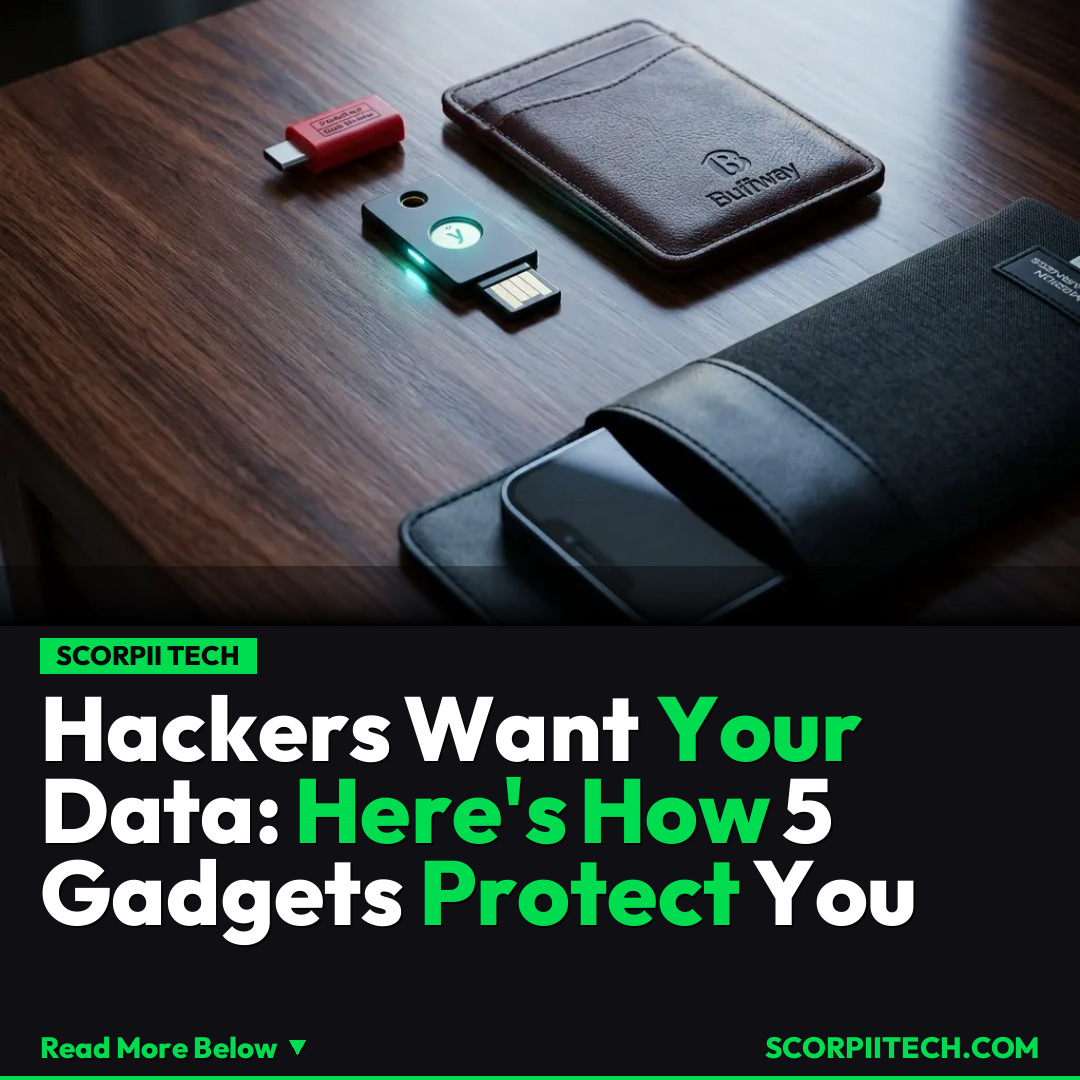
Protecting your digital footprint starts with robust defenses. The YubiKey 5 Series is a prime example of hardware-backed security, offering a physical key for multi-factor authentication (MFA). As First Facto, Only the VP, wisely noted, "With MFA switched on, you're 99% less likely to get hacked, even if hackers figure out your password." Starting at $58, this small device provides a massive boost to your account security across platforms like Microsoft, Google, and Apple.
Need fast, secure, and affordable hosting for your next website or PHP application? We recommend Hostinger Managed Hosting. Get premium speeds, a free domain, and 24/7 expert support.
Beyond digital credentials, your physical cards and devices are also targets. The Buffway Slim RFID Wallet offers a simple yet effective shield, featuring eight slots designed to block RFID signals that thieves use to skim your credit card information wirelessly. For your devices, the PortaPow USB-C Data Blocker is a must-have. Compatible with all USB-C devices, this gadget ensures that when you charge your phone or tablet in public ports, only power flows – no data transfer, preventing "juice jacking" attacks. It’s a tiny accessory that gives you peace of mind.
Finally, for ultimate digital silence and privacy, consider the Mission Darkness Faraday Phone Bag. For just $25, this specialized bag completely blocks all wireless signals to and from your phone, including cellular, Wi-Fi, Bluetooth, GPS, RFID, and NFC. It’s perfect when you need to ensure no one can track, listen in, or access your device remotely. And for your home network, the TP-Link Roam 6 AX1500, costing $69.99, helps secure your Wi-Fi, providing a more private connection for all your smart devices.
Why This Matters
You might wonder if these gadgets are truly necessary. Consider the constant warnings from organizations like the FBI and the Internet Crime Complaint Center (IC3), who consistently report on the escalating sophistication of cyberattacks. Every day, thousands of individuals fall victim to data breaches, identity theft, and financial fraud. While tech giants like Facebook, Microsoft, Google, and Apple invest heavily in security, the ultimate responsibility for your personal data often rests with you.
These privacy gadgets aren't just fancy toys; they represent proactive steps you can take to reclaim control over your digital and physical privacy. They offer tangible barriers against common attack vectors that hackers exploit. By integrating these simple, affordable tools into your daily routine, you're not just reacting to threats; you're building a personal fortress around your most valuable information, empowering you in an increasingly interconnected and vulnerable world.
The Bottom Line
In an era where your data is constantly under siege, taking proactive measures is no longer optional – it’s essential. You now have access to a range of accessible privacy gadgets, from robust MFA keys like the YubiKey 5 Series to simple data blockers and signal-blocking bags. By understanding the threats and equipping yourself with these smart solutions, you can significantly reduce your vulnerability. Don't wait until a breach occurs; empower yourself with these privacy gadgets and secure your peace of mind starting today.
Originally reported by
BGRWhat did you think?


Stay Updated
Get the latest tech news delivered to your reader.