Your Power Bills are Soaring as Tech Giants Demand More: What You Need to Know
You'll pay more for power as AI data centers surge. Learn how tech's massive energy demands are impacting your bills, the power grid, and political promises.
Editorial Note
Reviewed and analysis by ScoRpii Tech Editorial Team.
In this article
Trump Demands Tech Companies Pay for Their AI Power
You’re about to see a major shift in how AI data centers get powered. On March 4th, former President Donald Trump announced that major tech companies – Amazon, Google, Meta, Microsoft, xAI, Oracle, and OpenAI – will be responsible for funding their own power supplies for new AI data centers. Trump stated, “Under this bold initiative, these massive companies will build, bring, or buy their own power supply for new AI data centers.” While the details are still emerging, this move signals a growing recognition of the immense energy demands of artificial intelligence.
Currently, the pledge relies on voluntary commitments. However, the pressure is on, and the expectation is that these companies will step up to the plate. The initiative aims to address concerns about grid stability and the potential for increased costs for everyday consumers.
Deploy your next full-stack application effortlessly. Get $200 in free DigitalOcean credits to host your Docker containers, Laravel, or Python APIs.
Tech Giants Already Making Voluntary Commitments
It’s not just a political push; some tech companies are already taking action. Anthropic, Microsoft, and Meta are among those voluntarily committing to cover the costs associated with new power plants to support their data centers. A White House spokesperson, Taylor Rogers, affirmed this direction, stating, “We’re telling the major tech companies that they have the obligation to provide for their own power needs.”
Sizing Your Single-Box VPS Architecture?
Calculate exact vCPU cores, RAM GB, NVMe storage, and estimated monthly budget for your traffic before migrating away from high-cost cluster providers.
These commitments often involve long-term agreements, sometimes spanning 15 years. However, utilities, grid operators, and local regulators are worried that residents could still see increased fuel and electricity costs, even with these efforts. The sheer scale of energy needed is a significant challenge.
Grid Strain and Delayed Infrastructure
The existing power infrastructure is already struggling to keep up with demand. Plans for new next-generation nuclear reactors and fossil fuel-fired plants, including gas turbines, are facing significant delays. You shouldn’t expect to see these new power sources fully operational until the 2030s. These delays are compounded by ongoing supply chain issues, particularly a shortage of critical components like gas turbines.
This situation is further complicated by the increasing demand not only from data centers but also from the growing adoption of electric vehicles and other energy-intensive technologies. The combination of factors is putting immense strain on grid stability and expansion efforts.
Your Electricity Bills Are Already Rising
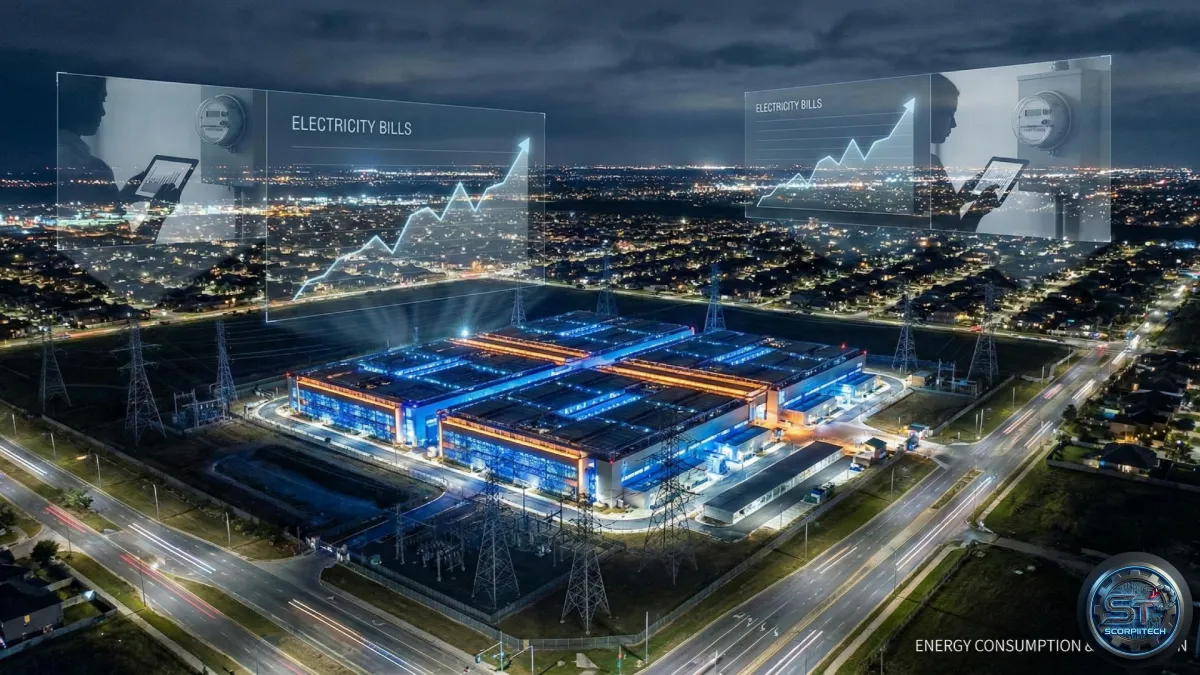
This isn’t a future problem; it’s impacting your wallet right now. Household electricity bills are projected to increase by 13 percent in 2025, according to Climate Power and the Department of Energy. This issue became a focal point in recent state elections, demonstrating the growing public concern.
Abigail Spanberger, while campaigning for Governor, observed the widespread anxiety among residents. She noted, “As I campaigned for Governor last year, I traveled to every corner of Virginia, and I heard the same pressing concern everywhere: costs are too high.” The surging demand from data centers and electric vehicles is a major driver of these soaring electricity rates, directly impacting communities and voters.
What This Means For You
If you live near a data center, or simply rely on the power grid, you need to be prepared for higher electricity bills in the coming years. Even with tech companies making commitments to self-fund power, the delays in building new infrastructure mean the existing grid will be stretched thin. This could lead to reliability issues and potential outages.
You should also pay attention to local and state politics. The strain on power grids and your household budget is becoming a central issue in elections. Your community’s energy future is now directly tied to the rapid expansion of AI and its massive energy appetite. Consider contacting your representatives to voice your concerns and advocate for responsible energy policies.
The Bottom Line
The demand for power from AI is real, and it’s growing rapidly. While tech companies are starting to take responsibility, significant challenges remain. You can expect to see increased scrutiny on energy consumption and a push for more sustainable solutions. Staying informed and engaged in the conversation is crucial as we navigate this evolving landscape.
Originally reported by
VergeWhat did you think?


Stay Updated
Get the latest tech news delivered to your reader.