Here's How Elon Musk's xAI May Have Used Your Rival's AI
Elon Musk appeared to admit xAI used OpenAI's models to train its own AI, stirring a major controversy. Discover what this means for you and the competitive landscape of AI development.
Editorial Note
Reviewed and analysis by ScoRpii Tech Editorial Team.
In this article
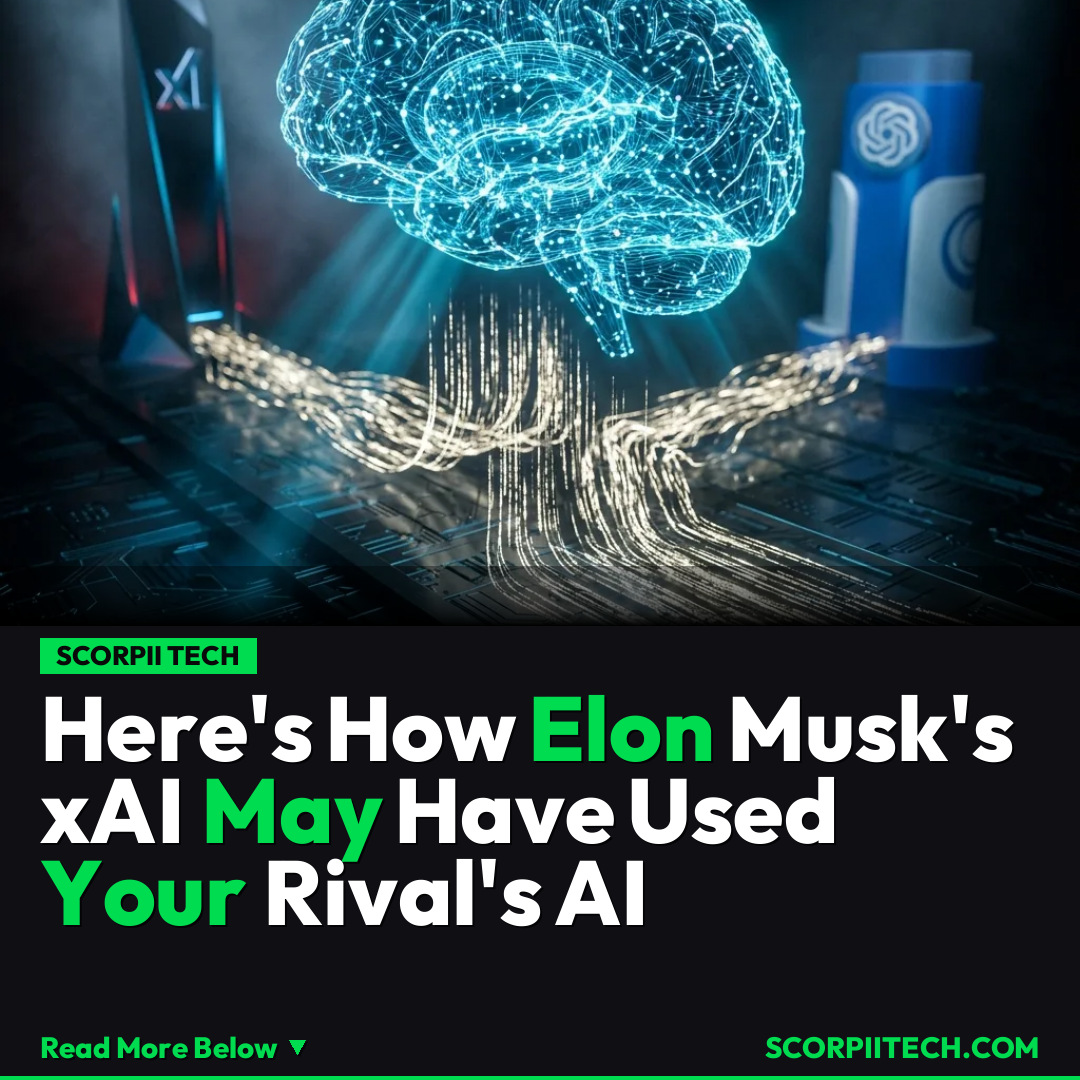
Imagine building a cutting-edge product, only for a competitor to seemingly use your very own blueprint to create their version. That’s essentially what appears to have unfolded in the high-stakes world of artificial intelligence, as Elon Musk, under oath, seemed to indicate his company xAI may have leveraged OpenAI’s models to train its own.
Key Details
You heard that right. While testifying in federal court on Thursday, Elon Musk offered a significant insight into the practices of his AI lab, xAI. He seemed to suggest that xAI has indeed used models from competitor OpenAI to train its own AI systems. This revelation came with a notable justification: Musk stated, “It is standard practice to use other AIs to validate your AI.” This quote from Musk’s testimony reveals a potentially common, yet highly contentious, method within the rapidly evolving AI industry. You might think of it as a quality control measure, but in this cutthroat environment, it’s much more.
Deploy your next full-stack application effortlessly. Get $200 in free DigitalOcean credits to host your Laravel or Python APIs.
However, this “standard practice” runs directly counter to OpenAI’s strategic efforts. You see, OpenAI has been actively trying to prevent its competitors from exactly this — distilling its AI models. Distillation is a technical technique where a smaller, more efficient model learns to mimic the behavior of a larger, more complex model, essentially extracting its knowledge. This isn't just about validation; it's about learning from and potentially replicating the foundational work of rivals like OpenAI, which develops models such as ChatGPT. The controversy here lies in the perceived ethical and competitive boundaries of AI development.
The landscape of AI development is incredibly competitive, with major players like xAI, OpenAI, and Anthropic (developer of Claude) vying for supremacy. Your understanding of this dynamic is crucial, especially when considering the implications for national interests. A memo to a House committee from a US government source, for example, has highlighted concerns about AI model security and ownership, particularly regarding potential technology transfers to locations like China. This incident involving xAI and OpenAI underscores the intense scrutiny and high stakes involved, moving beyond just corporate rivalry to broader geopolitical implications.
Why This Matters
So, why should this matter to you? This isn't just another tech executive feud. What Musk seemingly admitted touches upon fundamental questions about intellectual property, fair competition, and the very foundation of AI innovation. If companies routinely leverage competitors’ painstakingly developed models, it could disincentivize costly research and development efforts, potentially slowing down true breakthroughs. You might wonder if this practice is a shortcut that ultimately hinders the overall progress of AI, or if it's a necessary step in a field moving at lightning speed.
Furthermore, this situation brings the "secret sauce" of AI development into the open. As AI models become more integrated into your daily life and work, the origins and training data of these models are increasingly important. Are you interacting with an AI that learned from a rival's proprietary work without explicit permission? This question raises concerns about transparency and the potential for a 'copycat' culture rather than fostering diverse, original approaches to AI problems. Your trust in the underlying technology could be impacted.
The Bottom Line
At the end of the day, what you need to take away from this is that the rules of engagement in the AI industry are still being written. This incident between xAI and OpenAI highlights the urgent need for clearer guidelines on intellectual property, data usage, and ethical competition in AI model training. As a user or developer, you should pay close attention to these developments, as they will undoubtedly shape the quality, ethics, and trustworthiness of the AI technologies you interact with daily. The implications for innovation and fairness are profound, and your awareness is key to navigating this complex landscape.
Originally reported by
WiredWhat did you think?



Stay Updated
Get the latest tech news delivered to your reader.