Here's How a '1234' Password Exposed Your City's Tech
A shocking cyberattack on crosswalk buttons revealed weak security in cities across the U.S. Learn how a simple default password exposed critical infrastructure and what it means for you.
Editorial Note
Reviewed and analysis by ScoRpii Tech Editorial Team.
In this article
Imagine waking up to news that your city's traffic signals were hacked, not by sophisticated supervillains, but by someone using a '1234' password. That's exactly what happened last April when a cyberattack, starting in Silicon Valley, spread to crosswalk buttons across multiple states, exposing shocking vulnerabilities and leaving local officials red-faced.
Key Details
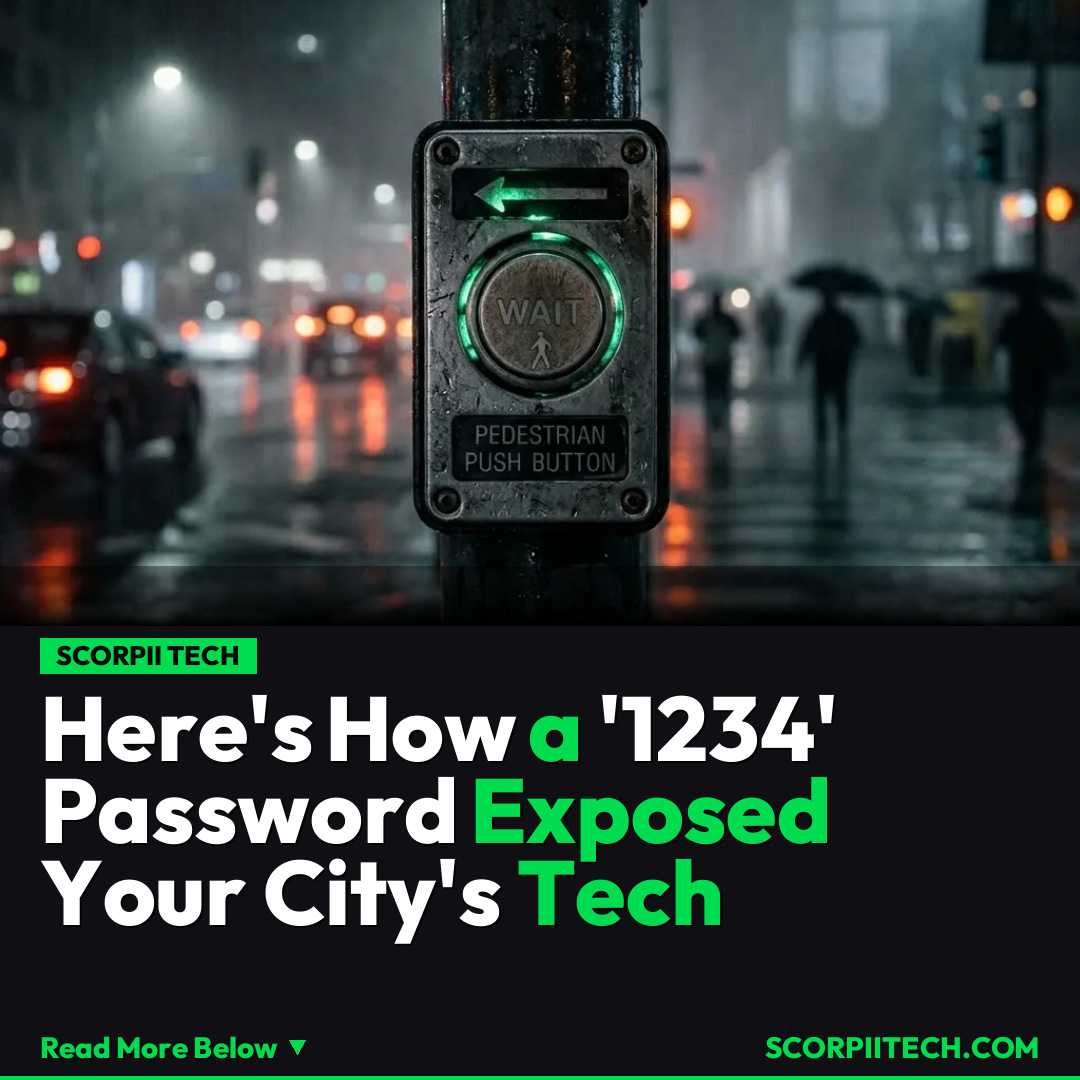
Last April, a simple cyberattack began hitting around 20 street intersections across Silicon Valley, in cities like Redwood City, Menlo Park, and Palo Alto. This wasn't sophisticated espionage, but a surprisingly basic hack targeting Bluetooth-enabled Polara crosswalk buttons. The vulnerability quickly spread to multiple states, exposing an astonishing lack of basic security protocols in public infrastructure.
Need fast, secure, and affordable hosting for your next website or PHP application? We recommend Hostinger Managed Hosting. Get premium speeds, a free domain, and 24/7 expert support.
The technical details, highlighted by Federal Highway Administration cybersecurity official Edward Fok, are almost comical. These Polara units came with a default password of '1234' and could be accessed via a publicly available app. This allowed the hack to expand rapidly, impacting cities from Seattle, where transit operations director Abel Pacheco had to respond, to Denver and Greenville, Texas. WIRED called it "The Dumbest Hack of the Year," but its reach was very real, embarrassing officials like Redwood City's then-city manager Melissa Diaz and current manager Nick Mathiowdis and prompting serious questions about their security practices. Physical security vlogger Deviant Ollam and Synapse ITS CTO Josh LittleSun further brought attention to this critical flaw.
Why This Matters
This hack isn't just about embarrassing local officials; it's a flashing red light for you and everyone relying on smart city infrastructure. When a simple '1234' password can compromise a crosswalk button, it forces you to question the security of more critical systems your city relies on – from traffic lights to public Wi-Fi. As cities deploy new technologies, the rush to innovate often overlooks fundamental security, leaving your daily interactions with public technology vulnerable and highlighting a systemic issue of weak security practices.
The Bottom Line
Your takeaway: never assume public infrastructure is inherently secure. This "dumb hack" should compel you to advocate for stronger cybersecurity in your community. For local governments, the message is crystal clear: prioritize security audits, abandon default passwords, and consistently update systems. A simple '1234' can expose real problems, impacting your safety and trust in the connected city.
Originally reported by
WiredWhat did you think?



Stay Updated
Get the latest tech news delivered to your reader.