Charge Your EV in 11 Minutes? Here's What China's Battery Means.
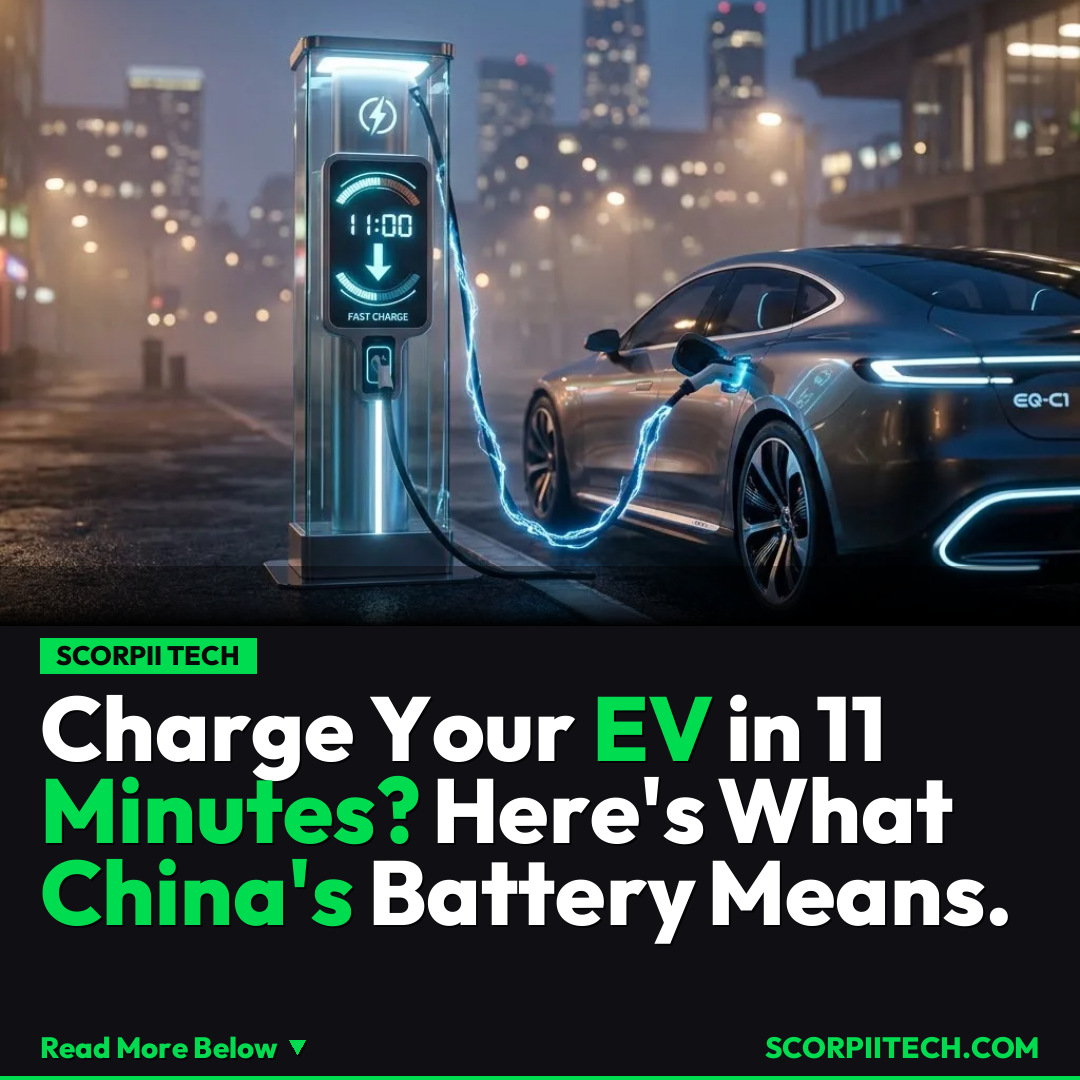
China's BAIC Group unveils a sodium-ion EV battery prototype that recharges in 11 minutes. Discover what this rapid-charging, robust battery could mean for your electric vehicle experience, despite its energy density caveat.
Editorial Note
Reviewed and analysis by ScoRpii Tech Editorial Team.
In this article
Are you tired of waiting around for your electric vehicle to charge? What if you could plug in your EV, grab a coffee, and come back to a fully charged battery in less time than it takes to charge your current phone? That's the electrifying promise from China's BAIC Group, which claims its new sodium-ion battery prototype can achieve a full recharge in a blistering 11 minutes for its Nevo A06 EV, all thanks to cutting-edge 4C charging support.
Key Details
This breakthrough isn't just a bold claim; it represents a significant leap in battery technology. The sodium-ion prototype, developed by BAIC Group, is designed with a focus on speed and resilience. With 4C charging support, the battery can accept a charge at four times its capacity, allowing for that incredibly rapid 11-minute full recharge. This capability could redefine your expectations for EV convenience, especially for quick top-ups during your day.
Deploy your next full-stack application effortlessly. Get $200 in free DigitalOcean credits to host your Laravel or Python APIs.
Beyond its rapid charging, this battery showcases impressive durability and performance across extreme conditions. You'll be interested to know it boasts an operating temperature range from a frigid -40 degrees Fahrenheit to a scorching 140 degrees Fahrenheit. Even at -4 degrees Fahrenheit, it retains an impressive 92% of its capacity, meaning cold weather won't drastically impact your range or charging speed. Plus, its structural integrity can withstand temperatures up to 392 degrees Fahrenheit, adding a layer of safety and reliability that's crucial for your peace of mind on the road.
While the speed and temperature resilience are game-changers, it's important for you to understand the major caveat: the energy density of the battery stands at 170 Wh/kg. This figure is lower than what you'd typically find in high-performance lithium-ion batteries that power many of today's longer-range EVs. However, this development from entities like BAIC Group, alongside broader industry players such as CATL, Changan Automobile, and Aurora Battery, signals a growing momentum in the exploration of sodium-ion alternatives.
Why This Matters
For you, the potential implications are huge. Imagine a world where range anxiety is significantly reduced, not by longer range, but by ultra-fast charging. This technology could make EV ownership more appealing for those who rely on quick turnarounds or frequently travel long distances. Quick charging allows for more flexible travel plans and less downtime, meaning you spend less time tethered to a charger and more time enjoying your journey. It expands the practical use cases for electric vehicles, potentially accelerating their adoption in regions with varying climates.
However, that 170 Wh/kg energy density means you'll likely see this particular battery first in urban EVs or those designed for specific short-to-medium range applications, rather than luxury long-haul vehicles. It highlights an ongoing trade-off in battery development: do you prioritize ultimate range or rapid charging speed and extreme temperature performance? This prototype suggests that for many drivers, especially in metropolitan areas or colder climates, the latter might be a more practical and desirable solution for your daily commute and errands.
The Bottom Line
This sodium-ion battery prototype from BAIC Group represents an exciting step forward in making EVs more accessible and convenient for you. While the energy density might mean a trade-off in ultimate range compared to some lithium-ion options, its rapid charging and robust performance in extreme temperatures offer a compelling alternative. Keep an eye on how this technology progresses; it could fundamentally shift what you expect from your next electric vehicle, proving that speed and reliability are just as important as how far you can go on a single charge.
Originally reported by
BGRWhat did you think?



Stay Updated
Get the latest tech news delivered to your reader.