Your AI Agents Are Finally Learning: ALTK-Evolve Tackles the 'Eternal Intern' Problem
ALTK-Evolve enables your AI agents to retain long-term, on-the-job learning, solving the 'eternal intern' problem that causes 95% pilot failures.
Editorial Note
Reviewed and analysis by ScoRpii Tech Editorial Team.
In this article
Addressing the Eternal Intern Problem
You face a significant challenge when deploying AI agents: their inability to retain situational knowledge. This 'eternal intern' problem causes 95% of pilot failures, as agents fail to adapt to unique environments. ALTK-Evolve aims to resolve this issue by injecting critical 'AI on-the-job learning' capabilities into your agent deployments.
ALTK-Evolve integrates long-term episodic memory, enabling agents to build and access a cumulative understanding of their operational history. This capability is crucial for agents deployed in AppWorld or utilizing frameworks like ReAct, which combines reasoning traces with specific actions.
Deploy your next full-stack application effortlessly. Get $200 in free DigitalOcean credits to host your Docker containers, Laravel, or Python APIs.
Concept Refresher: ReAct
ReAct, short for Reason and Act, is a general paradigm for AI agent design. It allows agents to generate both a thought process and an action to take based on that thought, enabling more robust and interpretable agent behavior. For your systems, ReAct enables agents to perform complex tasks by breaking them down into smaller steps, dynamically planning, and correcting themselves.
Sizing Your Single-Box VPS Architecture?
Calculate exact vCPU cores, RAM GB, NVMe storage, and estimated monthly budget for your traffic before migrating away from high-cost cluster providers.
The Underlying Mechanism: Long-Term Episodic Memory
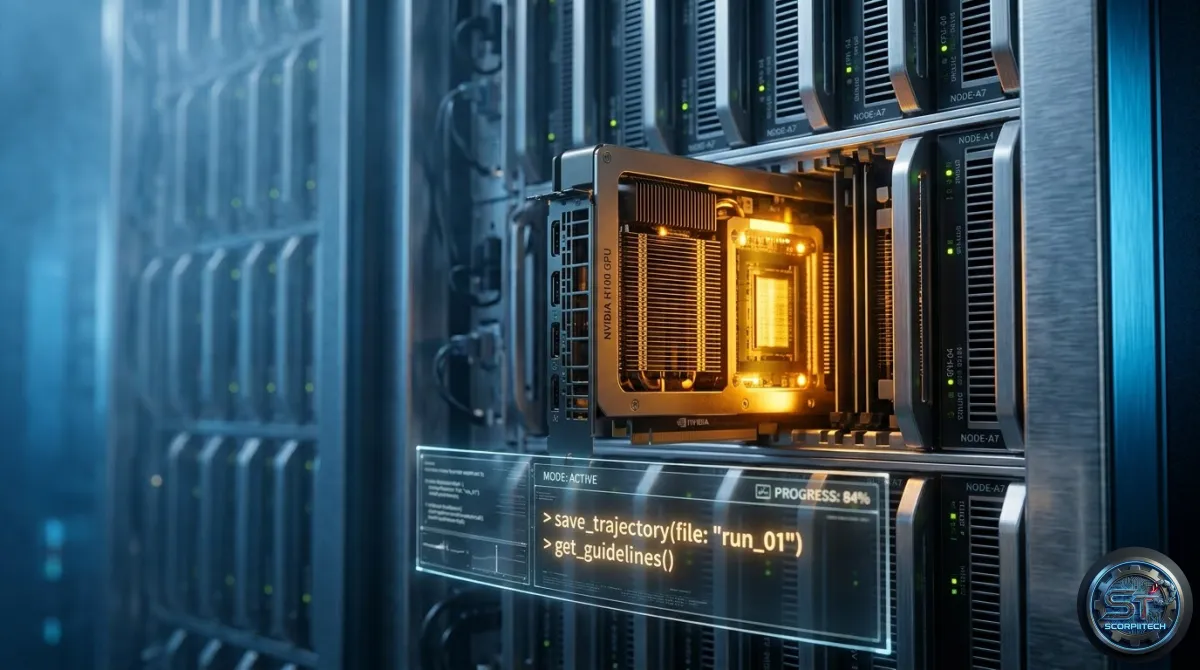
The core of ALTK-Evolve's capability lies in its implementation of a robust long-term episodic memory system. This system records and retrieves specific interaction sequences, environmental states, and generated guidelines over extended periods. The Memory Control Plane (MCP) orchestrates how agents interact with their accumulated experience, providing tools such as get_guidelines and save_trajectory.
Some key features of ALTK-Evolve's long-term episodic memory system include:
- Structured mechanism for recording and retrieving interaction sequences
- Environmental state tracking and recall
- Generated guideline storage and retrieval
- MCP for orchestrating agent interaction with accumulated experience
What This Means For Your Operations
For your engineering and operations teams, ALTK-Evolve translates into more reliable and autonomous AI agent deployments. You can expect a significant reduction in the need for constant human intervention to retrain or reconfigure agents for unique operational contexts. Agents will become capable of adapting to novel situations based on their stored experiences, leading to more resilient automation.
Infrastructure Impact
As you consider deploying ALTK-Evolve, you'll need to think about the infrastructure requirements for supporting long-term episodic memory. This includes robust, persistent storage and state management infrastructure to support the agents' evolving memory. You'll also need to consider how to manage, back up, and potentially audit these long-term episodic memories, integrating them into your existing data governance and MLOps pipelines.
Originally reported by
Hugging Face BlogWhat did you think?

Stay Updated
Get the latest tech news delivered to your reader.