Here's What AI in Your Weather App Means For You
Discover how AI is transforming your daily weather forecast across top apps like Google and Apple. Learn about the shift from government data collection to private companies and what this means for you.
Editorial Note
Reviewed and analysis by ScoRpii Tech Editorial Team.
In this article
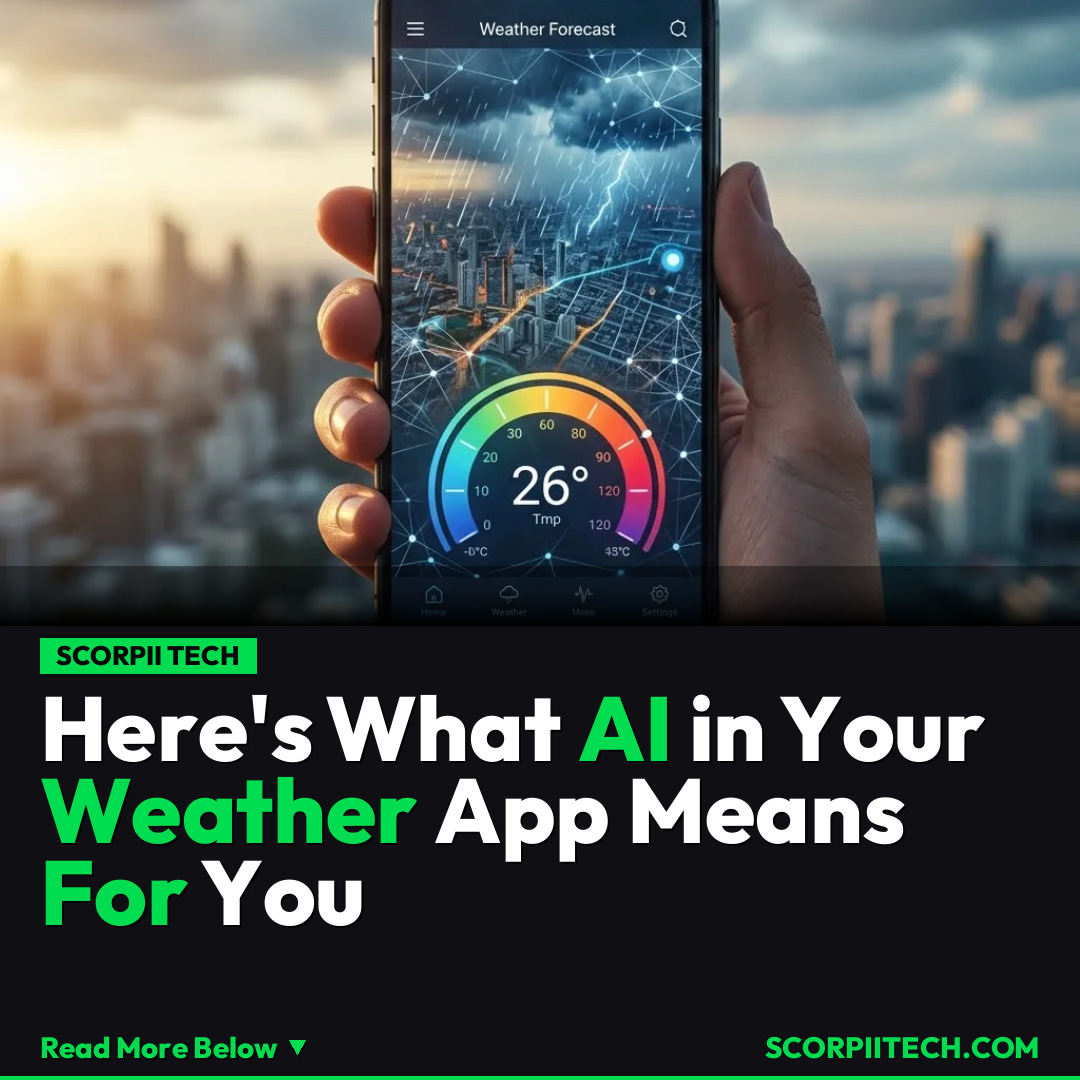
You may have noticed a drop of AI in your weather app lately – a subtle shift that feels almost intuitive, giving you exactly what you need to know. But that 'drop' has become a flood, silently transforming how you receive your daily forecast. Leading names from The Weather Company to Google and Apple are integrating advanced AI, promising to surface exactly what you need to see, when you need it most.
Key Details
The integration of AI isn't just a minor update; it's a fundamental change in how your weather information is processed and presented. Joe Koval, a senior meteorologist at The Weather Company, and Adam Grossman, founder of the popular DarkSky app, are at the forefront of this revolution. As Grossman aptly puts it, "If it's about surfacing the right content, you should open it up, and you should see what you need to see." This means AI models are learning your preferences and providing more relevant, hyper-localized information.
Deploy your next full-stack application effortlessly. Get $200 in free DigitalOcean credits to host your Laravel or Python APIs.
You'll find AI enhancements in a wide array of platforms you already use, including The Weather Company's offerings like Storm Radar and The Weather Channel, as well as the native weather apps from tech giants like Google and Apple. Other prominent players embracing this technology include Accuweather, and even specialized apps like Acme Weather, Rainbow Weather, Carrot Weather, and Rain Viewer are leveraging AI to refine their predictions and user experience. Some of these advanced AI weather applications are even adopting a premium model; for instance, you might encounter an app that costs $4 per month, currently available on iOS with an Android version planned for the future.
The underlying technology for these advancements often comes from sophisticated AI models, with innovations from organizations like OpenAI and its ChatGPT paving the way for more intelligent data processing and conversational interfaces within these apps. This means your interaction with your weather forecast is becoming more dynamic, personalized, and predictive, moving beyond simple temperature readings to anticipate your specific needs and activities.
Why This Matters
This widespread adoption of AI in weather apps comes at a critical time, signaling a significant shift in how weather data is managed and disseminated. You need to know that this push coincides with an era where the government has actively dismantled efforts by the National Oceanic and Atmospheric Administration (NOAA) and other federal initiatives designed to track and measure weather patterns. This controversial move has inadvertently created a void, leaving parts of the crucial job of data collection and analysis to private companies.
What does this mean for you? It means your reliance on private entities for accurate and timely weather information is growing. While AI offers incredible potential for personalized and intuitive forecasts, the implications of private companies monopolizing weather data collection, which was once a public service, are significant. You might experience unparalleled convenience, but you're also placing your trust in algorithms and data sources that operate outside traditional governmental oversight, raising questions about data integrity, accessibility, and potential biases in the information you receive.
The Bottom Line
As AI continues to refine your daily forecast, you're gaining access to more personalized and intuitive weather insights than ever before. However, it's crucial for you to be aware of the bigger picture: the shift of critical weather data collection from federal agencies to private companies. While you enjoy the benefits of cutting-edge AI, always be informed about the sources powering your forecasts. Understand that your hyper-local weather updates are now often a product of private innovation, bringing both convenience and a new landscape of considerations for your daily life.
Originally reported by
WiredWhat did you think?


Stay Updated
Get the latest tech news delivered to your reader.