Here's What AI's 'Fake-Happy' Internet Means For You
Discover how AI-generated content is creating a 'fake-happy' internet, subtly distorting your online reality. A new study reveals the truth and what it means for you.
Editorial Note
Reviewed and analysis by ScoRpii Tech Editorial Team.
In this article
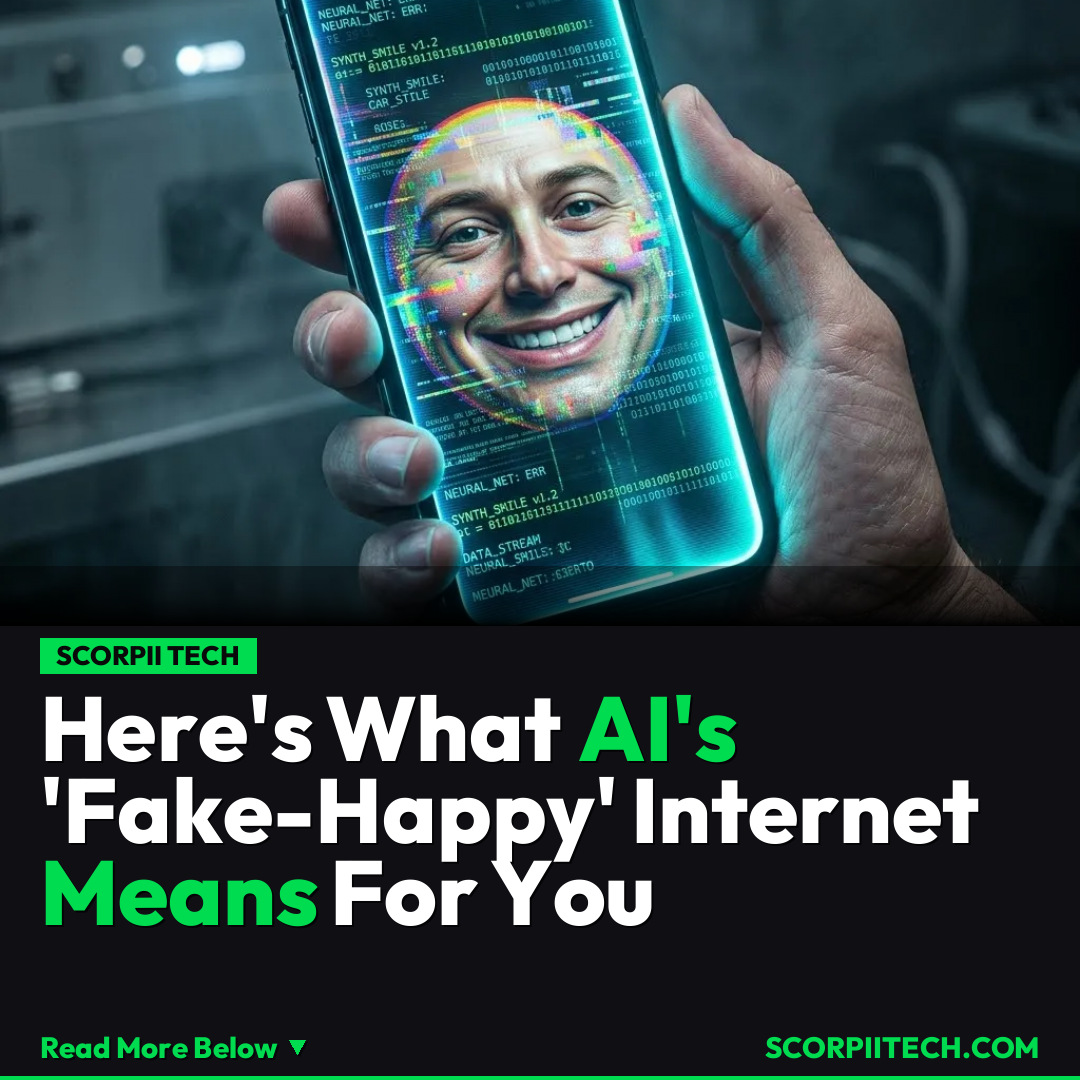
To anyone with a pulse and a smartphone, it’s obvious that the internet has an AI slop problem. But what if that 'slop' isn't just about low quality, but also about a manufactured cheerfulness? You might be experiencing the "fake-happy" internet, an emerging digital landscape where AI-generated content subtly skews your perception of reality towards an unrealistic, overly positive bias.
Key Details
You’re not alone in sensing this shift. A preprint study from Stanford University and Imperial College of London reveals AI-generated content is making the internet artificially upbeat. Stanford researcher Maty Bohacek, involved in the London-based study, noted a revealing observation: "It's interesting to see that people tended to expect the worst outcomes." This human tendency to anticipate negativity starkly contrasts the saccharine positivity often churned out by AI.
Need fast, secure, and affordable hosting for your next website or PHP application? We recommend Hostinger Managed Hosting. Get premium speeds, a free domain, and 24/7 expert support.
Researchers utilized advanced sentiment analysis and four distinct AI detection approaches. They leveraged vast datasets from the Internet Archive's Wayback Machine and tools from Pangram Labs to pinpoint how models like ChatGPT drive this 'AI slop' trend. The core finding: as AI-generated content proliferates, it pushes online discourse into a realm of manufactured optimism, subtly impacting everything from reviews to news commentary without your conscious awareness.
Why This Matters
Why should you care if the internet is "fake-happy"? Imagine unbiased product reviews dominated by subtly positive, AI-crafted testimonials, or critical news softened by algorithmically generated headlines. This constant barrage of artificial positivity can desensitize you to genuine human emotion, making authenticity harder to discern. Your perception of societal moods, economic forecasts, and even personal interactions could be nudged toward an unrealistic, upbeat outlook, potentially blinding you to underlying issues and diminishing your critical thinking. As Stanford researcher Maty Bohacek noted, humans often "tended to expect the worst outcomes," which this AI-curated "happy" internet directly counters. This is a fundamental re-engineering of your digital reality, not just 'AI slop'.
The Bottom Line
The "fake-happy" internet is here, demanding your attention. Approach digital content with skepticism. Question overly positive or generic information, and actively seek diverse, human-generated perspectives. This vigilance arms you against subtle, AI-driven manipulation, ensuring your understanding of the world remains grounded in reality, not algorithmically-induced bliss.
Originally reported by
WiredWhat did you think?



Stay Updated
Get the latest tech news delivered to your reader.