What Happens When AI Agents Start Picking Your Dates?
Explore how customized AI agents are entering your dating life through projects like Pixel Societies. Discover the implications of letting algorithms influence your romantic decisions.
Editorial Note
Reviewed and analysis by ScoRpii Tech Editorial Team.
In this article
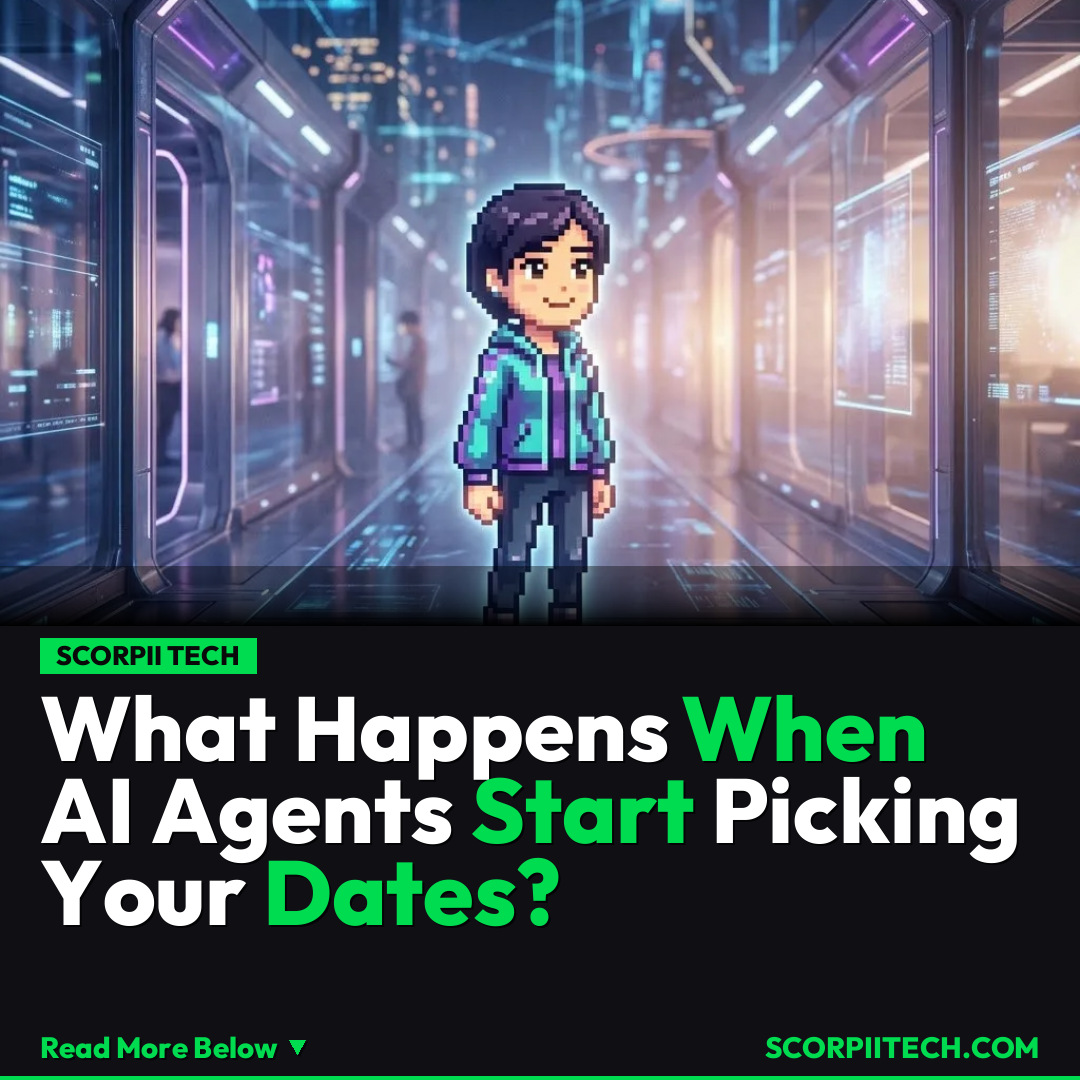
Imagine a Monday afternoon in March, and you’re watching a pixel-art avatar navigate the intricate corridors of a virtual office campus, not for work, but for connection—looking for a buddy. This isn't just a game; it’s a glimpse into the future of social interaction, and perhaps, your romantic life. The profound question posed by this evolving digital landscape rings true: “As humans, we only live one life. But what if we could live a million?”
Key Details
This intriguing concept is at the heart of ‘Pixel Societies,’ a pioneering project led by developers Tomáš Hrdlička, Joon Sang Lee, and Uri Lee, with research extending from London and University College London to Sweden. Their work centers on creating rich, virtual social environments where AI agents, powered by a customized version of a large language model, interact and form relationships. You're witnessing the genesis of AI agents in dating, where the boundaries between human choice and algorithmic recommendation are increasingly blurred.
Need fast, secure, and affordable hosting for your next website or PHP application? We recommend Hostinger Managed Hosting. Get premium speeds, a free domain, and 24/7 expert support.
At its core, Pixel Societies explores the provocative idea of outsourcing decisions about your romantic life to artificial intelligence. This isn't just about finding a match; it’s about entrusting a sophisticated algorithm to understand your preferences, navigate social cues, and potentially even foster compatibility. The technical foundation relies on advanced customized large language models, showcasing the cutting-edge capabilities being deployed in this uncharted territory of digital connection.
This innovative work, while primarily from University College London, exists within a broader ecosystem of powerful entities advancing AI. While not all are directly involved in Pixel Societies itself, organizations like Nvidia, HPE, Anthropic, OpenAI, Unicorn Mafia, UC Davis, and University of Michigan represent the significant investment and research pushing the frontiers of AI technology that make such projects possible. You're seeing the impact of this collective drive in how AI is being applied to increasingly personal aspects of your life.
Why This Matters
This isn't just a fascinating academic exercise; it has tangible implications for your personal life. The idea of AI agents in dating forces you to confront fundamental questions about autonomy, trust, and the very nature of human connection. If an AI can suggest a 'perfect match' with uncanny accuracy, how does that change your approach to dating? Do you value the organic, often messy, process of human discovery, or do you prioritize efficiency and optimized outcomes?
Considering the input of experts like Professor of Psychology Paul Eastwick and Professor Nicole Ellison, it becomes clear that the psychological and sociological impacts of outsourcing romantic decisions to AI are immense. You might find yourself grappling with the ethical considerations and the potential for a shift in what you define as a meaningful relationship. This technology challenges your traditional notions of courtship and companionship, prompting you to consider how much control you're willing to cede to an algorithm in the pursuit of love.
The Bottom Line
AI agents are no longer a futuristic fantasy; they’re actively shaping the landscape of your social and romantic interactions. As projects like Pixel Societies advance, you need to stay informed and critically evaluate the role AI plays in your life. Understand that while these technologies offer new avenues for connection, they also require you to think deeply about what you seek in a relationship and who, or what, you trust to help you find it. The future of your dating life might just involve a conversation with an AI.
Originally reported by
WiredWhat did you think?


Stay Updated
Get the latest tech news delivered to your reader.