Here's Why Your Wearable's Sleep Score Might Be Lying To You
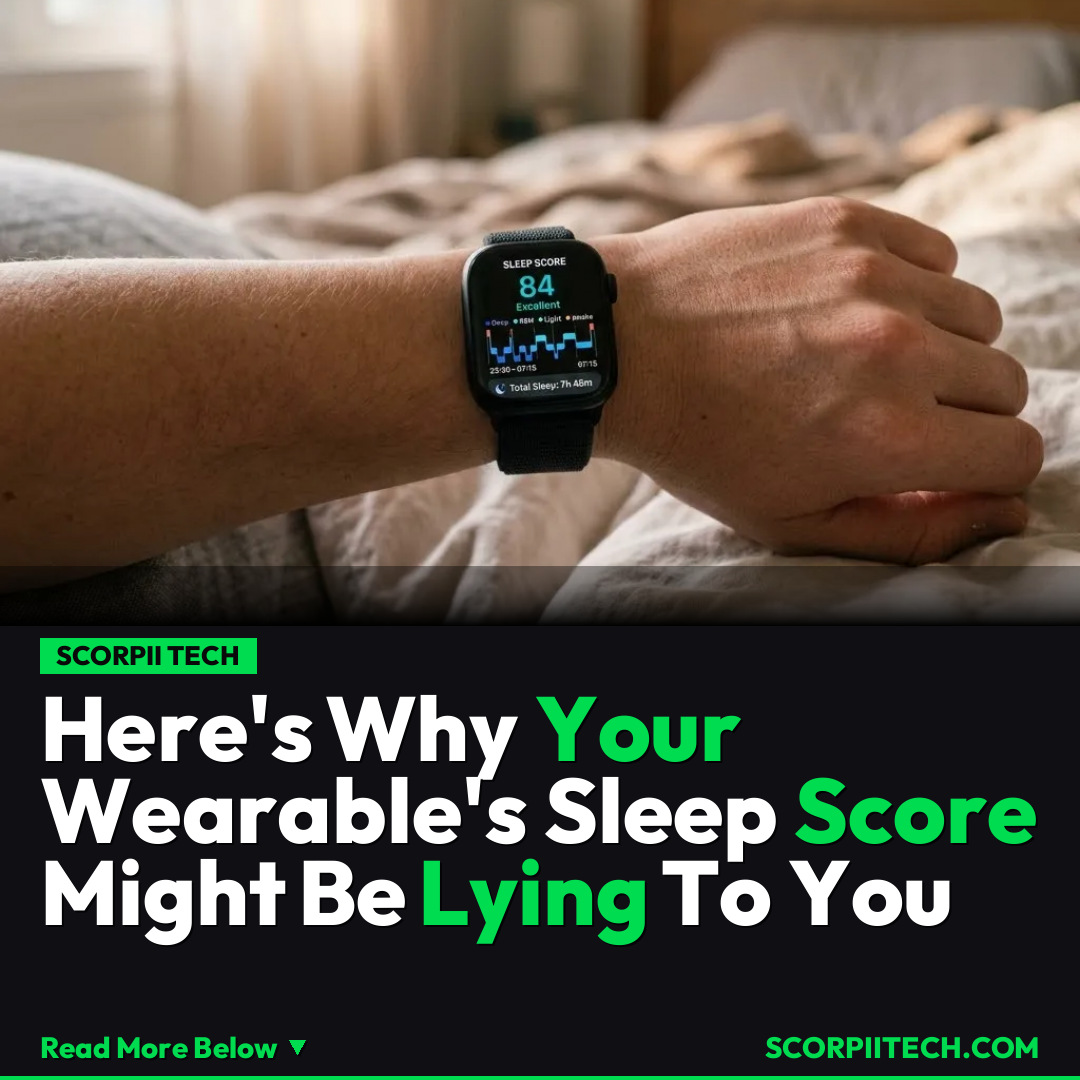
You rely on your wearable's sleep score, but did you know Garmin, Oura, Apple Watch, Whoop, and Fitbit all use different systems? Understand why you can't compare them directly and what it means for your health tracking.
Editorial Note
Reviewed and analysis by ScoRpii Tech Editorial Team.
In this article
You probably check your sleep score every morning, eagerly awaiting that golden number to tell you if you truly conquered the night. It's one of the most-checked metrics in wearable health tracking, right? But here's a startling truth: the companies behind your beloved devices haven't agreed on a shared language for what a 'good' night's sleep even looks like. This isn't just a minor difference; it's a fundamental disparity.
Key Details
The conflict is clear: while you might be comparing your score to a friend's, Garmin, Oura, Apple Watch, Whoop, and Fitbit each calculate your precious sleep score using entirely different methodologies. This makes it incredibly hard to compare them directly, creating a confusing landscape for anyone trying to track their rest consistently. As "and facto" wisely noted, "No sleep score, across any of these platforms, is a clinical measurement." So, while they offer insights, they're not medical diagnoses.
Need fast, secure, and affordable hosting for your next website or PHP application? We recommend Hostinger Managed Hosting. Get premium speeds, a free domain, and 24/7 expert support.
Consider the varied approaches. Your Oura Sleep Score, for instance, ranges from 0 to 100, with clear zones: 85–100 is Optimal, 70–84 is Good, and anything Under 70 means Pay Attention. Garmin also uses a 0–100 scale but with slightly different rankings: 90–100 for Excellent, 80–89 for Good, 60–79 for Fair, and Below 60 for Poor. Then there's Whoop, which gives you two distinct numbers—a Sleep Performance percentage and a Recovery score—rather than a single unified sleep score.
Apple Watch calculates its Sleep Score based on a weighted system: sleep duration is worth 50 points, bedtime consistency accounts for 30 points, and interruptions take up 20 points. Meanwhile, your Fitbit overall sleep score is a sum of individual scores across sleep duration, sleep quality, and restoration, adding up to a total of 100. As you can see, these systems are not just different in branding; they are built on fundamentally distinct assumptions about what constitutes quality sleep, making a direct comparison between devices an apples-to-oranges scenario.
Why This Matters
So why does this jumble of metrics matter to you, the everyday wearable user? The primary reason is consistency and understanding. If you switch from a Garmin to an Oura, your perception of your sleep quality could drastically change overnight, even if your actual sleep patterns remain the same. This can lead to unnecessary anxiety or a false sense of security about your health. You might be comparing your 75 on Fitbit to a friend's 80 on Garmin, thinking they slept better, when in reality, their device just measures differently.
This lack of a universal standard impacts how you interpret personal trends and make health decisions. You're not getting a universal 'sleep grade' but rather a proprietary algorithm's interpretation. This means the most valuable insight comes from tracking your trends *within a single device*, rather than trying to benchmark yourself against others using different trackers. It’s about leveraging the data for your personal context, not for cross-platform comparisons that hold little scientific meaning.
The Bottom Line
Moving forward, the key is to adjust your perspective. Don't fall into the trap of obsessing over comparative scores between brands. Instead, use your wearable's sleep score as a personal feedback loop. Focus on the trends your specific device shows you over time. This data is a powerful tool to help you understand your own body, identify patterns that impact your rest, and make informed lifestyle adjustments. Think of it as a personalized guide to better sleep, tailored by your device, rather than a universal report card you can compare against everyone else's.
Originally reported by
LifehackerWhat did you think?



Stay Updated
Get the latest tech news delivered to your reader.