Why Your Wireless Charger Is Wasting Way More Energy
You love wireless charging, but it's far less efficient than wired. Discover why your convenient charging pad uses up to 40% more electricity, impacting your energy footprint.
Editorial Note
Reviewed and analysis by M.Numan
In this article
You’ve probably got a wireless charger on your desk or nightstand right now. With tech giants like Apple, Samsung, and Google pushing the convenience, these pads have become incredibly common. But what if that sleek convenience comes with a hidden cost for your wallet and the planet? As one expert put it, “It's way more convenient, but way less efficient.”
Key Details
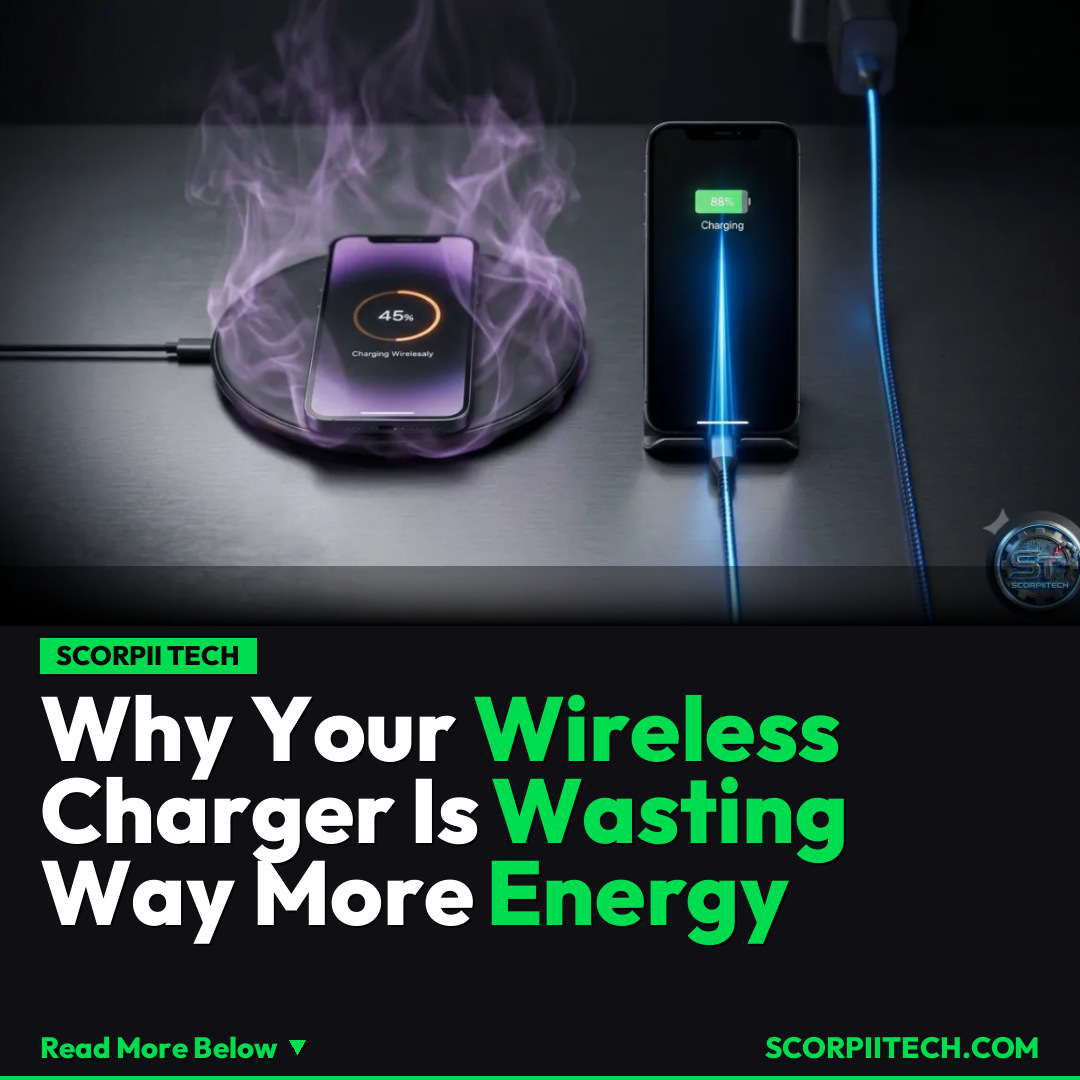
You might appreciate the simplicity of dropping your phone onto a pad, but here’s the stark truth: wireless charging is a significant energy hog compared to plugging in. According to analysis from outlets like OneZero, powering up a modern smartphone from zero to 100 percent wirelessly demands approximately 21 watt-hours (Wh) of electricity. Compare that to a mere 15 Wh when you use a traditional wired charger. That's a staggering 40 percent more energy simply to avoid plugging in a cable.
Need fast, secure, and affordable hosting for your next website or PHP application? We recommend Hostinger Managed Hosting. Get premium speeds, a free domain, and 24/7 expert support.
And this isn't an isolated finding. A more recent 2024 test conducted by the experts at iFixit further underscored this gap. When examining Apple's popular MagSafe charger, they observed that it still required about 36 percent more power than a wired connection to fully charge a device. While slightly better than the 40% general figure, it still points to a substantial efficiency problem across the board for this widely adopted technology, embraced by major players like Apple, Samsung, and Google.
Why This Matters
You've likely invested in wireless chargers for their sheer convenience, and companies like Apple, Samsung, and Google certainly promote them for that very reason. But when you scale up this inefficiency across millions of devices charged daily, the cumulative energy waste becomes significant. This isn't just about a few extra watts; it’s about a design trade-off where convenience directly impacts our collective energy footprint. As the Wireless Power Consortium pushes for broader adoption, understanding these trade-offs becomes even more critical for you as a consumer.
Think about it: every time you opt for the wireless pad, you're knowingly (or unknowingly) choosing a method that requires more raw electricity to achieve the same result. This increased consumption translates to more demand on power grids and a larger carbon footprint over time, a perspective that organizations like Deloitte might consider in broader sustainability discussions. It forces you to weigh the instant gratification of a cable-free experience against the long-term implications of elevated power consumption. Is that extra convenience truly worth the environmental cost?
The Bottom Line
So, what should you do with this information? While the convenience of wireless charging is undeniable, especially when integrated into your home ecosystem, you now know the hidden cost. If you're looking to minimize your personal energy consumption and environmental impact, reaching for that wired charger is still your most efficient option. Embrace wireless for those quick, convenient top-ups, but for full charges and overnight power, perhaps it’s time to plug back in and make a conscious choice for greater efficiency.
Originally reported by
EngadgetWhat did you think?


Stay Updated
Get the latest tech news delivered to your reader.