Why Your Internet Depends On Sharks (And Kevlar)
Discover how over 99% of your international internet traffic travels through undersea cables, and why shark bites aren't the biggest threat thanks to Google's Kevlar tech.
Editorial Note
Reviewed and analysis by ScoRpii Tech Editorial Team.
In this article
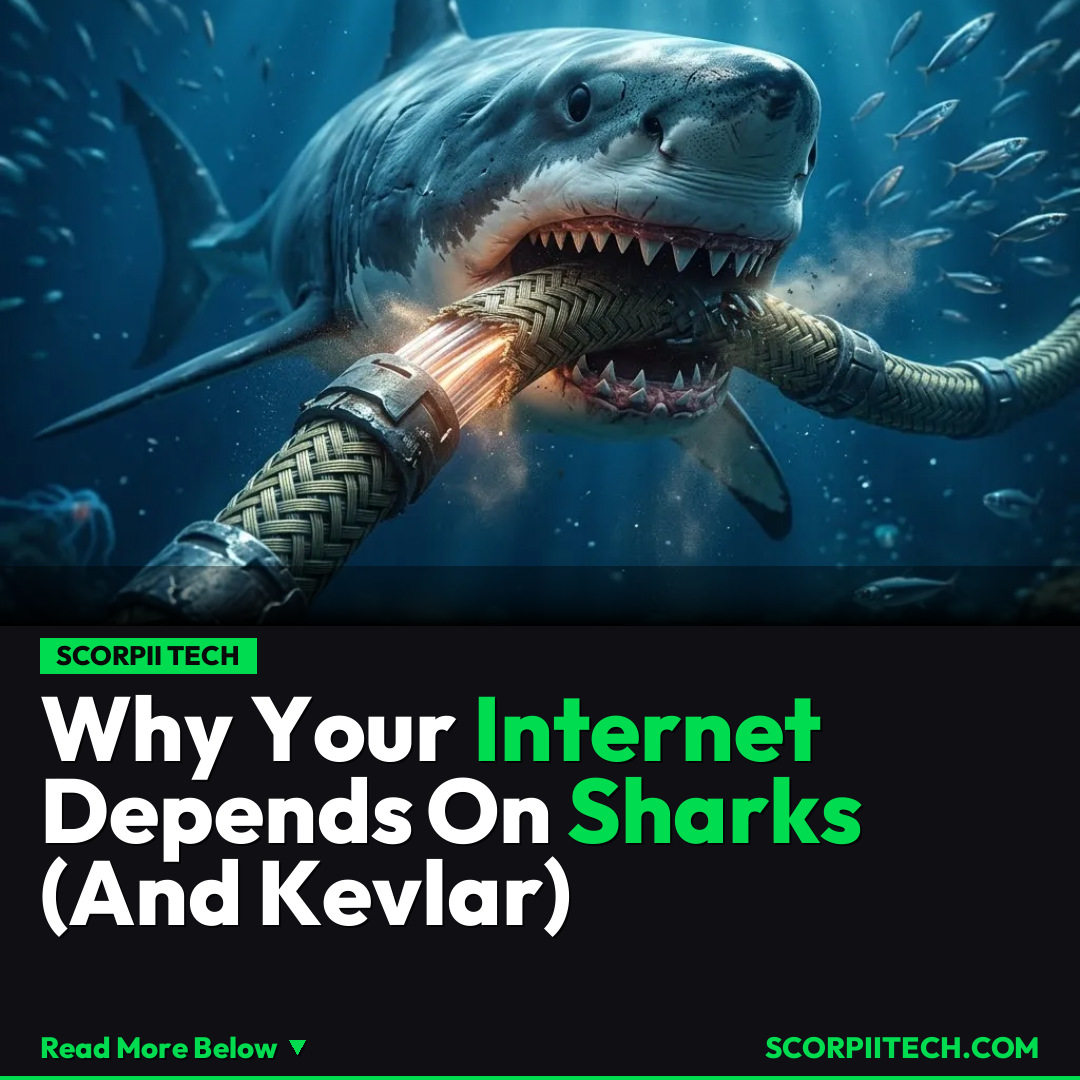
You might think your lightning-fast international internet connection floats through the air via satellites. But here's a surprising truth: about 99% of global internet traffic actually zips through massive undersea cables. These incredible feats of engineering are literally the backbone of your digital life, connecting continents across trans-Pacific and transatlantic routes. But what happens when something unexpected, like a curious shark, takes a bite?
Key Details
Yes, you read that right: sharks do occasionally nibble on these vital arteries of the internet. It’s not just an urban myth! While the idea of a shark chomping through the cable that lets you stream your favorite show or video call a loved one across the globe is certainly dramatic, it’s not quite the rampant epidemic you might imagine. In fact, major players like Google have taken significant steps to mitigate these toothy threats, especially along critical trans-Pacific and transatlantic routes where data density is highest.
Need fast, secure, and affordable hosting for your next website or PHP application? We recommend Hostinger Managed Hosting. Get premium speeds, a free domain, and 24/7 expert support.
How do they do it? You'll be fascinated to learn that some of these essential undersea internet cables are now reinforced with incredibly strong materials like Kevlar. This isn't just about deterring hungry predators; it's about protecting an investment. The design and deployment of these advanced cables can cost a staggering $400 per foot. When you consider the thousands of miles involved in bridging oceans, you start to grasp the immense financial and logistical challenge involved.
The stakes are incredibly high. A fault or damage to a single undersea cable isn't just an inconvenience; it can be a massive financial burden. Annually, the cost of repairing such damage can soar upwards of $116 million. Beyond the monetary cost, damaged undersea cables can cause significant international internet traffic disruptions, impacting everything from global finance to your personal social media feed. It highlights just how vulnerable our seemingly robust digital world can be to physical threats, even those from the deep.
Why This Matters
Why should you care about sharks and undersea cables? Because without these silent warriors beneath the waves, your digital world as you know it would grind to a halt. Every click, every stream, every message that crosses an ocean relies on this hidden infrastructure. When these cables are damaged, whether by anchor drags, seismic activity, or yes, even the occasional shark bite, you feel the ripple effect. Your calls might drop, your downloads might slow, and global communications can suffer.
Understanding the challenges in maintaining these systems helps you appreciate the incredible engineering and constant vigilance required to keep your internet running smoothly. The innovation from companies like Google, utilizing materials like Kevlar, isn't just a fascinating tech tidbit; it's a direct investment in your seamless online experience. It means you can continue to connect with people and information across continents without constantly worrying about what's lurking in the deep.
The Bottom Line
So, what’s the takeaway here? You can rest a little easier knowing that while sharks might be part of the undersea internet cable narrative, they're not the primary threat to your connectivity. Thanks to robust engineering and innovative materials like Kevlar, the vast majority of international internet traffic remains secure. The real lesson is an appreciation for the complex, expensive, and often unseen infrastructure that powers your daily life. The next time you effortlessly connect with someone on the other side of the world, take a moment to consider the incredible journey your data just made – past the sharks, through the deep, and right to you. It's a reminder that even the most advanced technology has a physical, sometimes perilous, foundation.
Originally reported by
BGRWhat did you think?



Stay Updated
Get the latest tech news delivered to your reader.