Why Aren't All Your Batteries Rechargeable?
You feel that guilt tossing dead batteries? Discover why many aren't rechargeable, the hidden environmental cost of primary cells, and what it means for your tech future.
Editorial Note
Reviewed and analysis by ScoRpii Tech Editorial Team.
In this article
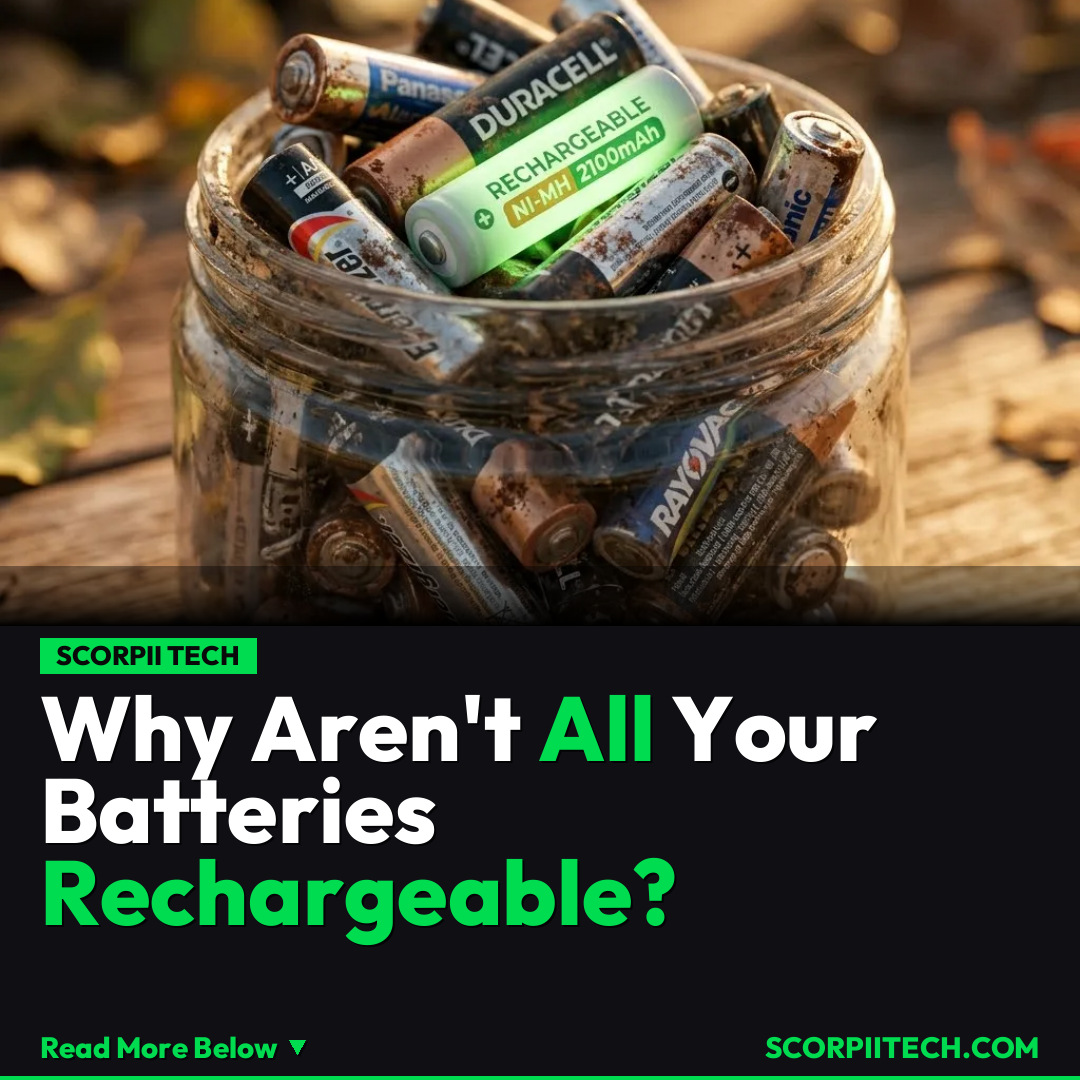
Seems wasteful, doesn't it? If you're like me, every time you pop the batteries out of a remote, gamepad, or flashlight and have to throw them in the trash (or recycle them), there's the faintest ripple of guilt. You're constantly bombarded with news about advanced EV batteries and the push for sustainability, so why do these tiny power cells in your home still feel like a step backward?
Key Details
You might wonder why, in an age of electric vehicles and sophisticated gadgets, we still grapple with the existence of non-rechargeable batteries. This very question lies at the heart of a significant environmental controversy. As the quote suggests, "Surely condemning these tiny receptacles of heavy metal to a landfill can't be great for the environment." And you're right to feel that concern, as these single-use items contribute significantly to waste, containing heavy metals that can harm ecosystems when not properly disposed of.
Need fast, secure, and affordable hosting for your next website or PHP application? We recommend Hostinger Managed Hosting. Get premium speeds, a free domain, and 24/7 expert support.
So, what's the technical difference keeping us tied to disposable power? Every battery, whether rechargeable or not, operates with a positive electrode and a negative electrode, separated by an electrolyte solution. However, the chemistry for common non-rechargeable (or primary cell) AA and AAA batteries is typically alkaline, relying on zinc metal and manganese dioxide electrodes. Rechargeable alternatives, such as Lithium-ion (Li-ion) batteries prevalent in your phones and EV batteries, or Nickel–Metal Hydride (NiMH) batteries, utilize different chemical reactions that allow for repeated charging cycles.
This fundamental chemical distinction is why you can't simply 'recharge' an alkaline battery. They're designed for a one-way chemical reaction, unlike the reversible processes in Li-ion or NiMH cells. The environmental impact stems directly from this design; when these primary cells reach the end of their single life, their heavy metal components — despite being small individually — accumulate into a massive waste problem, fueling the controversy around their continued widespread use.
Why This Matters
This isn't just about a 'faint ripple of guilt' you feel; it directly impacts your wallet and the planet. You're constantly purchasing new batteries, creating a never-ending consumption loop for items that could, in many cases, be reusable. Think about all the battery packs in your home – from your kids' toys to your TV remote – each eventually destined for the trash if they're not rechargeable. This cycle costs you money and contributes to a larger environmental burden.
Beyond your personal finances, the broader implications are significant. The continued reliance on non-rechargeable batteries adds untold tons of heavy metals to landfills globally, posing long-term environmental risks. As you hear more about global warming and resource scarcity, understanding the lifecycle of even small items like batteries becomes crucial. Your choices, however minor they seem, contribute to a collective impact on sustainable living and technological advancement.
The Bottom Line
While the transition to entirely rechargeable power isn't instantaneous due to cost and technical factors, you have agency. Next time you need batteries for a device, consider investing in rechargeable options and a charger where practical. Be mindful of proper recycling for all batteries, reducing their environmental footprint. By understanding the core differences and their implications, you can make more informed choices that align with a more sustainable future for your tech and the planet.
Originally reported by
BGRWhat did you think?



Stay Updated
Get the latest tech news delivered to your reader.