Here's What Your Charger's mAh Means For Your Travel & Tech
Ever wondered what 'mAh' on your portable battery pack actually means? Understand capacity ratings, travel limits from the FAA/TSA, and how to pick the right charger for your Samsung, Google, or Nintendo devices.
Editorial Note
Reviewed and analysis by ScoRpii Tech Editorial Team.
In this article
You see that 'mAh' number on your portable charger, but do you truly know what it signifies for your devices, or even your travel plans? It's more than just a random figure; it's the key to understanding how long your Samsung phone, Google tablet, or Nintendo Switch will stay powered on the go. Smaller battery packs and portable chargers are frequently labeled by capacity in milliampere-hours (mAh), a crucial detail for consumers. This rating indicates the energy storage, directly impacting how many times you can recharge your favorite tech before the power bank itself needs a boost. Let's decode this essential metric.
Key Details
Understanding the mAh rating on your portable battery pack is fundamental to making informed decisions. This number, representing milliampere-hours, tells you the capacity of the battery – essentially, how much charge it can hold. Portable battery packs available today can range significantly, from smaller capacities around 2,500 mAh suitable for a quick phone top-up, all the way up to massive units reaching 50,000 mAh. However, Consumer Reports generally recommends that most users will find what they need within the 5,000 mAh to 30,000 mAh range for everyday portable charging.
Deploy your next full-stack application effortlessly. Get $200 in free DigitalOcean credits to host your Laravel or Python APIs.
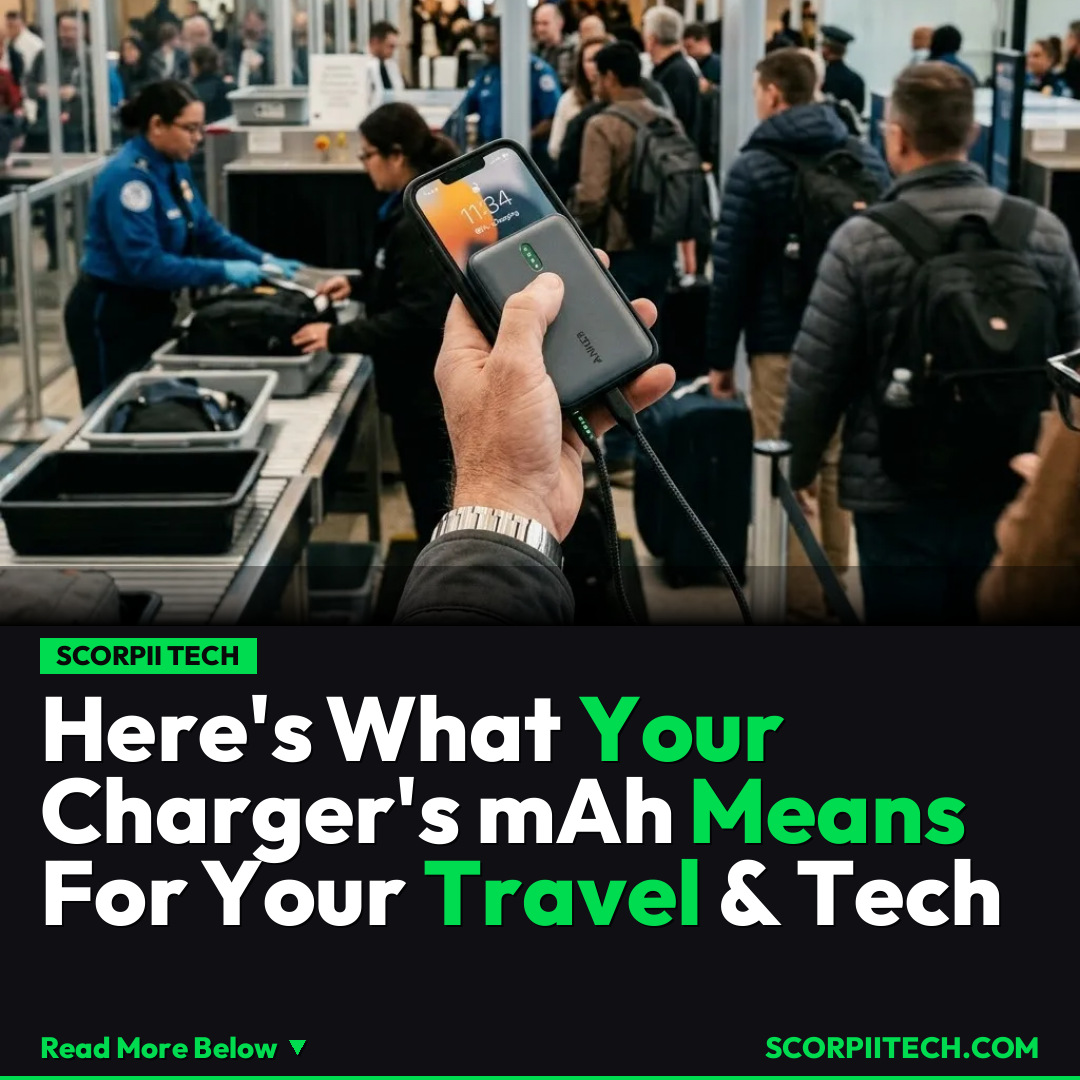
The mAh rating also becomes critical when you consider air travel. The FAA (Federal Aviation Administration) and TSA (Transportation Security Administration) have specific regulations regarding lithium-ion batteries, which power these portable chargers. You'll find restrictions primarily focused on watt-hours (Wh), not directly mAh. Specifically, battery packs exceeding 100 watt-hours (Wh) require airline approval, and those over 160 Wh are generally prohibited. For most standard portable battery packs, 100 watt-hours translates to approximately 27,000 mAh. This means if your charger is rated higher than roughly 27,000 mAh, you'll need to exercise caution and verify airline policies, and all spare lithium batteries must be carried in your carry-on luggage, never in checked bags. This distinction is vital for anyone planning to travel with their Samsung, Google, or Nintendo devices powered by these packs.
Why This Matters
Knowing your mAh isn't just about technical jargon; it directly impacts your daily life and travel convenience. Imagine being midway through a crucial video call on your Google Pixel or deep into a game on your Nintendo Switch, only for your battery to die because your portable charger wasn't up to the task. By understanding the mAh, you can accurately match the charger's capacity to your device's needs, preventing unexpected power outages and ensuring you get the most value for your money. You don't want to buy a 50,000 mAh monster if you only need to charge your smartphone once, nor do you want a tiny 2,500 mAh pack for multiple devices on a long trip.
Beyond performance, the FAA and TSA regulations are non-negotiable for air travelers. Being unaware of the 100 watt-hour (approximately 27,000 mAh) limit can lead to delays at security, confiscation of your expensive battery pack, or even bigger headaches if you've mistakenly placed it in checked luggage. These rules are in place for safety, and adherence ensures a smoother, stress-free journey for you. Consumer Reports consistently highlights the importance of battery specifications, underscoring that these numbers aren't just for tech enthusiasts but for every consumer.
The Bottom Line
When you're shopping for your next portable battery pack, or even just checking the one you already own, pay close attention to that mAh rating. It's not just a number; it's a guide to your device's endurance and your travel compliance. Choose a capacity that fits your lifestyle – whether that's a compact 5,000 mAh for a daily boost or a robust 25,000 mAh for extended adventures. Most importantly, if you're flying, double-check your charger's mAh (or Wh) against the FAA and TSA guidelines, ensuring it stays under the 27,000 mAh threshold for hassle-free travel and always carried in your carry-on. Your tech, and your peace of mind, will thank you.
Originally reported by
BGRWhat did you think?



Stay Updated
Get the latest tech news delivered to your reader.