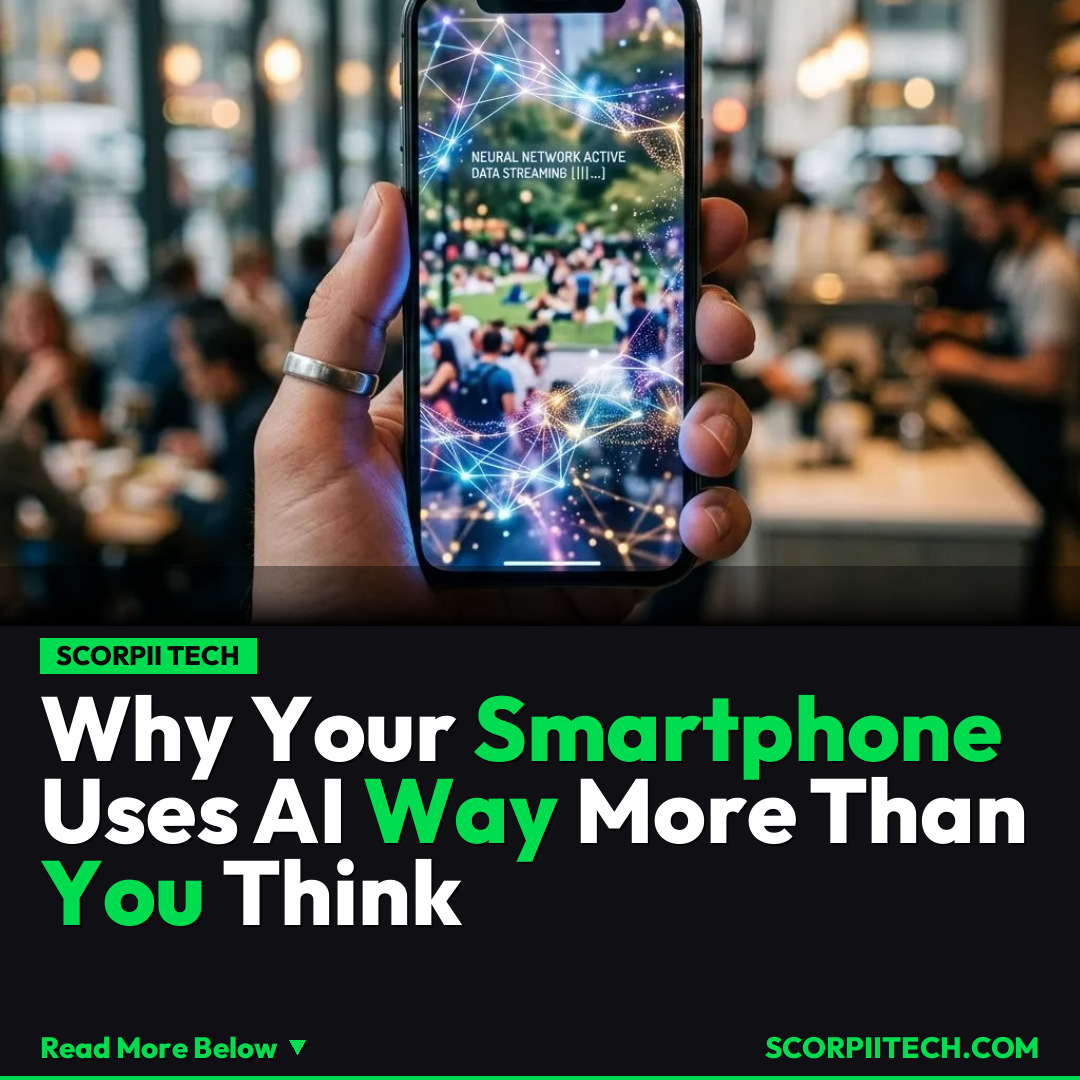
Why Your Smartphone Uses AI Way More Than You Think
Discover how AI powers 90% of American smartphones, often without users realizing it. Learn about the hidden features and the NPU technology driving your daily mobile experience.
Editorial Note
Reviewed and analysis by ScoRpii Tech Editorial Team.
In this article
Think you're not an AI user? Think again. A surprising 90% of Americans are regularly using artificial intelligence on their smartphones, yet a staggering 62% remain completely unaware. While your mind might jump to flashy generative tools, the AI silently powering your device is far more pervasive, making your daily mobile experience smoother than you realize. The AI you might often ignore is what your smartphone depends on to function, working tirelessly behind the scenes.
Key Details
You might associate AI with complex systems, but your everyday smartphone is a mini-AI powerhouse. A recent Talker Research survey of 2,000 Americans revealed the striking statistic: 90% of you are already engaging with AI on your phone, even if only 38% consciously acknowledge it. This isn't about futuristic robots; it's about the subtle, smart features that make your phone work for you, often without you ever noticing.
Deploy your next full-stack application effortlessly. Get $200 in free DigitalOcean credits to host your Laravel or Python APIs.
Think about it: every time you snap a photo and your device automatically optimizes the lighting, smooths skin, or identifies faces, that's AI at work. Services like Google Photos use sophisticated AI algorithms to sort your memories, suggest edits, and even intelligently search for specific objects or people within your vast collection. Your Android phone's predictive text, spam call filtering, and personalized recommendations? All powered by AI, often running on a dedicated component called a Neural Processing Unit (NPU).
This NPU is specifically designed to handle AI tasks efficiently, making features on devices from Samsung and other manufacturers incredibly fast and responsive. It allows your phone to learn your habits, conserve battery life by predicting usage patterns, and even enhance your camera's capabilities in real-time, delivering professional-looking shots without you needing to lift a finger for complex settings. This silent reliance on AI is what makes your smartphone an indispensable tool in your daily life.
Why This Matters
Understanding this pervasive, often invisible, integration of AI in your smartphone is more important than ever. With 90% of Americans already relying on it daily, recognizing AI's role shifts the conversation from theoretical future impacts to present-day realities. This awareness is crucial, especially as broader societal concerns about AI continue to grow, touching on everything from its impact on daily life and potential job layoffs to significant privacy concerns. You're not just a passive user; you're actively participating in the AI ecosystem every time you interact with your device.
Knowing that your smartphone houses a powerful Neural Processing Unit (NPU) dedicated to AI operations helps demystify the technology. It allows you to engage more thoughtfully with discussions around data privacy and how your personal information is used to train and refine these intelligent features. As a Pew Research Center study highlights the evolving landscape of digital privacy, being informed about the AI in your pocket empowers you to make better choices about your technology use and advocate for responsible AI development and greater transparency.
The Bottom Line
So, what's your takeaway? Recognize that AI isn't just an abstract concept for the future; it's already an integral, often unseen, part of your daily digital life. Take a moment to explore your phone's settings and features. You might be surprised to discover the AI-driven conveniences you've been taking for granted, from enhanced photo quality to smart battery management. By understanding how your smartphone leverages AI, you can engage with technology more knowingly, appreciating its benefits while also staying informed about the ongoing conversations surrounding its ethical implications and your personal data. It’s time to stop just using AI and start understanding it.
Originally reported by
BGRWhat did you think?



Stay Updated
Get the latest tech news delivered to your reader.