Why Your Clean Energy Future Just Got a Nuclear Boost
You've heard about fusion power, but what about nuclear batteries? Discover how Avalanche Energy's groundbreaking tech, backed by DARPA and the U.S. Air Force, could revolutionize your access to clean energy. Learn why this matters for your future.
Editorial Note
Reviewed and analysis by ScoRpii Tech Editorial Team.
In this article
Fusion power has always been a bit of a contradiction, hasn't it? For decades, you’ve heard the promise of boundless, clean energy, yet the practical realization feels perpetually just out of reach. You might even wonder if it's an impossible dream. But what if the missing piece wasn’t just making fusion, but cleverly harvesting its immense power?
Key Details
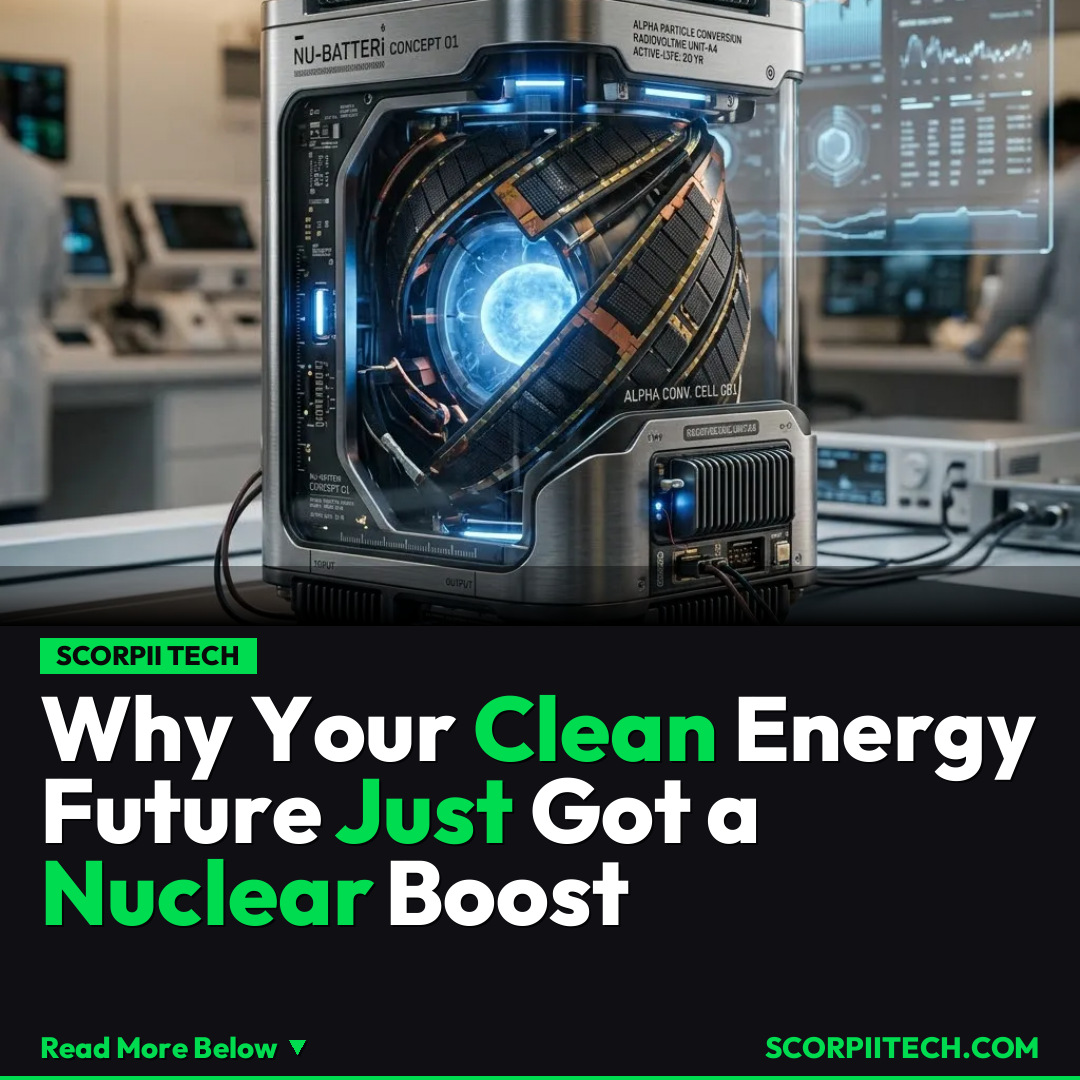
You're seeing a fascinating pivot in the race for clean energy, spearheaded by companies like Avalanche Energy. They're not just aiming to achieve fusion; they're tackling the often-overlooked challenge of harvesting energy from fusion reactions efficiently. As Daniel Velásquez, materials science lead at Avalanche Energy, sagely put it, "A fusion reactor that makes power — and there’s plenty of those, they already exist." The real hurdle, then, is extracting that power in a usable form, and that's precisely where their innovative 'nuclear batteries' come into play.
Deploy your next full-stack application effortlessly. Get $200 in free DigitalOcean credits to host your Laravel or Python APIs.
This ambitious endeavor isn't going unnoticed. You'll be interested to know that Avalanche Energy has secured significant backing, including a substantial $5.2 million contract from DARPA, the Defense Advanced Research Projects Agency. On top of that, they've also received a $1.25 million award through AFWERX, an innovation arm of the U.S. Air Force, underscoring the strategic importance of their work. These 'nuclear batteries' are designed around the principle of radiovoltaics, which directly convert the energy from alpha particles emitted during fusion into electricity. The ultimate goal, of course, is achieving a Q>1 state – meaning the reactor produces more energy than it consumes, a critical milestone for practical fusion power generation. This breakthrough was highlighted recently by TechCrunch, bringing this cutting-edge research to your attention.
Why This Matters
Why should you care about nuclear batteries speeding up the race to fusion power? Think about the fundamental shift this could bring to your world. If successful, this technology offers a path to virtually limitless, clean energy. You could see an end to energy crises, a drastic reduction in carbon emissions, and a future where power is far more abundant and affordable. This isn’t just about making electricity; it’s about providing foundational energy security and unlocking new possibilities for industry, transportation, and even space exploration, all while minimizing environmental impact.
The involvement of powerhouses like DARPA and the U.S. Air Force, through AFWERX, signals that this isn't just a science experiment; it's a strategic national priority. You're witnessing an acceleration in investment for what many consider the holy grail of energy. By focusing on the 'harvesting' aspect, Avalanche Energy is addressing a critical bottleneck in fusion development. This approach could significantly shorten the timeline for when fusion power moves from the lab into your grid, impacting everything from the cost of goods to the air you breathe.
The Bottom Line
So, what does this mean for you? Keep your eyes on companies like Avalanche Energy. While the journey to widespread fusion power is still underway, the development of technologies like nuclear batteries represents a crucial leap forward. You're witnessing the transformation of a scientific contradiction into a tangible solution. Understanding these advancements helps you grasp the enormous potential for a truly sustainable and powerful future. This isn't just news; it's a peek into the next generation of energy that could power your life.
Originally reported by
TechCrunchWhat did you think?



Stay Updated
Get the latest tech news delivered to your reader.