Kelowna Wildfire: Your Operations Face Immediate Infrastructure Risk
A wildfire near Kelowna, B.C., is forcing thousands to evacuate, directly impacting your operational continuity and physical infrastructure. Understand the immediate risks to your systems.
Editorial Note
Reviewed and analysis by ScoRpii Tech Editorial Team.
In this article
Operational Continuity Under Duress
When a mass evacuation is ordered in areas like Kelowna, West Kelowna, or the Westbank First Nation, your business's operational protocols are severely impacted. The loss of access to physical sites, such as servers and network hardware in the Clifton Road area, becomes a primary concern. Your focus shifts from routine maintenance to emergency data egress and system shutdown under extreme time pressure.
Staff who reside in or near the affected zones face direct personal threats, impacting their capacity to engage with remote work or emergency response procedures. This displacement causes an immediate, unquantifiable impact on your workforce's availability, a critical component of any incident response plan. Your reliance on local telecommunications infrastructure becomes a single point of failure; an active wildfire can disrupt fiber optic lines, power substations, and local cellular towers, isolating your infrastructure entirely.
Deploy your next full-stack application effortlessly. Get $200 in free DigitalOcean credits to host your Docker containers, Laravel, or Python APIs.
Infrastructure Vulnerability and Unquantified Economic Risk
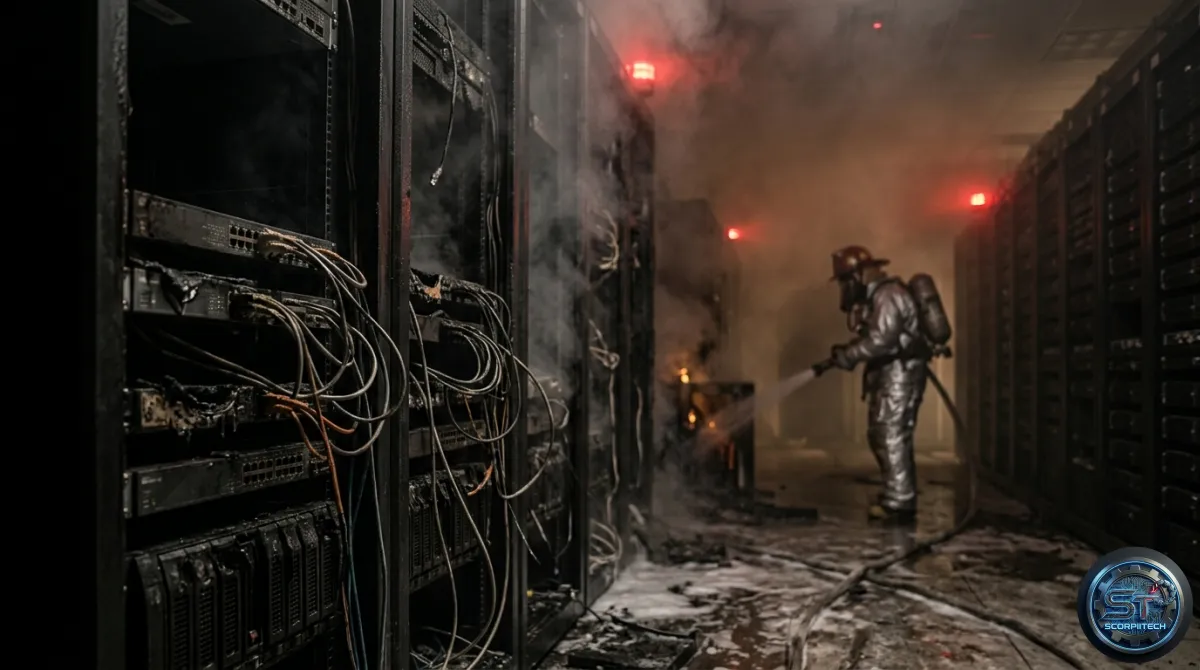
The physical presence of the wildfire near Kelowna, B.C., translates directly into acute vulnerability for any deployed hardware. Servers, storage arrays, network equipment, and associated power supplies in affected areas are directly threatened by fire damage, smoke, and power disruptions. Karley Desrosiers, a BC Wildfire Service information officer, confirms the active nature of the incident, meaning these threats are not theoretical but immediate.
Sizing Your Single-Box VPS Architecture?
Calculate exact vCPU cores, RAM GB, NVMe storage, and estimated monthly budget for your traffic before migrating away from high-cost cluster providers.
Economically, the fear expressed by residents for their homes translates to an unquantified but significant risk to your capital assets. The cost of replacing damaged infrastructure, the potential for lost operational revenue due to extended downtime, and the expenditure on emergency mitigation are substantial. Your business's resilience depends heavily on pre-existing disaster recovery plans that account for geographically dispersed assets and automated failover mechanisms.
Disaster Preparedness and Geographic Redundancy
To mitigate these risks, you must assess the proximity of your primary and secondary data centers to high-risk zones. Consider the following key factors:
- Physical separation of data centers by hundreds of kilometers
- Automated failover mechanisms to ensure minimal downtime
- Geographically dispersed assets to reduce dependence on a single region
Furthermore, this event compels you to re-evaluate your team's remote access capabilities and your organization's human-centric disaster response plans. Can your essential personnel operate effectively if they are displaced from their homes or primary workspaces? The imperative is to engineer systems and processes that are resilient not just to hardware failure, but to wide-area environmental events that disrupt power, connectivity, and human accessibility.
What This Means For You
The Kelowna wildfire scenario serves as a stark reminder for your architectural decisions regarding geographic redundancy and business continuity. Relying on a single operational region for critical infrastructure introduces an unacceptable level of risk. You must invest in resilient architecture, rather than reactive measures during a crisis.
The Bottom Line for Developers
In conclusion, a well-planned disaster recovery strategy is crucial for businesses operating in high-risk areas. By prioritizing geographic redundancy, automated failover mechanisms, and human-centric disaster response plans, you can minimize the impact of wide-area environmental events on your operations. Remember, the resilience of your business depends on proactive investment in disaster preparedness.
Originally reported by
OpenAI ResearchWhat did you think?



Stay Updated
Get the latest tech news delivered to your reader.