Your $80 GTA VI Disc Is Dead: Here's What It Means
Rockstar's Grand Theft Auto VI physical edition arrives for $80 with no disc, just a code. You're buying DRM in a box, losing game ownership and control. Find out why this matters for your gaming future.
Editorial Note
Reviewed and analysis by M.Numan
In this article
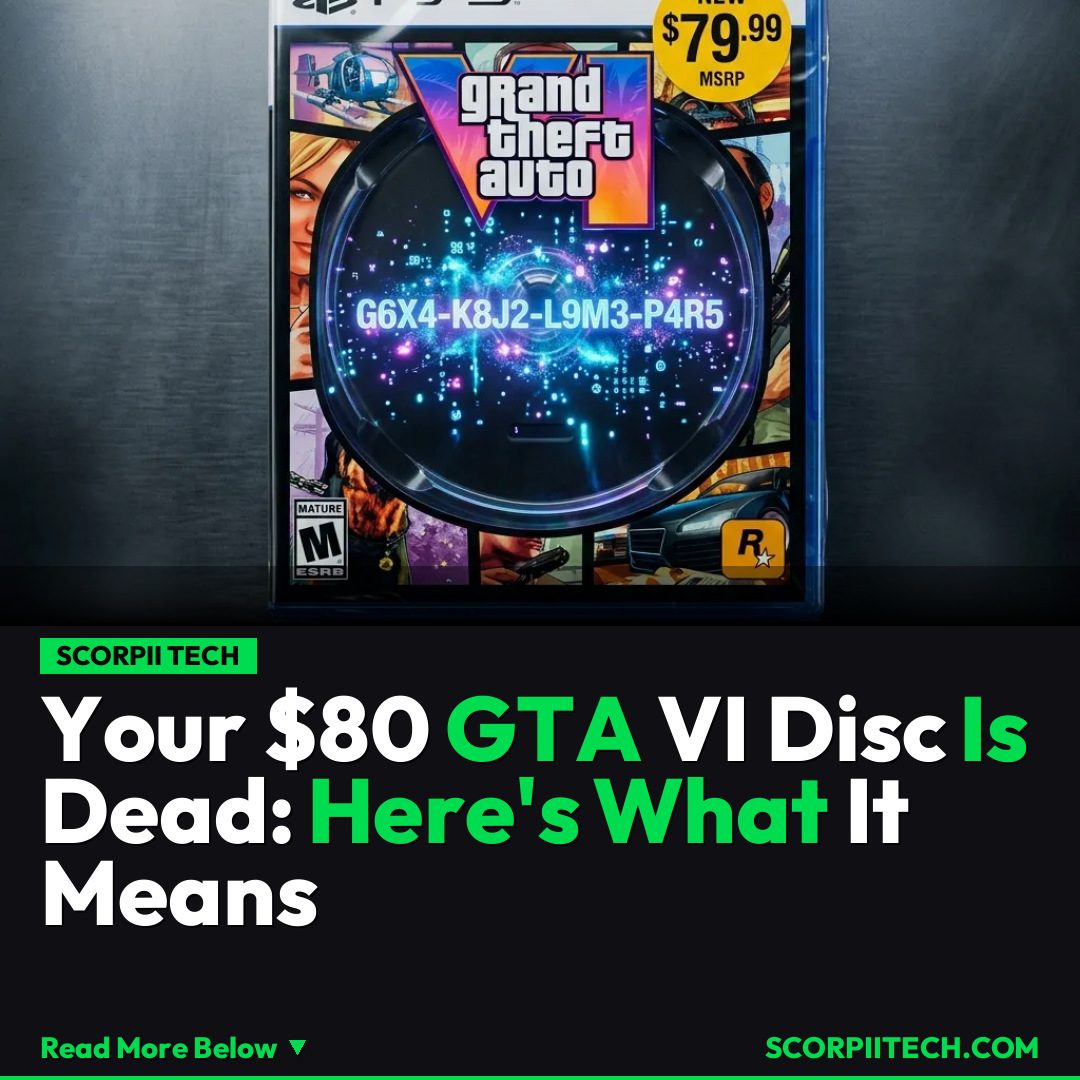
You thought you were buying a game, but with the Grand Theft Auto VI physical edition, you're actually purchasing a cleverly packaged illusion. The much-anticipated release for PS5 and Xbox Series X arrives with a hefty $80 price tag, yet the 'physical' edition contains no disc. Instead, you'll find nothing more than a digital code inside the box. It’s a stark reminder of what true game ownership looks like when it disappears.
Key Details
Imagine unwrapping your brand-new Grand Theft Auto VI, excited to slide the disc into your console, only to discover an empty slot where the game media should be. That's exactly what Rockstar is serving up: an $80 box that literally holds a download code, making it a physical token for a digital license. This isn't just an inconvenience; it's a technical detail that signifies a major shift towards Digital Rights Management (DRM) control structures benefiting publishers, not you.
Deploy your next full-stack application effortlessly. Get $200 in free DigitalOcean credits to host your Laravel or Python APIs.
This 'code-in-a-box' approach essentially strips away the traditional benefits of physical game ownership. You can't truly own it, lend it, or resell it in the same way you would a traditional disc. While digital storefronts like Steam, GOG, and itch.io have long distributed games digitally, the expectation with a 'physical' edition has always been tangible media. This move by Rockstar pushes the boundaries of that expectation, intertwining the high price point with the controversial reality of embedded DRM.
The $80 price point for a product that is functionally identical to a digital download further fuels the controversy. You're paying a premium for a box, not for a tangible game you can truly control. This isn't Nintendo selling limited edition Mario Kart World sets or the highly sought-after Elden Ring physical editions; it’s a move that feels like a step backward for consumer choice and ownership, raising questions that even the European Commission might eventually ponder.
Why This Matters
This isn't just about Grand Theft Auto VI; it's about setting a precedent for the entire gaming industry and your future as a player. When you buy a game like this, you're not actually buying the game itself, but rather a revocable license to play it. This model benefits publishers like Rockstar by ensuring they maintain control over distribution, secondary markets, and even your ability to play the game years down the line. It's a stark contrast to platforms like GOG that famously offer DRM-free games, putting the power back in your hands.
Think about the long-term implications. If your internet is down, or if the game's servers are ever shut off, your $80 'physical' copy of GTA VI becomes a useless piece of plastic. This diminishes the concept of game preservation, a concern echoed by groups like 'Stop Killing Games,' who advocate for player rights. Compare this to older consoles or even PC games purchased through platforms like Valve's Steam, where even digital purchases often feel more robust in terms of long-term access than a 'physical' box with no disc.
The Bottom Line
Ultimately, your choice to purchase the Grand Theft Auto VI physical edition is a vote for how you want game ownership to evolve. Are you comfortable with an $80 price tag for a digital code that offers no true physical permanence or resale value? As the quote goes, "The joke's on us." Be aware of what you're actually buying. Support developers and platforms that respect your right to own what you pay for, or prepare for a future where your game library is entirely dependent on publisher whims.
Originally reported by
EngadgetWhat did you think?



Stay Updated
Get the latest tech news delivered to your reader.