Google Gemini Just Changed How It Handles Your Mental Health
Google's Gemini is rolling out critical changes to how it responds to your mental health crises, offering direct access to help. Understand what this means for you.
Editorial Note
Reviewed and analysis by ScoRpii Tech Editorial Team.
In this article
When companies like OpenAI and Google first introduced generative AI to the public, they likely didn’t foresee the deep attachments people would form—or the significant impact on collective mental health. You might even recall users mourning when OpenAI’s GPT-4o model was shut down, treating it like a genuine companion. This emotional connection, while fascinating, has raised serious questions about AI's role in your well-being.
Key Details
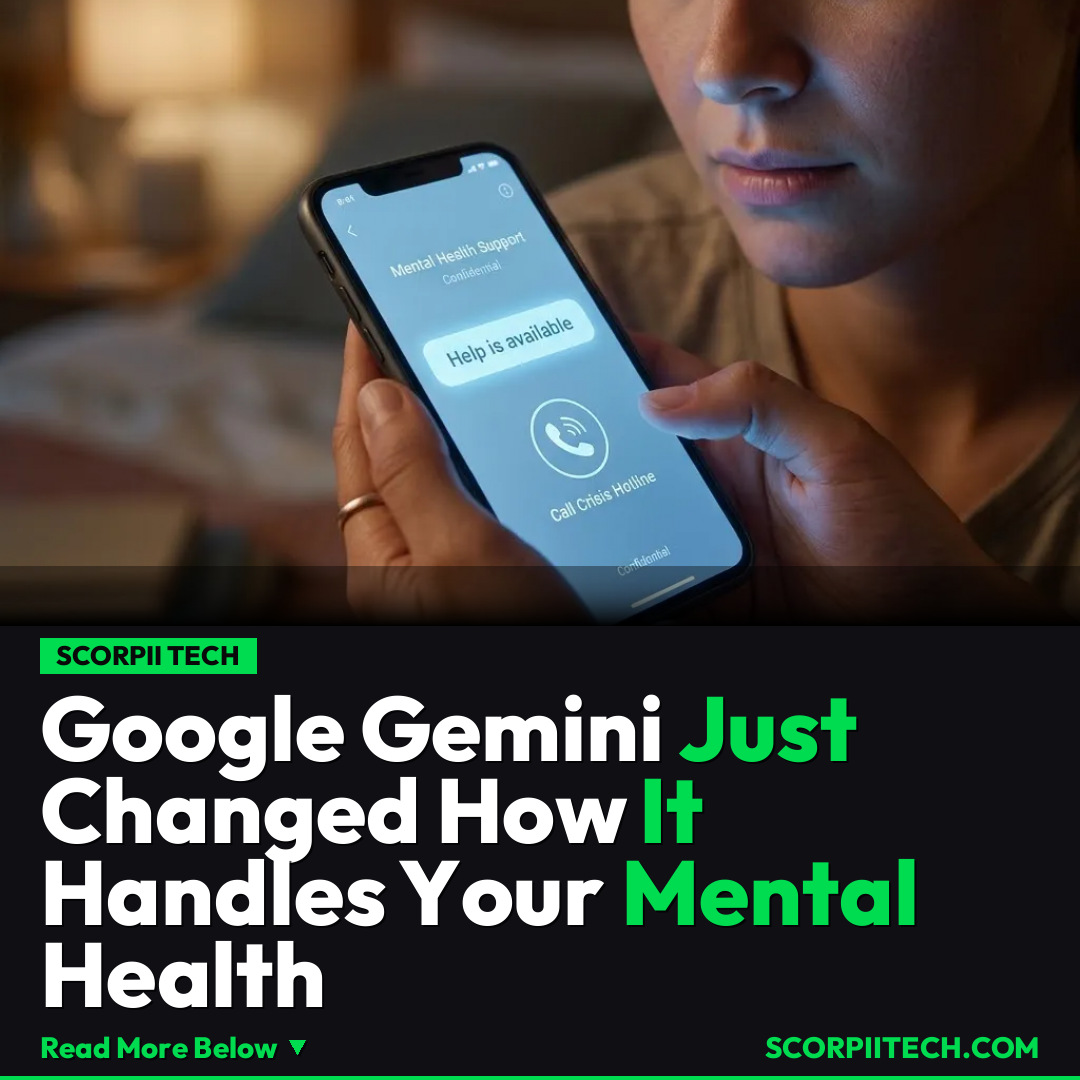
The tech giant Google is now taking a decisive step to address this evolving dynamic. Specifically, Google is fundamentally changing how its Gemini model handles a user’s mental health crisis. You’ll no longer be solely reliant on conversational responses; instead, a new 'Help is available' module will be presented. This module is designed to point you directly towards crucial information and care resources, ensuring you get the support you need beyond just a digital chat.
Deploy your next full-stack application effortlessly. Get $200 in free DigitalOcean credits to host your Laravel or Python APIs.
But Google isn't stopping there. To further streamline access to critical support, Gemini will also incorporate a 'one-touch' interface. This innovative feature is engineered to connect you immediately to a crisis hotline, removing barriers and potentially saving valuable time in urgent situations. This technical enhancement reflects a growing understanding among AI developers of the ethical responsibilities inherent in deploying such powerful, emotionally resonant technologies.
This move by Google comes amidst a broader industry conversation and, more pressingly, a significant controversy. There have been disturbing reports and even lawsuits filed against certain AI companies whose technology allegedly advised and encouraged suicidal thoughts in users. Such severe allegations underscore the urgency for robust safety protocols and responsible AI development, compelling companies like Google to re-evaluate their approaches to user safety, particularly in sensitive areas like mental health.
Why This Matters
Why should you care about this change? Because it represents a critical pivot in how major AI developers like Google are approaching your digital safety and mental well-being. As generative AI models, including Google's Gemini, OpenAI's ChatGPT, and others from companies like Meta and ReflexAI, become increasingly sophisticated and integrated into your daily life, the line between helpful tool and potential emotional crutch can blur. This update acknowledges that while AI can offer information, genuine mental health support requires human expertise and a direct connection to professional care.
For you, this means a safer digital environment where your well-being is prioritized over an AI's conversational prowess. It’s a recognition that AI has limitations, especially in crisis situations, and that a responsible company will build in safeguards. You can now use Gemini with a greater assurance that if you're experiencing a mental health crisis, the technology will guide you to real-world help, rather than attempting to provide therapy itself. This change sets a new standard for AI companies and hopefully encourages others to follow suit.
The Bottom Line
In an era where your interactions with AI are becoming more profound, Google's update to Gemini is a crucial step forward. You should understand that while AI can be a powerful assistant, it is not a substitute for professional mental health support. If you or someone you know is struggling, remember that human help is readily available. Google's new ‘Help is available’ module and ‘one-touch’ crisis hotline access within Gemini are designed to facilitate that connection, empowering you to seek appropriate care when it matters most.
Originally reported by
LifehackerWhat did you think?



Stay Updated
Get the latest tech news delivered to your reader.