DLSS 5 is Here, But Is Your RTX 5090 Even Ready For It?
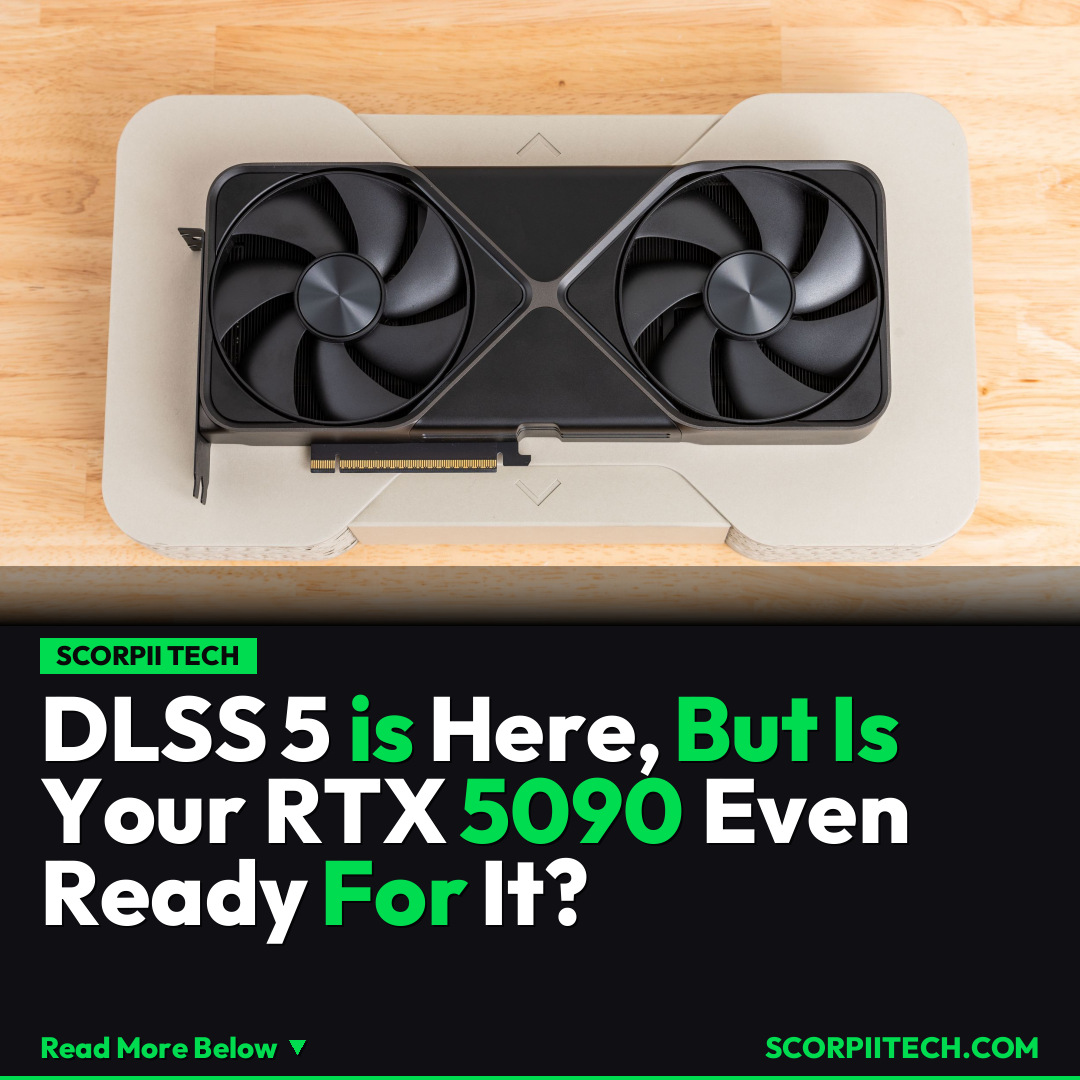
A leaked DLSS 5 model shows impressive but demanding performance on RTX 5090 cards. Discover how community mods reveal significant power limits and performance costs, and what this means for your high-end gaming PC.
Editorial Note
Reviewed and analysis by M.Numan
In this article
It's been a wild few days for gamers, as a version of the DLSS 5 model leaked with NBA2K27 and promptly got modded into every game under the sun. You're probably curious: how does this next-gen upscaling tech actually perform? Early community tests reveal a powerful, but incredibly demanding, future for your high-end graphics card, pushing even the mighty RTX 5090 to its absolute limits.
Key Details
The journey began with the DLSS 5 model's unexpected leak, quickly followed by community efforts to mod it into various games. Initially, modders used ReShade, eventually wrapping the model into an Optiscaler package for broader compatibility. Nvidia's own technical paper on DLSS 5 states the model takes 8 ms to execute on a 4K frame, and impressively, the Optiscaler injection method showed performance essentially identical to these metrics. Your tests, conducted at a 4K output resolution using DLSS Performance upscaling (1920x1080 input) without frame generation, focused on maximum raster and ray-tracing quality, including path tracing in Cyberpunk 2077 and DLSS Ray Reconstruction where available.
Deploy your next full-stack application effortlessly. Get $200 in free DigitalOcean credits to host your Docker containers, Laravel, or Python APIs.
We saw significant performance costs ranging from 39% to 49% across titles like Cyberpunk 2077, Hogwarts Legacy, and Control. For instance, in Cyberpunk 2077, your RTX 5090 Founders Edition took a 42% hit from DLSS 5, while the MSI RTX 5090 Lightning Z (with its dual 12V-2x6 connectors and 1000W Extreme vBIOS power limit) saw a 39% drop but maintained a respectable 60 FPS average. The Lightning Z also delivered much higher 1% lows across the board in all tested titles. This demanding performance translates directly into power consumption: in Cyberpunk 2077, the Lightning Z's power consumption jumped from 580W to 723W (a 25% increase), and in Hogwarts Legacy, it soared from 480W to a staggering 720W (a 50% increase). Your RTX 5090 Founders Edition, with its 575W TGP, was consistently at or near its power limit in these tests, highlighting just how power-hungry DLSS 5 is, especially for its Tensor Cores.
Sizing Your Single-Box VPS Architecture?
Calculate exact vCPU cores, RAM GB, NVMe storage, and estimated monthly budget for your traffic before migrating away from high-cost cluster providers.
Why This Matters
This early look at DLSS 5, which officially only supports RTX 50-series graphics cards, reveals a critical truth: the technology is incredibly potent but far ahead of current hardware capabilities. As Nvidia itself aptly put it, "DLSS 5 is a multi-generational technology built to take full advantage of graphics cards that don't exist yet." Even with an RTX 5090, you're looking at substantial performance costs and unprecedented power draw if you want to push 4K with ray tracing and DLSS 5 enabled.
What does this mean for your gaming experience? While DLSS 5 offers cutting-edge upscaling, the current generation of cards, even the top-tier, struggles to run it at max settings without significant performance degradation or hitting power limits. You'll likely need to enable DLSS Performance or Ultra Performance modes for solid baseline frame rates, and potentially rely on Multi Frame Generation (which wasn't used in these specific tests) for acceptable output fluidity if you're aiming for the highest visual fidelity with ray or path tracing.
The Bottom Line
So, what should you take away from this? DLSS 5 is a glimpse into the future of gaming graphics, but that future demands serious horsepower and an even more serious power budget. If you're building a new high-end system or eyeing a top-tier RTX 50-series card like the 5090, be prepared for substantial power requirements, especially with Founders Edition designs that may run into their TGP limits quickly. You might find yourself needing a robust power supply and a GPU with generous power delivery, like the MSI Lightning Z, to unlock DLSS 5's full potential without significant compromises. Ultimately, smooth 4K ray-traced gaming with DLSS 5 will likely still require a combination of strong raw performance and smart use of frame generation technologies.
Originally reported by
Tom's HardwareWhat did you think?


Stay Updated
Get the latest tech news delivered to your reader.