Here's Why ChatGPT Images 2.0 Is Changing Your Digital Designs
Get ready for perfect text in your AI-generated images. ChatGPT Images 2.0 by OpenAI delivers unprecedented fidelity, making your marketing assets and comic strips look professional.
Editorial Note
Reviewed and analysis by ScoRpii Tech Editorial Team.
In this article
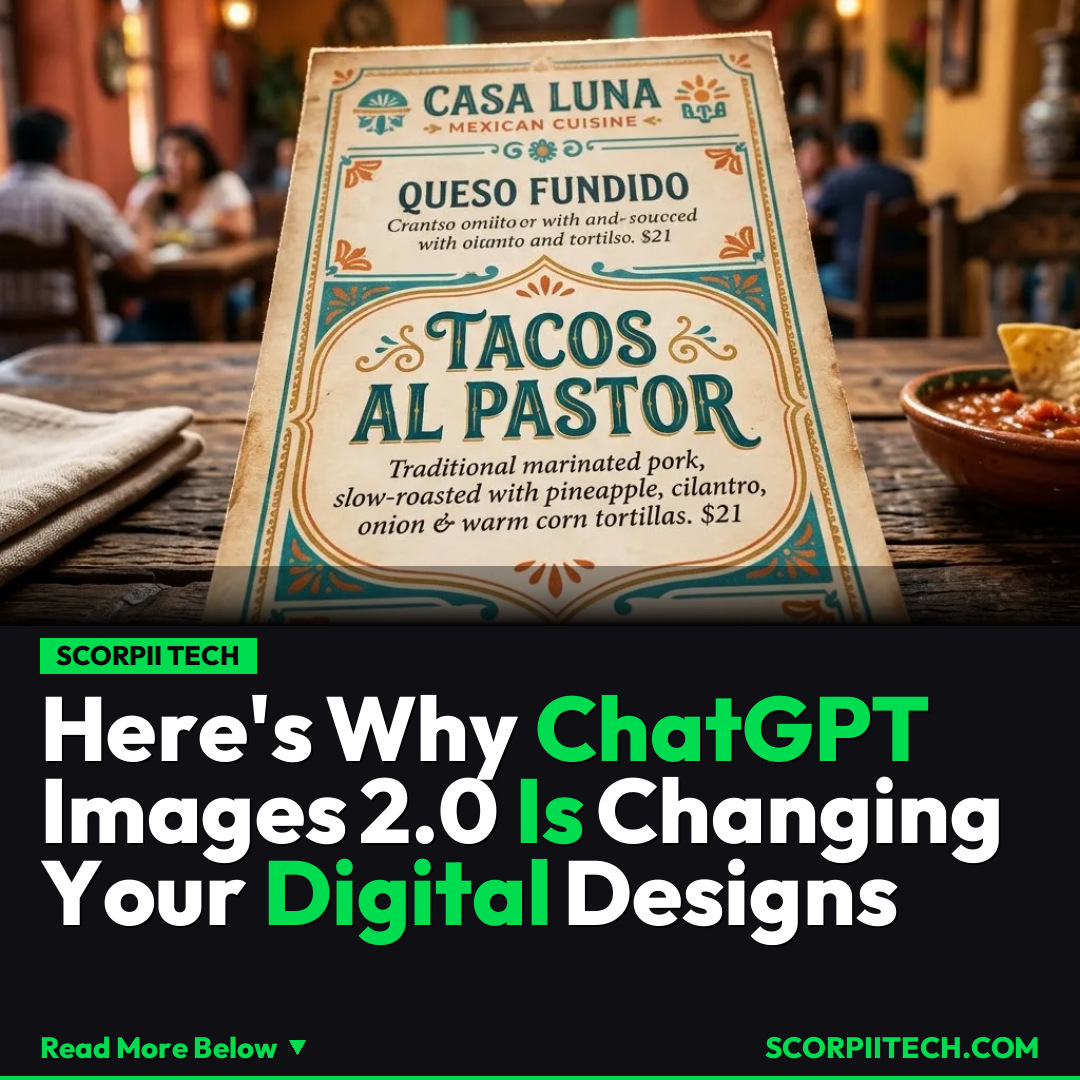
You’ve likely seen AI-generated images fall flat when it comes to text, producing jumbled letters or bizarre symbols. But prepare for a jaw-dropping change: OpenAI’s new ChatGPT Images 2.0 model is here, and it's so good, you could use its generated menu in a restaurant today without anyone noticing it’s AI-made. This isn't just an upgrade; it's a paradigm shift in visual AI.
Key Details
Forget the days of struggling to get legible words into your AI art. OpenAI's ChatGPT Images 2.0 model marks a significant leap, boasting an "unprecedented level of specificity and fidelity to image creation," according to Asmelash Teka Hadgu, founder and CEO of Lesan AI. This isn't just marketing fluff; the model can produce practical, high-quality visuals with accurate text.
Deploy your next full-stack application effortlessly. Get $200 in free DigitalOcean credits to host your Laravel or Python APIs.
One of the most striking technical advancements is its ability to render text, even in non-Latin languages. You can ask for a menu in Spanish, a sign in Japanese, or a document in Hindi or Bengali, and Images 2.0 understands and executes it with remarkable accuracy. This capability extends beyond simple labels; the model can create diverse marketing assets in various sizes and even complex multi-paneled comic strips, previously a design headache for AI.
What's truly revolutionary is that this model achieves its impressive results using a mechanism different from traditional diffusion models. While the exact details aren't publicly disclosed by OpenAI, this departure suggests a new approach to image generation that prioritizes fidelity, especially when it comes to intricate details like text. You’ll be able to leverage this power directly through the gpt-image-2 API, with pricing adjusted based on the quality and resolution you require for your outputs. Keep in mind, the model's knowledge cutoff is December 2025, so current events beyond that date won't be reflected.
Why This Matters
So, why should you care about more accurate AI-generated text and images? This isn't just a niche update for graphic designers; it’s a game-changer for businesses and content creators alike. For businesses, it means you can rapidly prototype marketing materials, social media graphics, and even product mock-ups with professional-grade text. Imagine quickly generating a series of ad variations with precise messaging for A/B testing, or developing localized content for global markets without hiring specialized designers for every language.
For content creators, this opens up new avenues for visual storytelling. From crafting unique comic strips to illustrating articles with custom infographics containing accurate labels, the creative possibilities are vast. You can generate assets that are not only visually appealing but also immediately functional and culturally relevant, significantly improving your workflow and output quality. No more fumbling with manual edits to correct AI’s textual blunders.
The Bottom Line
ChatGPT Images 2.0 fundamentally changes what you can expect from generative AI for visuals. You now have access to a tool that eliminates one of the biggest hurdles in AI image creation: legible and accurate text. To make the most of this, start thinking about how you can integrate high-fidelity, text-rich images into your projects, whether it’s for marketing, content creation, or simply elevating your digital presence. Keep an eye on the gpt-image-2 API for direct access to this powerful new capability. The future of AI-generated visuals, complete with perfect text, is here on April 21, 2026.
Originally reported by
TechCrunchWhat did you think?


Stay Updated
Get the latest tech news delivered to your reader.