Your Battlefield Is Going Digital: Here's What AI Warfare Means
Explore Project Maven, the AI changing modern warfare. Learn how systems like Palantir's Maven Smart System are impacting military decisions and raising ethical questions for your future.
Editorial Note
Reviewed and analysis by ScoRpii Tech Editorial Team.
In this article
Imagine a world where the most critical battlefield decisions aren't made solely by human intuition, but augmented—or even driven—by artificial intelligence. You might think this is science fiction, but it's already a reality. From private retreats where defense leaders mingle with tech investors to active warzones across the globe, AI warfare is no longer a distant concept; it's here, fundamentally reshaping military strategy and raising profound questions about the future you face.
Key Details
You might be surprised to learn how rapidly this future arrived. It was in early September 2024, during a cocktail hour at an exclusive retreat for tech investors and defense leaders, that Vice Admiral Frank 'Trey' Whitworth sought out Marine Colonel Drew Cukor. Their conversation wasn't about the weather; it was about the silent, powerful revolution taking place on the battlefield: AI warfare, often spearheaded by initiatives like Project Maven.
Deploy your next full-stack application effortlessly. Get $200 in free DigitalOcean credits to host your Laravel or Python APIs.
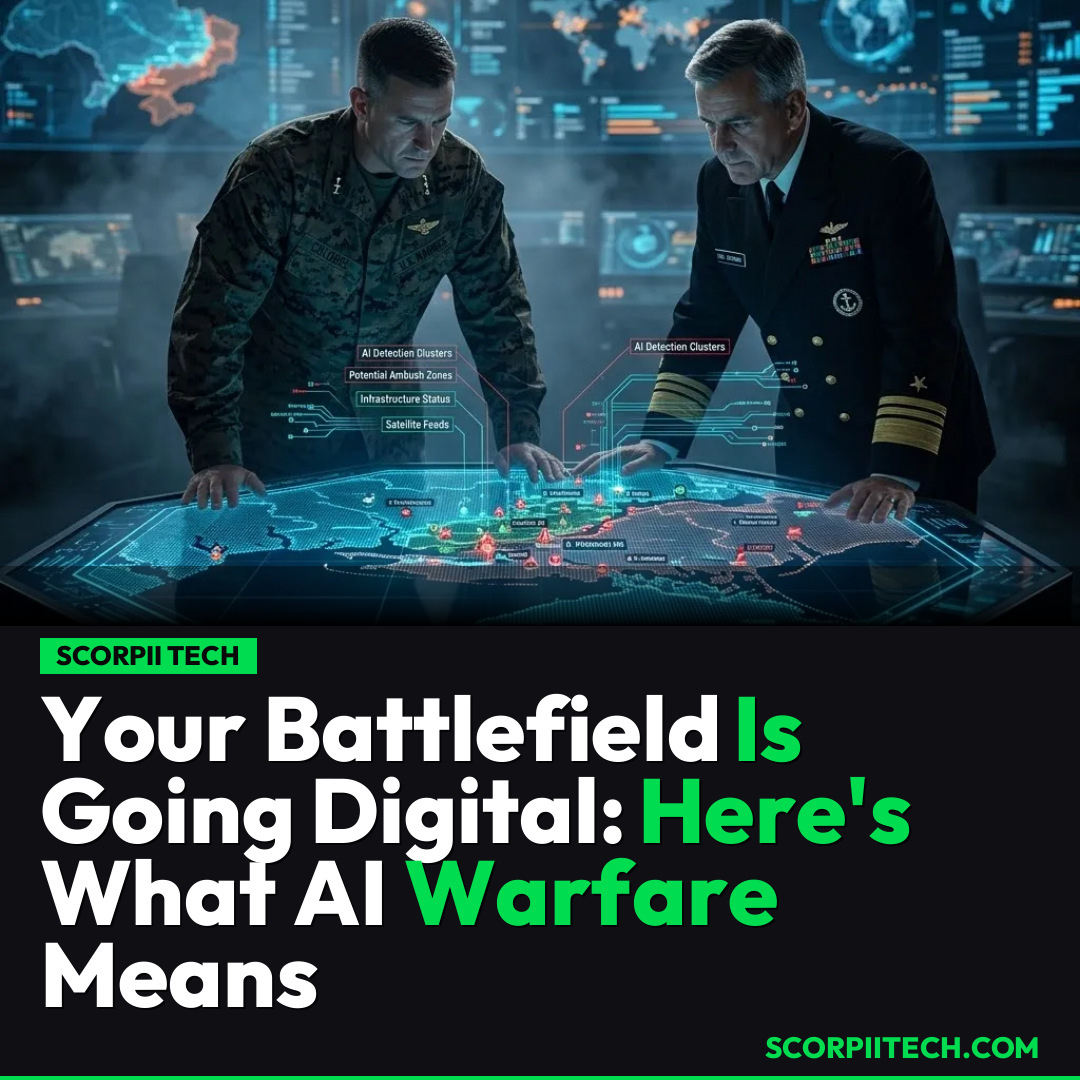
At the heart of this transformation is the Maven Smart System, an AI-powered platform designed to integrate disparate battlefield data onto a comprehensive digital map. This system doesn't just display information; it actively leverages AI to detect objects, providing critical insights that can be swiftly deployed in targeting. Consider this: the Maven Smart System can now detect objects nearly five times faster than before, a staggering leap in operational efficiency. The National Geospatial-Intelligence Agency (NGA) has already amassed an astounding one billion AI detections within its computer vision data store, signaling the immense scale and capability of these systems. Key entities like Palantir, working alongside the Pentagon, the US Marine Corps, the US Navy, NATO, and CENTCOM, are instrumental in deploying and refining these AI capabilities. It's a shift so profound that, as one commentator put it, "War was now just another business process, sandwiched between sales and health care."
This isn't theoretical; this AI is actively engaged in operational theaters. From the battlegrounds of Kherson in Ukraine to the tense waters of the Red Sea off Yemen, and across volatile regions like Iraq, Syria, Israel, and Jordan, AI-driven systems are providing real-time intelligence and targeting support. Personnel like John Cogbill, Brigadier General, and Alex Miller, Army Chief Technology Officer, are among those observing and integrating these advancements. The sheer speed and data processing power of the Maven Smart System enable forces to react with unprecedented agility and precision.
Why This Matters
You might be thinking about the implications of such rapid technological advancement. The integration of AI into military operations, particularly for targeting, raises critical moral and practical questions that directly impact you and your understanding of global conflict. Who gets to decide to take a human life when an AI system identifies a target? And perhaps more importantly, who bears the ethical and emotional cost of those decisions? This isn't just about efficiency; it's about responsibility and accountability in the gravest of circumstances.
As AI systems become more autonomous, the traditional chain of command and the very nature of human judgment in warfare are being re-evaluated. General Erik Kurilla and Joe O'Callaghan, Director of AI Mission, are undoubtedly grappling with these complex issues. While the Maven Smart System offers unparalleled speed and data integration—critical advantages in fast-moving conflicts—it also forces us to confront the boundaries of artificial intelligence in matters of life and death. Your world, already shaped by technology, is now navigating the profound ethical frontier of AI warfare, making the discussions at Fort Belvoir Army Base, Virginia, feel less like military strategy and more like a philosophical debate on humanity's future.
The Bottom Line
So, what should you take away from this? The dawn of AI warfare is not a future event; it's a present reality, actively deployed and evolving. You need to understand that the speed, precision, and data integration offered by systems like Project Maven are fundamentally changing military operations and geopolitical landscapes. But just as crucial is your awareness of the ethical quagmire this technology presents. Stay informed about these developments, engage in the conversations around AI's role in decision-making, and recognize that the line between human and machine in conflict is blurring. The way wars are fought, and the moral calculus behind them, are being redefined before your eyes.
Originally reported by
WiredWhat did you think?



Stay Updated
Get the latest tech news delivered to your reader.