Why Your Favorite AI Could Be Fueling Climate Change
You might love your AI chatbots, but are they quietly contributing to climate change? Discover the surprising environmental cost of AI and what tech giants are (or aren't) doing about it.
Editorial Note
Reviewed and analysis by ScoRpii Tech Editorial Team.
In this article
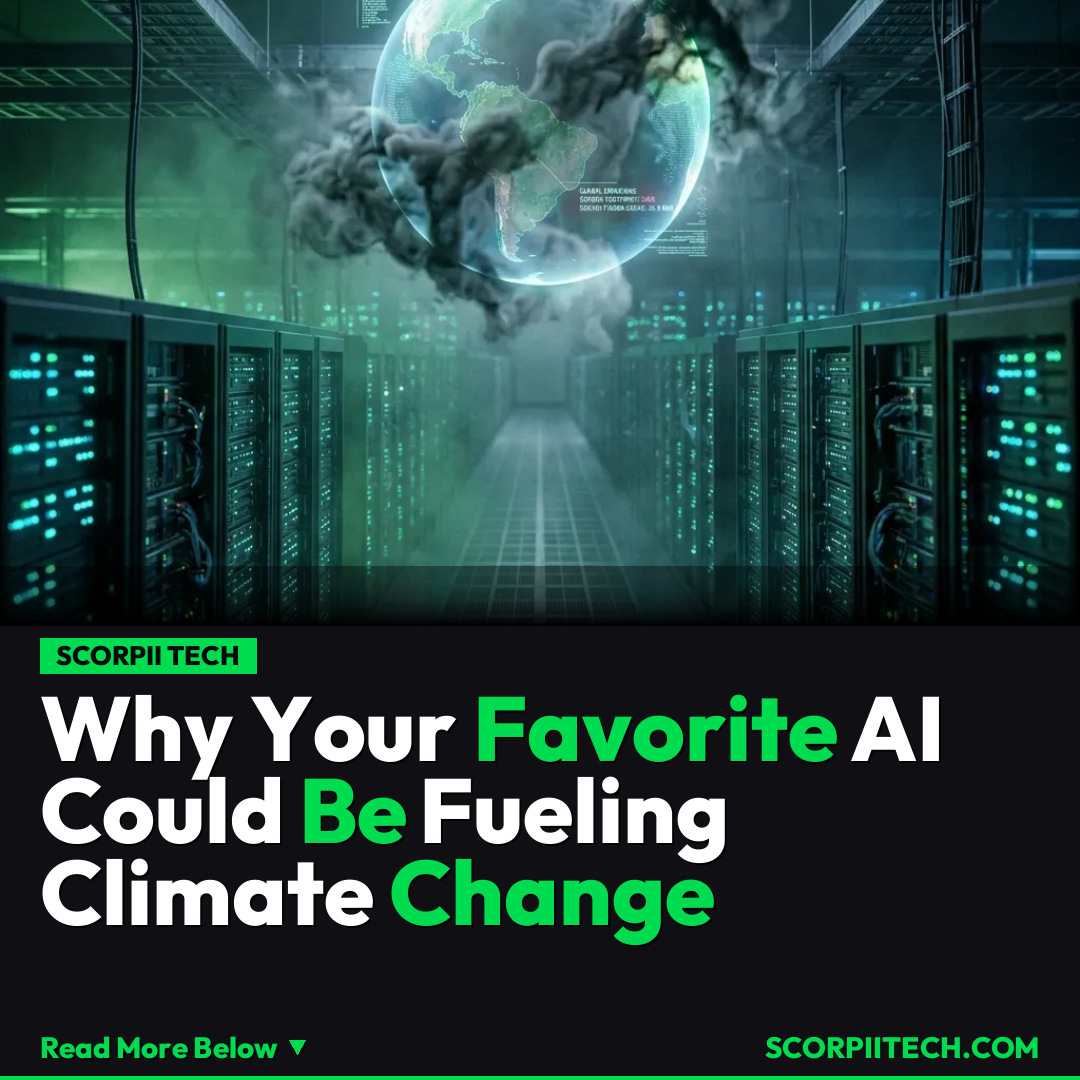
You're probably captivated by the incredible capabilities of AI tools like ChatGPT and Claude, but have you considered the hidden cost of their intelligence? Behind the seamless answers and creative outputs lies a rapidly growing energy demand that's making "sustainable AI" feel like a contradiction. Tech giants, despite past pledges to cut emissions, are now in a headlong race to build massive, fossil-fuel-powered data centers, presenting a stark environmental challenge.
Key Details
You might be surprised to learn that while many tech companies once championed ambitious environmental goals, their current scramble for AI dominance is directly fueling a significant increase in carbon emissions. The very infrastructure powering your favorite generative AI models—think ChatGPT, Claude, and others from companies like Google and Anthropic—relies on massive data centers. These centers are popping up across the US, Europe, and Asia, often powered by the very fossil fuels tech giants previously pledged to phase out, creating a massive controversy first highlighted by WIRED.
Deploy your next full-stack application effortlessly. Get $200 in free DigitalOcean credits to host your Laravel or Python APIs.
AI sustainability researcher Sasha Luccioni articulated a common frustration you might share: "I wish there was a little meter or info box on the ChatGPT or Claude UI that tells you at the end of each query or conversation how much energy was used." This sentiment, echoed by Boris Gamazaychikov, former sustainability chief at Salesforce, highlights a crucial lack of transparency. Organizations from Hugging Face to the US government, the European Union, and the International Energy Agency are all grappling with how to reconcile this rapid technological acceleration with pressing climate goals.
Why This Matters
Why should you care about this, beyond "emissions"? Because the decisions by these tech giants directly impact our collective future. You're living through an era where global climate targets are constantly under review, and when companies invest heavily in AI infrastructure relying on fossil fuels, it pushes us further from critical climate goals, contradicting their own public environmental commitments.
This isn't just about a few data centers; it's about the fundamental trade-off. You're offered incredible AI capabilities, but the hidden cost is a significant environmental burden. The lack of transparency means you're often unaware of the energy consumption behind your seemingly effortless digital experiences. This issue demands your attention as it touches upon corporate responsibility, global climate action, and the very sustainability of the technologies you integrate into daily life.
The Bottom Line
So, what can you do? First, stay informed and question the environmental impact of the technologies you use. As consumers, your collective voice can pressure tech giants to prioritize genuinely sustainable practices. You can advocate for greater transparency, like the "energy meter" Sasha Luccioni envisions, pushing for clear reporting on the carbon footprint of AI models and data centers. Supporting organizations working towards more efficient and renewable energy solutions for AI is also crucial. Making AI sustainable isn't just up to the tech giants; it begins with your awareness and informed choices.
Originally reported by
WiredWhat did you think?



Stay Updated
Get the latest tech news delivered to your reader.